8 October, 2026 | 12:34 AM


Arrogance of Popularity?
08-10-2026 12:00:00 AM
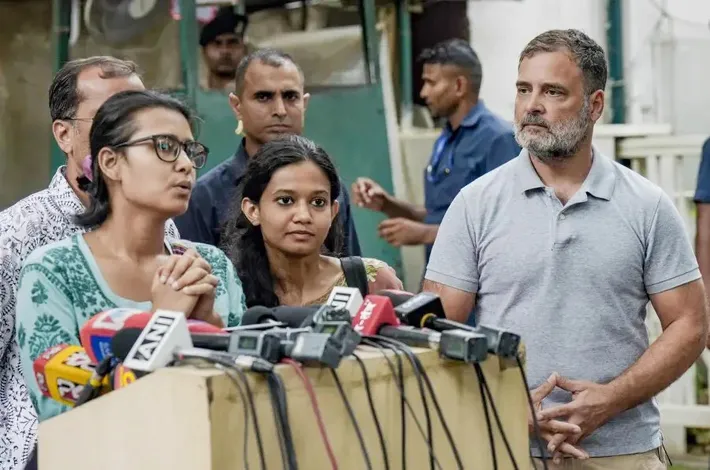
Neha Bora’s selective praise exposes the opportunism of street radicals who ride parliamentary struggles only when convenient
* Had Rahulji not addressed a presser and not given her platform to speak to the media, we wouldn’t have known today who Neha Bora is.
Remember those 3 cockroaches completely ignored her, they didn’t give her space at Jantar Mantar. This woman was fasting alone on the side, was never called on stage to speak. All limelight was shared by Dipke Das and Ranka.
Even after all this, if she choses a side and disrespects the LOP it’s on her. We have seen Scindia turn on Congress, she’s is just another person.
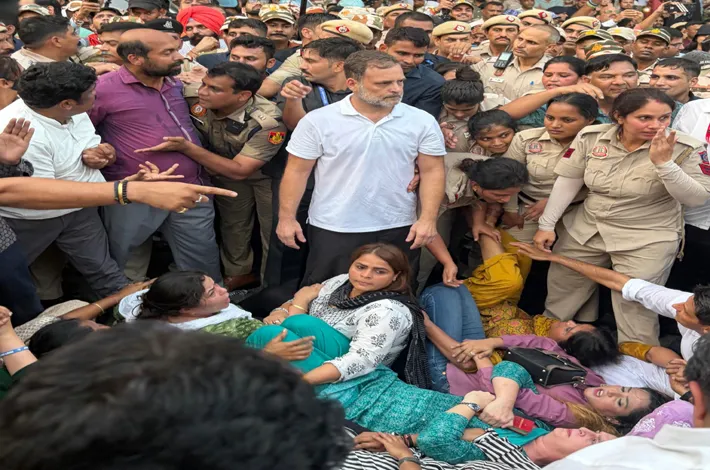
metro india news I new delhi : AISA national president and JNU PhD scholar Neha Bora recently tweeted in response to footage of Leader of Opposition Rahul Gandhi and other opposition leaders being removed from a Delhi protest site against the Election Commission: “Some people’s representatives are doing their job and defending democracy while others are busy counting down their days...” The phrasing is deliberately vague and superior. It elevates a handful of visible actors while reducing the broader institutional fight—hundreds of MPs from the INDIA bloc protesting under Rahul Gandhi’s leadership on electoral integrity, SIR of rolls, and alleged partisan conduct by CEC Gyanesh Kumar—to the dismissive category of “some people.”
This is not neutral commentary. It is the classic left-sectarian sleight of hand: claim ownership of “people’s” struggles while treating elected representatives who actually command parliamentary numbers, media attention, and organisational machinery as secondary or incomplete. Bora and AISA (the student wing of CPI(ML) Liberation) have long positioned themselves as the pure voice of the streets. Still visibility Bora enjoys today did not emerge in a vacuum. The sustained opposition spotlight on paper-leak scandals, ministerial accountability, and now electoral processes—led prominently by Rahul Gandhi—created the national stage on which student hunger strikes and detentions could register. When no one else amplified certain campus voices, that parliamentary opposition provided oxygen.
To now frame the same force as merely “some” representatives is pure audacity.
Calling Bora a “turncoat” captures the political reality even if she never formally held a Congress card. She comes from a BJP-leaning family background, migrated ideologically to the far left, and has repeatedly signalled that loyalty is only to “the people,” not parties. That posture allows selective solidarity: praise the optics of opposition MPs being manhandled when it serves the narrative of democratic defence, then maintain ideological distance the moment the same leaders are no longer useful props.
The 300-odd MPs risking institutional confrontation are not “some people.” They are the elected opposition attempting to use the only remaining democratic instruments available against an alleged capture of the election machinery. Reducing them to a rhetorical afterthought while claiming the high ground of “defending democracy” is the height of performative radicalism. Hard truth: street protests and hunger strikes matter, but they do not substitute for parliamentary numbers, legislative strategy, or sustained institutional pressure.
Bora’s tweet reveals a familiar pattern—harvest the legitimacy of mass opposition action, then reassert ideological purity by implying that only the purest voices truly count. Democracy is not defended by counting whose days are numbered while diminishing those actually showing up to fight. The audacity lies in forgetting the stage that was provided and rewriting the cast list after the fact.