1 October, 2026 | 3:00 AM


Chana falls on weak demand; tur, urad steady
06-05-2026 12:00:00 AM
Seasonal slowdown, muted buying interest, and ample supplies keep pulses markets subdued across key trading centres
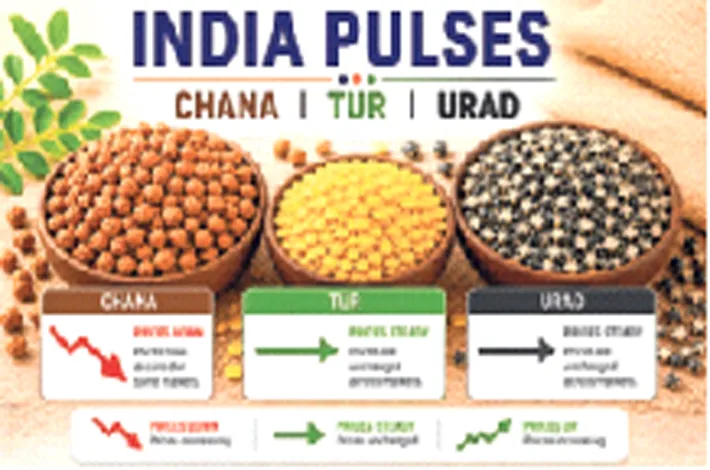
Prices of pulses showed a mixed trend across key markets on Tuesday, with chana declining in select centres due to sluggish demand, while tur and urad remained largely steady, traders said.
Weak seasonal consumption and limited buying interest from millers and stockists continued to weigh on market sentiment, even as supply dynamics varied across regions.
In Akola, Maharashtra, chana prices were steady at ₹5,700–₹5,725 per 100 kg, supported by a balance between low demand and tight supply. According to local trader Ankit Kedia, arrivals of the rabi crop have slowed significantly as most farmers have already sold their produce to government agencies at the minimum support price of ₹5,875 per 100 kg, which remains higher than prevailing market rates.
However, demand has not picked up as expected at the start of the month. Typically, traders and millers replenish stocks during this period, but buying activity has remained subdued.
Market participants indicated that if demand does not revive soon, the subdued trend may persist through the rest of May, with buyers relying on existing inventories.In contrast, chana prices in Delhi declined by ₹25 to ₹5,550–₹5,575 per 100 kg, reflecting weaker demand conditions in the northern market.
Tur prices were largely unchanged, with Akola rates holding at ₹7,700–₹7,725 per 100 kg. Traders noted that while prices have stabilised temporarily, the broader trend remains slightly bearish, with intermittent declines observed over recent sessions.
Demand has been affected by seasonal factors, while arrivals, though lower than last month, continue to trickle into markets.
Procurement activity for tur has lagged behind chana, as farmers are reluctant to sell lower-quality produce to government agencies due to stricter quality checks.
Most high-quality stock has already been offloaded during peak arrivals, leaving behind limited buyer interest in the remaining crop. Prices are expected to ease further towards ₹7,500 per 100 kg in the near term.In Katni, Madhya Pradesh, tur prices were steady around ₹7,800–₹7,900 per 100 kg.
Urad prices also remained unchanged across major markets. In Chandausi, Uttar Pradesh, prices held at ₹8,325–₹8,350 per 100 kg, while Jaipur markets reported steady rates in the range of ₹7,400–₹8,400 per 100 kg.
Market participants expect urad prices to remain under pressure due to ample supply and weak demand. Ongoing domestic arrivals, coupled with imports from Myanmar and expectations of fresh shipments from Brazil starting July, are likely to keep prices subdued in the near term.
Overall, the pulses market is navigating a phase of weak consumption and cautious buying, keeping prices range-bound across key centres. While supply pressures persist due to ongoing arrivals and imports, the absence of strong demand is limiting any meaningful upside. A sustained pickup in demand or tighter supply could lend support, but near-term sentiment is likely to remain subdued.
— Informist