22 September, 2026 | 3:21 PM


Ex- DGP stresses need for proportionate representation
08-08-2026 12:00:00 AM
Metro India News | Hyderabad
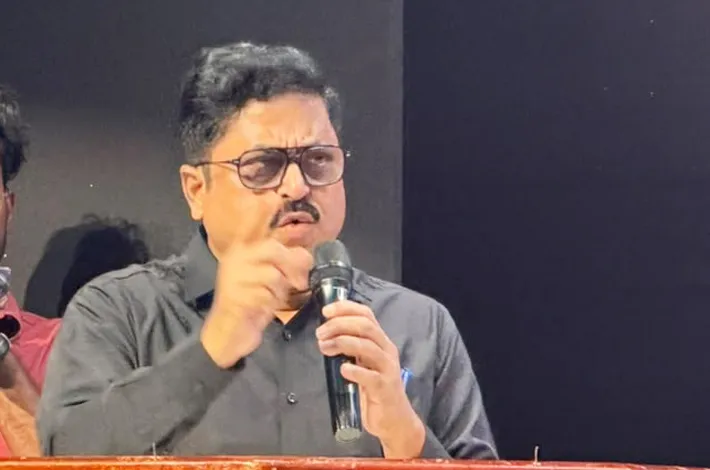
Although every Indian citizen enjoys the right to vote, political representation remains unequal, making India’s democracy only “half complete”, former Director General of Police (DGP) and social justice advocate Dr. J. Purnachandra Rao said on Thursday. He was addressing the ‘Mandal Day’ celebrations organized by the All India OBC Students Association (AIOBCSA) at the University of Hyderabad (Central University), where he was the Chief Guest.
Dr. Rao argued that while the Constitution guarantees the principle of “one person, one vote”, India has failed to ensure proportionate political representation for all social groups in legislatures and Parliament. Describing B.P. Mandal as one of the most influential figures in India’s social justice movement, Dr. Rao said the Mandal Commission scientifically documented the educational and social backwardness of Other Backward Classes (OBCs).
The Commission recommended 27 per cent reservation for communities constituting nearly 52 per cent of the country’s population, he noted. He recalled that although the Commission report remained unimplemented for several years, Prime Minister V.P. Singh’s decision to implement its recommendations in 1990 marked a turning point in Indian politics. Leaders such as Kanshi Ram and Sharad Yadav, he said, expanded the social justice movement into a powerful political force across North India. Highlighting what he termed the “representation deficit” Dr. Rao cited Telangana and Andhra Pradesh as examples.
In Telangana, he said, Backward Classes constitute around 56 per cent of the population but have only 19 members in the 119-member Legislative Assembly, while a few dominant castes with a much smaller population share continue to secure a disproportionately high number of seats. Similarly, in Andhra Pradesh, he said, BCs account for nearly 52 per cent of the population but have only about 40 legislators in the 175-member Assembly.
Calling upon students to broaden their aspirations beyond government employment, he urged them to prepare for political leadership and electoral participation. He said the AIOBCSA, which has played an important role in mobilizing students around issues of social justice, should now evolve into a platform for nurturing future political leadership. “It is the responsibility of the younger generation to transform Indian democracy into a system of complete and inclusive political representation,” he said.