22 September, 2026 | 4:08 AM


Gen Alpha ignites student activism
31-07-2026 12:00:00 AM
metro india news I hyderabad
In a striking display of youthful agency, thousands of Gen Alpha students – children born roughly between 2010 and 2025, now aged between 1 to 16 – have taken to the streets and school grounds in parts of Uttar Pradesh and Rajasthan. They are demanding basic amenities, functional classrooms, clean water, sanitation, and the urgent appointment of teachers. What began as localized grievances has rapidly gone viral, drawing comparisons to the recent Gen Z-led protests at Delhi’s Jantar Mantar and signaling a new chapter in India’s education activism.
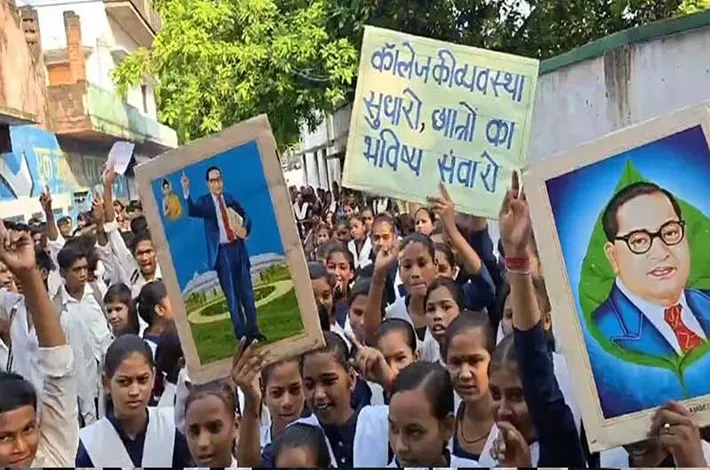
The spark ignited on Tuesday at Sarvodaya Inter College in Kishanpur, Fatehpur district, Uttar Pradesh. Over 1,500 students from Classes 6 to 12 staged a six-hour sit-in protest, refusing to attend classes. Armed with placards featuring Dr. B.R. Ambedkar and slogans highlighting their plight, they highlighted chronic issues: erratic electricity supply, broken fans, unsafe drinking water, poor sanitation, damaged furniture, and inadequate sports facilities. Some also alleged teacher misbehaviour and unauthorized fees. Organized by senior students, including Class 12 leader Ankur Sonkar – who had participated in the recent Jantar Mantar agitation – the protest used AI tools like ChatGPT for poster designs. Students pooled funds for printing forcing District officials, including the District Inspector of Schools and Nayab Tehsildar, eventually arrived.
They issued written assurances on seven of eight demands: installing four fans per classroom, repairing wiring, setting up an RO water plant, cleaning toilets regularly, maintaining the sports ground, improving mid-day meals, and adding benches. The science stream request was forwarded to the state government. Work has reportedly begun, and classes resumed. School principal Lal Bahadur Singh expressed surprise at the scale but noted the students’ determination. District Magistrate Nidhi Gupta Vats confirmed most issues were addressed promptly. Social media erupted with praise and memes labeling it India’s “first Gen Alpha protest,” inspired by Gen Z successes.
Similar unrest unfolded in Rajasthan. At PM Shri Government Senior Secondary School in Mengalwa village, Jalore district, students locked the school gate in protest. The school had only seven teachers against 25 sanctioned posts. A viral video of a young girl passionately articulating their demands captured national attention. District officials visited quickly, promising four teachers immediately and three more within ten days. The protest ended peacefully.
These incidents are not isolated. Reports indicate demonstrations in other parts of UP and Rajasthan, with students echoing demands for improved education infrastructure and teacher appointments. Education experts link this surge to the momentum from the Jantar Mantar protests earlier this month, where Gen Z students, under banners like the Cockroach Janta Party (CJP), highlighted exam irregularities (such as NEET issues), governance, and systemic education reforms, eventually securing some concessions including ministerial accountability. Deeper Systemic ChallengesIndia’s vast school system serves over 24 crore students across nearly 15 lakh schools, per recent NITI Aayog and UDISE+ data. While progress exists – UDISE+ 2025-26 reports around 1.02 crore teachers nationwide, an increase from previous years, with a national pupil-teacher ratio (PTR) around 24 – glaring disparities persist, especially in rural and government institutions. T
Teacher shortages remain acute in several states. Official DISE/UDISE data has historically shown vacancies in the hundreds of thousands, though analyses debate net figures after accounting for small schools and enrollment. Rural areas often face the brunt, with high pupil-teacher ratios disrupting learning. ASER (Annual Status of Education Report) surveys consistently highlight that while enrollment is near-universal, foundational learning outcomes in reading and arithmetic lag, exacerbated by infrastructure gaps. Infrastructure has improved: UDISE+ notes high percentages of schools with electricity (over 93%), drinking water (near 99%), and girls’ toilets (over 97%) in recent data.
Yet, functionality varies. Many schools report non-functional fans, intermittent power, unclean facilities, and missing basic furniture – precisely the issues protested. ASER 2024 noted steady gains in usable facilities but persistent challenges in usage and quality, particularly in certain states. Gen Alpha, the first fully digital-native generation shaped by smartphones, AI, and social media from a young age, is demonstrating heightened awareness. “They organized efficiently, used technology for messaging, and understood their rights,” noted one observer. This mirrors global trends where younger cohorts leverage digital tools for advocacy.
Government and expert respond
Authorities have responded swiftly in these cases, issuing written guarantees to de-escalate. Uttar Pradesh and Rajasthan education departments emphasized commitment to the National Education Policy (NEP) 2020 goals, including better infrastructure under Samagra Shiksha Abhiyan and teacher recruitment drives. However, critics argue these are cosmetic solutions. “Protests highlight the implementation gap,” said an education activist. “While enrollment has stabilized post-COVID, quality requires sustained investment.” Dropout rates, though declining per UDISE+, and transition losses from primary to secondary levels remain concerns.
Government school enrollment share has declined over years as parents opt for private options where affordable. Experts call for systemic fixes: accelerated teacher recruitment and training, regular infrastructure audits, increased funding (education spending hovers around 3-4% of GDP, below recommended levels), and greater student participation in school management committees.
A Generational Shift?
These Gen Alpha actions represent more than complaints about broken fans; they signal empowered youth unwilling to accept subpar education. Influenced by climate strikes, social media movements, and recent national protests, even younger students are finding their voice. As one Fatehpur student reportedly said, “We come to school to study, not to suffer.” With viral videos amplifying their message, pressure is mounting on policymakers. Whether this sparks widespread reform or remains localized wins will shape the educational landscape for India’s youngest generation – and the nation’s future workforce.