19 November, 2026 | 12:03 AM


HC directs separate facilities for trafficking survivors
19-11-2026 12:00:00 AM
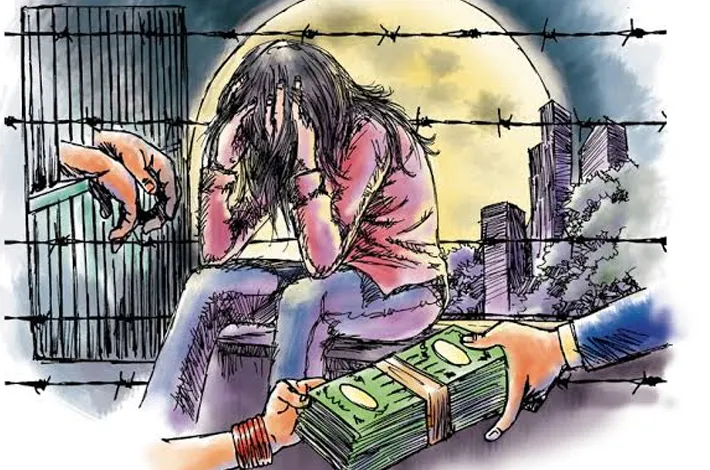
The Telangana High Court has directed the State Government to strictly implement safeguards governing the placement of persons rescued in human trafficking cases in Protective Homes, including separate facilities for alleged perpetrators and organisers, verification of antecedents and individual roles, and reasoned judicial inquiries before admission.
A division bench comprising Acting Chief Justice P. Sam Koshy and Justice Narsing Rao Nandikonda was dealing with a writ petition filed by Prajwala, an NGO engaged in the rescue, rehabilitation and reintegration of trafficking survivors. The petition arose from an order of the III Additional Chief Metropolitan Magistrate, Nampally, directing the admission of nine women into Prajwala's Protective Home following a police raid at Verily Beauty Salon & Spa.
Counsel Deepak Misra, appearing for Prajwala, submitted that the NGO had objected to the admission of M. Renuka, alleging that she was an organiser of brothel activities and an accused in another human trafficking case. While admitting the other eight women, Prajwala initially refused to accommodate Renuka, citing potential security risks to other residents. It eventually admitted her under protest to avoid contempt proceedings.
Misra argued that Protective Homes were meant to provide safe and rehabilitative environments for trafficking victims and could not become default custodial institutions for everyone rescued during police operations. Housing suspected organisers alongside survivors could expose vulnerable residents to intimidation, manipulation and further exploitation.
The petitioner also cited earlier instances of persons allegedly involved in prostitution-related offences being sent to its Protective Home without adequate scrutiny. It sought uniform police protocols and judicial guidelines to distinguish victims from alleged traffickers and organisers before ordering admissions.
The State submitted that Renuka had not been identified as an organiser in the case arising from the raid and was described by the police as a therapist/sex worker. She was subsequently released to her mother pursuant to a Magistrate's order dated June 6, 2025. The State also informed the bench that Telangana Police had formulated a consolidated Standard Operating Procedure (SOP) on human trafficking on February 26, 2026.
The bench observed that registration of an FIR or a previous accusation could not conclusively establish a person's involvement in trafficking. A person might still have been subjected to coercion or exploitation despite an alleged previous role in an offence. However, describing someone as rescued did not eliminate the need to assess the risks they might pose to other residents. Such questions required individualised, evidence-based inquiries and reasoned judicial decisions.
Distinguishing Protective Homes from Corrective Institutions, the bench held that they served different statutory purposes. A Protective Home meant exclusively for victims could not be used for penal detention or remand of alleged perpetrators and organisers. Similarly, placement in a Corrective Institution or judicial custody could not automatically follow an allegation or previous FIR and required authorisation by a competent court.
The bench directed the State to establish or provide separate corrective institutions and other lawful custodial facilities for alleged perpetrators and organisers. Until such facilities were created, suitable arrangements should be made within existing lawful facilities, subject to orders of competent courts. Where credible material indicated that a person proposed for admission might be an exploiter or pose a risk to residents, police and institutions must place the material before the Magistrate.
The Director General of Police, through the Women Safety Wing and Anti-Human Trafficking Units, was directed to circulate and operationalise the consolidated SOP. Police must assess rescued persons individually, verify their identities and antecedents, investigate suspected organisers independently and not treat previous criminal cases as conclusive proof of guilt or grounds to deny protection. Inquiries under Section 17 of the Immoral Traffic (Prevention) Act, 1956, must not become mechanical exercises.
The judgment also prescribed safeguards for NGOs and Protective Homes, including confidential intake procedures, risk assessments, admission and incident registers, medical screening, counselling and legal aid. Authorities must maintain district-wise lists of recognised Protective Homes, detailing their capacity and specialised services, and consult them on availability and safety before referrals.
The Telangana State Legal Services Authority and District Legal Services Authorities were directed to coordinate rehabilitation and legal aid initiatives. Educational authorities must organise at least one age-appropriate human trafficking awareness programme every academic semester. The Registry was asked to place the order before the Chief Justice for appropriate sensitisation measures for Magistrates.
Directing the authorities to submit an initial compliance report within three months and six-monthly progress reports for one year, the bench disposed of the petition without further individual relief. It clarified that it had expressed no finding on Renuka's or any other person's guilt, innocence or victim status.