26 November, 2026 | 12:00 AM


Hettich plans `2,000 cr investment in India
26-11-2026 12:00:00 AM
* It’s a tough and tight competition, especially with China. If you supply from India, you always compare with China, so we have to be price competitive.
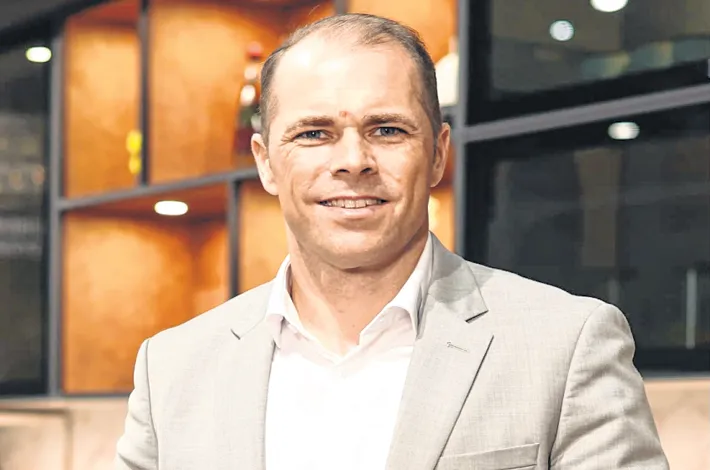
* Andre Eckholt, Managing Director, Hettich India, SAARC, Middle East & Africa Fresh investment over four to five years will take its total India outlay to `4,000 crore
Ashad Hussain :
German furniture fittings manufacturer Hettich will invest an additional ₹2,000 crore in India over the next four to five years, taking its total investment in the country to ₹4,000 crore. The announcement comes as the company marks 25 years of operations in India. Hettich has also partnered with German architectural hardware maker ECO Schulte to expand across furniture fittings, architectural hardware and building solutions.
"The fresh investment of ₹2,000 crore will be infused over the next four to five years, taking our total investment in India to ₹4,000 crore," said Andre Eckholt, Managing Director, Hettich India, SAARC, Middle East & Africa. Its existing plants in Vadodara, Gujarat, and Indore, Madhya Pradesh, will drive the immediate expansion plans, he added. The investment is aimed at expanding manufacturing capabilities, increasing localisation and strengthening India's role in the group's global supply chain network.
"In our domain, which is furniture fittings mainly, we are the undisputed market leader," Eckholt said.
India is the second-largest market for Hettich outside Germany and contributes 15 per cent of group revenue. The company aims to raise this to 20 per cent by 2030. Group revenue is around $1.65 billion (about €1.5 billion in calendar 2025), and India is its fastest-growing market.
Partnership opens new growth avenues
The partnership brings together Hettich's presence in furniture fittings and ECO Schulte's expertise in architectural hardware.
"We shake hands now with a partner which has the same DNA as we have," Eckholt said.
Eckholt said the aim was to expand the portfolio "in a top premium range when it comes to furniture fittings and interior solutions and architecture".
For Hettich, the expanded portfolio also creates an opportunity to increase business through its existing distributor and dealer network and enter more hospitality and commercial projects, where architectural and door hardware are important requirements.
"We have a tremendous potential in terms of increasing our share within our existing customer base," Eckholt said.
"There are specifications where Hettich has maybe not been able to take part in the past because our product portfolio was limited," he said.
The two companies had worked together before, but not as a joint venture. Hettich already sold selected ECO Schulte products in India, but imported them. They now plan to manufacture selected products locally. Eckholt said government quality control orders have made imports more challenging, while local manufacturing would also bring the company closer to the market.
Why make it in India
The new investment will go largely into technology rather than new infrastructure, as Hettich has space available at its existing facilities. "This goes into machines, processes and tools," Eckholt said. For architectural hardware, the investment is expected to be in place within 12 months.
Hettich operates five factories across Gujarat and Madhya Pradesh.
"It doesn't matter where in the world the products are being manufactured. There is raw material coming in and the final product coming out, in between no human intervention," Eckholt said.
Few economies, he said, have the scale to justify a plant like this. "There are not so many big economies in the world where it really makes sense to settle down." The company also plans to increase local research and development.
"We will in the future also bring more and more products which are there for the local needs," he said.
Exports, retail and a bigger India
Hettich exports products manufactured in India to more than 20 countries, including Canada, Australia, New Zealand, Sri Lanka, Nepal, Bangladesh, Germany and China. Exports account for about 10-15 per cent of its India business. The company also sees India as a potential manufacturing base for the Asia-Pacific region.
"If you supply from India, you always compare also with China, so we have to be price competitive," Eckholt said. Free trade agreements, he added, "are helping us a lot".
Alongside manufacturing, the company has 12 company-owned stores and 50 franchised outlets under the Hettich Exclusive format. It plans to add another 50 franchise outlets by the end of 2027, focusing on tier-3 and tier-4 markets to extend its reach beyond larger urban centres.
Hettich also sees an opportunity in the shift from an unorganised to an organised building materials market. Eckholt estimates that organised players account for about 30 per cent of the market, while the unorganised segment makes up the remaining 70 per cent.
"We have a huge opportunity to grab also the shares now when it comes to the big shift from the unorganised to the organised market," he said.
Expanding manufacturing across countries is also part of Hettich's strategy to reduce supply-chain risks and stay closer to large markets. "We cannot rely only on a single source of supply," Eckholt said, pointing to geopolitical uncertainties. Hettich's approach, Eckholt said, is "make in India, make for the world".
"When it comes to manufacturing, I'm always saying we are just at the beginning," he said.