20 September, 2026 | 12:39 AM


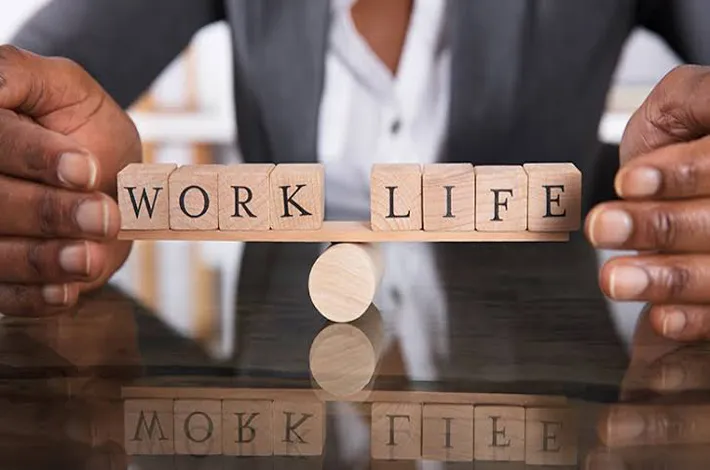
‘Life beyond work’- A right, not a privilege
20-09-2026 12:00:00 AM
Metro India News | Hyderabad : Nita kept glancing at her phone while her only son was checking in at airport to leave for higher studies. She looked stressed as she had to attend a teleconference at 8:00 p.m. Disconnecting the call would be considered misconduct on her side. Swaminath was accompanying his wife to a cardiologist when his WhatsApp pinged that he had to submit a crucial work data urgently and that it was utmost important. He asked his wife to wait in the lobby and called his subordinate to reassign that duty to him. It was 7:30 in the evening. This is not unusual in Indian work scenario to be assigned duties beyond office hours.
According to a survey, around 88% of the Indian employees are contacted by their employer outside of their regular working hours. 85% report that work related communication continues even during sick leave or public holidays. The concept of work/private life demarcation hardly exists in Indian work space. Right to disconnect is a proposed human right. It’s the right of the people to disconnect from work related communication during non-work hours in physical or electronic form.
Around 18 countries have brought legislations related to this right. In 2017, France brought El Khomri Law which includes the right to disconnect. An employee is under no obligation to accept working at home or to indulge in electronic communication beyond office hours. Japan’s karoshi laws forbids employers to engage employees for more than 45 hours per week. Karoshi means death from over work. Deaths and health threats from overwork rose at such an alarming level in Japan that government was forced to pass work style reform act in Japan. It limits the overtime hours also to 45 hours per month.
The comments of Infosys’s Narayan Murthy to critically raise the working hours to 70 hours per week from the existing 48 hours per week was applauded by people from various spheres but it equally received criticism from already overworked and burnt Indian employees. They point out that these kinds of recommendations come from top 2% of people who are at the apex of working food chain, all the work they have to do is to shout orders. Body can adapt to short period of over exertion but in long run, it can lead to chronic stress, diabetes and hypertension, and even cardiac diseases. India tops the list of countries where people die from long work hour related diseases.
Around 2 lakh people died since 2016 due to work related health problems and in 2023, close to 2500 suicides were attributed to work related stress according to News Minute. In July 2024, 26 year old CA Ana Sebastian died four months after joining Ernst and Young(EY), a corporate accounting giant due to high pressure work environment. There is extreme hierarchy in Indian work space, both in public and private sector. Bosses shout and throw files around. Work day starts as soon as one wakes up, in the form of WhatsApp messages and mails and doesn’t stop till late in night.
MP Supriya Sule introduced a private member bill to enter right to disconnect into Indian work space. This law has not made any progress till the date. Soon after the death of EY employee in September 2024, MP Shashi Tharoor had promised that he would raise the issue in the parliament. According to Economic Survey 2024-25, tabled in parliament on 31st January by Union Finance and Corporate Affairs Minister Nirmala Sitharaman, hostile work cultures and excessive hours [more than 60 hours a week] can adversely affect mental wellbeing and put the brakes on the pace of economic growth. Right from the government to the common people, there needs to be a massive paradigm shift in Indian work space from ‘live to work’ to ‘work to live’.

(Sanjeevani Kusum,
Principal, Govt Junior College,
Buttayagudem)