19 September, 2026 | 12:39 AM


Move out TM It’s SM here
19-09-2026 12:00:00 AM
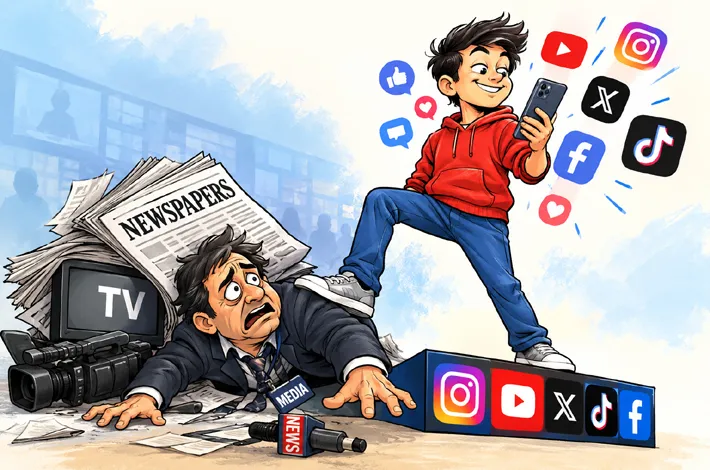
- Social Media Reigns Supreme
- How Gen Z Rewrote the Rules of Media and Left Traditional Entertainment Behind
metro india news I hyderabad : For Generation Z, the glowing screen of a smartphone has become the primary stage of modern life. Born roughly between 1997 and 2012, this cohort has grown up immersed in platforms like YouTube, TikTok, Instagram and Snapchat, transforming social media from a pastime into the central nervous system of their entertainment, information, social connections and even identity formation. In the process, conventional media and the traditional entertainment industry — once unchallenged gatekeepers of culture — have steadily lost ground in a decisive shift of attention and influence.Recent data paints a clear picture of this dominance.
According to the Pew Research Center’s 2025 survey of U.S. teens, roughly nine in ten use YouTube, while about six in ten or more regularly use TikTok and Instagram. Daily engagement is intense: three-quarters of teens visit YouTube every day, 61 percent check TikTok daily, and 55 percent open Instagram. More striking still, 36 percent of teens report using at least one major platform “almost constantly,” with about one in five saying the same specifically of TikTok or YouTube. This near-constant presence extends beyond teens into the broader Gen Z population.
Studies indicate many spend several hours daily across platforms, with video-sharing sites commanding particular loyalty. One 2026 analysis found 43 percent of Gen Z watch two or more hours of content on video platforms daily, while 38 percent watch no live television at all. YouTube leads daily usage at 63 percent, followed closely by Instagram and TikTok.
Social media shapes nearly every facet of Gen Z existence. It serves as a primary news source: 44 percent access news daily through social platforms, and a quarter identify TikTok as their main news outlet, outpacing traditional news apps. Entertainment arrives in highly personalized, algorithm-driven feeds of short-form videos, user-generated clips, memes and influencer content. Creators often feel more authentic and relatable than distant Hollywood stars.
Deloitte’s Digital Media Trends research has repeatedly shown that 56 percent of Gen Z find social media content more relevant than traditional television shows and movies, while roughly half report a stronger personal connection to social media creators than to actors or TV personalities. The platforms also function as social hubs, discovery engines for brands and products, and spaces for self-expression and community. Many Gen Z users create their own content, chase trends, and build identities through curated feeds.
Shopping decisions frequently begin on these sites, with influencers and peer recommendations carrying significant weight. In short, social media is not merely consumed; it is lived.This transformation has exacted a heavy toll on conventional media and the entertainment sector. Linear television, once the family hearth of shared cultural moments, has seen steep declines among younger audiences. Gen Z watches far less traditional TV than older generations — often under an hour of linear programming daily, with streaming filling some but not all of the gap. Many prefer free, on-demand social video over scheduled broadcasts or even paid streaming services. Nearly half of Gen Z now favor YouTube and TikTok over traditional TV and paid streaming for entertainment and news.
Hollywood and traditional studios face a parallel challenge.
High-production-value films and series compete for attention against an endless stream of short, relatable, niche-tailored content produced by independent creators at a fraction of the cost. The old model relied on gatekeepers — studios, networks, publishers — who controlled what reached audiences and when. Social media democratized creation and distribution. Anyone with a phone can reach millions overnight. Algorithms prioritize engagement and relevance over prestige, favoring authenticity and immediacy over polished narratives.Advertising dollars have followed the audience.
Social platforms offer precise targeting and measurable results that traditional television and print struggle to match. As younger consumers spend more time scrolling than sitting through commercial breaks or waiting for weekly episodes, revenue streams for legacy media have fragmented. Cinema attendance and traditional celebrity culture retain some pull — Gen Z still goes to theaters for social experiences — but the cultural center of gravity has shifted. Viral moments on TikTok or Instagram Reels often drive discovery of movies and shows more effectively than traditional marketing.The entertainment industry’s response has been mixed.
Some studios and streamers experiment with micro-series, vertical video formats, and creator partnerships. Others attempt to chop long-form content into social-friendly clips. Still the fundamental mismatch remains: traditional production cycles cannot match the speed and volume of user-generated content, nor the intimate parasocial relationships creators cultivate with their audiences.Critics note downsides. Heavy use correlates with concerns over attention spans, mental health pressures, FOMO, and the spread of misinformation. Some surveys show rising skepticism among teens themselves about social media’s net effects. Stillthe pull remains powerful.
Platforms deliver what Gen Z values most: control, personalization, community and relevance.The result is a media landscape unrecognizable from a generation ago. Where previous cohorts gathered around network premiers or Hollywood blockbusters, Gen Z gathers in digital spaces shaped by algorithms and peers. Conventional media has not disappeared, but it has been displaced from the center of young people’s lives. Social media did not merely compete with traditional entertainment — for Gen Z, it largely redefined what entertainment, information and connection look like. The sector that once dictated culture now finds itself adapting to the rules of a new, always-on digital stage.