8 October, 2026 | 8:11 PM


Real-Time learning checks aim to transform govt schools
06-05-2026 12:00:00 AM
KIRANMAI TUTIKA | AMARAVATI
In a quiet but consequential shift inside classrooms, Andhra Pradesh is piloting a technology-led approach to answer a long-standing question in education, did students actually understand what was taught, right now, not weeks later?
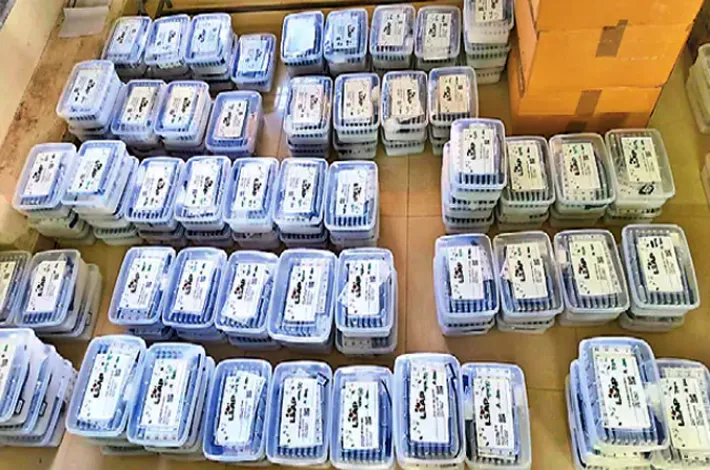
The state has introduced handheld “clicker” devices, an interactive response system that lets teachers gauge comprehension instantly. Instead of waiting for periodic tests to reveal learning gaps, teachers can now diagnose them within minutes and intervene on the spot.
Each classroom is equipped with a digital board linked to clicker devices distributed to students. After a lesson, the teacher displays multiple-choice questions (A-D). Students submit answers using their devices, and responses are aggregated in real time. The dashboard instantly shows who has understood the concept and who hasn’t, allowing targeted re-teaching before the class moves on.
Officials say the system moves assessment from “end-of-chapter” to “end-of-lesson,” making evaluation continuous, low-stakes, and actionable. It also encourages participation from quieter students who may hesitate to answer aloud.
The model was piloted last year in Poranki ZPHS and Akunuru schools. Following encouraging feedback, the Education Department has expanded the rollout to 130 schools across Krishna district, covering 7,565 Class IX students. Schools in Thallapalem, Tapasipudi, Buddalapalem, Chinnapuram, Desayipeta, Gilakaladindi, Rustumbada, and Gurukul institutions in Rudravaram are among those selected.
District Education Officer U. V. Subbarao said devices are being distributed and teacher training is underway to ensure effective classroom use. Full implementation is planned from the next academic year, with scope for expansion statewide based on outcomes.
For government schools, where large class sizes often mask individual learning gaps, the clicker system offers a practical bridge between teaching and feedback. By identifying misunderstandings immediately, teachers can tailor instruction, reduce cumulative learning loss, and potentially improve board exam outcomes. If scaled effectively, AP’s “clicker classrooms” could redefine how learning is measured, and improved, across the public school system.