24 September, 2026 | 10:57 PM


SC ensured none is above the law
01-01-2026 12:00:00 AM
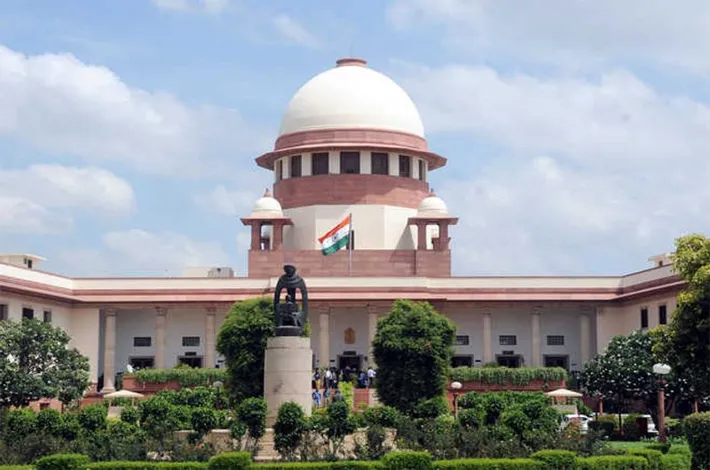
The Supreme Court has, at least for the time being, prevented a grave miscarriage of justice in the 2017 Unnao rape case, one that had shaken the conscience of the nation. By staying the operation of the Delhi High Court’s order of December 23, which had directed the release of former BJP MLA Kuldeep Singh Sengar, the apex court restored a measure of faith in the justice delivery system that had been badly jolted. The three-member Bench, comprising Justices Surya Kant, J.K. Maheshwari, and Augustine George Masih, was compelled to intervene because the HC order was morally indefensible. Sengar was not an undertrial seeking the benefit of the doubt. He is a convicted criminal—found guilty in two cases of raping a minor who was just 15 years and 10 months old at the time of the crime, and also convicted for his role in the custodial death of her father.
The brutality of the case defies description. The victim’s father was arrested on trumped-up charges and subjected to third-degree torture in police custody, leading to his death. In a grotesque attempt to justify this custodial violence, he was falsely accused of raping his own daughter. As if this was not enough, an engineered car-truck collision was later carried out to eliminate a crucial witness, killing two of the victim’s aunts and critically injuring her. The trail of intimidation, violence, and manipulation laid bare the enormous political and administrative clout enjoyed by the accused. Yet, the High Court chose to locate a “lacuna” in the unamended POCSO Act to grant Sengar a reprieve. It accepted the argument that since an MLA was not a “public servant” under the definition applicable at the time, he could be sentenced only to seven years’ imprisonment. This reasoning was deeply flawed. The definition of “public servant” itself is absurd when it includes a police constable but excludes an MLA or MP who wields far greater power, influence, and control over institutions—and even draws a pension. Even without invoking the amended POCSO Act, Sengar should have been treated as a public servant in the spirit of the law. The Central Bureau of Investigation, which probed the case and challenged the HC order, deserves commendation for refusing to let this travesty pass unchallenged. Had he been released, it would have been a cruel spectacle: a powerful convict enjoying creature comforts while the victim, who lost her childhood and her father, faced public ridicule and renewed trauma. Justice for the victim will be served only when Sengar undergoes full punishment. This case must stand as a reminder that however high a person may be in society, the law must treat him as an ordinary citizen. Anything less would be an abdication of justice.
The CBI, which probed the case and challenged the HC order, deserves commendation for refusing to let this travesty pass unchallenged.