2 October, 2026 | 12:31 AM


Shastri’s quiet lessons for leaders
02-10-2026 12:00:00 AM
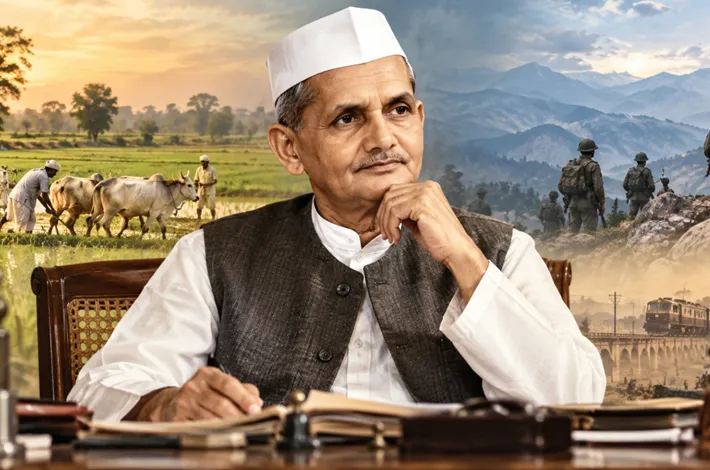
The former Prime Minister of India, Lal Bahadur Shastri was a short man but with a tall stature
What makes a leader worthy of public trust? Is it power, popularity and visibility, or the willingness to accept responsibility when things go wrong? The life of former Prime Minister Lal Bahadur Shastri offers a different answer. For him, public office was closely linked to accountability, personal discipline and service.
Born on October 2, 1904, in Mughalsarai, Shastri came from modest circumstances. His father, a schoolteacher, died when he was one-and-a-half years old, leaving his mother to raise three children. Despite poverty, Shastri pursued his education and later joined the freedom movement. He spent seven years in British prisons during the struggle for Independence.
After Independence, he held several positions in Uttar Pradesh before moving to the Union Cabinet, where he served in portfolios including Railways, Transport and Communications, Commerce and Industry and Home Affairs.
One of the clearest examples of his understanding of responsibility came in 1956. Following a major railway accident in which several people were killed, Shastri resigned as Railway Minister, accepting moral responsibility for the ministry. Parliament records show that he said he felt deeply distressed by the accident and considered himself responsible to the House and the public.
The episode is significant because accepting responsibility did not mean accepting personal blame. Prime Minister Jawaharlal Nehru made this distinction in Parliament, saying Shastri was not personally responsible for the accident, but that accepting his resignation would establish an example of constitutional propriety.
That principle remains relevant beyond politics. In institutions, companies, schools and other organisations, failures can easily lead to a search for someone else to blame. Shastri's example raises a more fundamental question: what responsibility does a person carry when entrusted with an institution and the lives or interests dependent on it?
His public personality was equally striking for its simplicity. Shastri did not build his leadership around extravagance or constant self-promotion. Official accounts describe him as humble, hardworking and firm in resolve. His career showed that authority need not always be loud. It can also be expressed through preparation, discipline, listening and measured decisions.
His simplicity, however, did not mean indecision. During the 1965 India-Pakistan war, he led the country through a difficult period that coincided with a serious food crisis. His famous call, “Jai Jawan, Jai Kisan”, placed soldiers and farmers at the centre of national resilience. The message linked defence with food production and encouraged greater attention to India's food security and self-reliance.
An often-recalled account says that before asking citizens to observe a weekly fast during the food shortage, Shastri first tried the idea within his own household. Whether viewed as an anecdote or as an illustration of his character, the episode carries a simple lesson: leaders earn credibility when they are willing to share the sacrifices they ask others to make.
Communication was another important part of his leadership. Effective leadership requires more than making announcements or expressing authority. It requires understanding other viewpoints, negotiating and listening. That lesson has particular relevance today, when communication is faster than ever but public discussion can often leave little room for patient listening.
For younger generations, Shastri's example need not be confined to national politics. A student accepting responsibility for a mistake, a teacher exercising authority fairly, a business leader acknowledging an organisational failure or a parent admitting an error can all demonstrate the same principle.
Shastri's premiership lasted less than two years, ending with his death in Tashkent on January 11, 1966. Yet the brevity of his tenure does not diminish the questions his life continues to raise.
On his birth anniversary, perhaps the more useful question is not how often Shastri is remembered, but what society expects from those entrusted with authority. In an age of instant publicity and constant visibility, his life offers a quiet reminder: power may command attention, but responsibility is what builds trust.
(Vangeepuram Srinivasa Chary is a human development trainer.)