20 November, 2026 | 1:47 AM


Steel Frame and the Living Tree
20-11-2026 12:00:00 AM
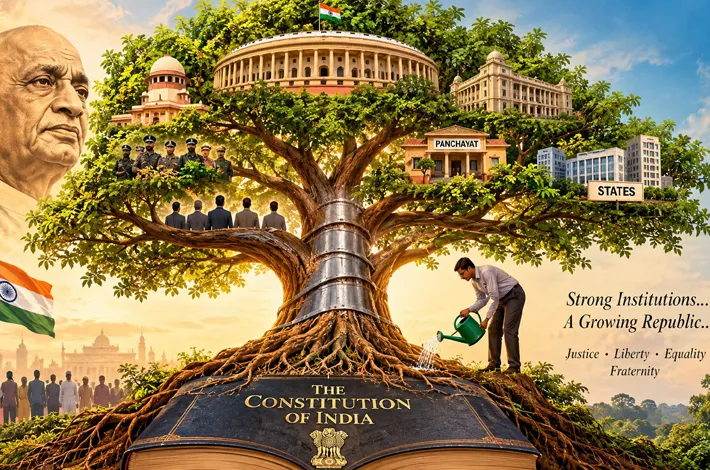
Soon after Independence, Sardar Vallabhbhai Patel famously described the All-India Services as the “steel frame” of India. The phrase has endured because it captured an essential truth about a newly independent nation.
Political freedom alone could not hold together a country of immense linguistic, cultural, geographic, and social diversity. India required institutions capable of preserving constitutional continuity while democratic governments changed through the ballot box. The civil services became that stabilising framework—professional, impartial, and committed to the Republic rather than to any transient political authority
The metaphor of steel remains powerful. Steel provides strength, resilience, and permanence. It supports bridges, buildings, railways, and countless structures upon which modern civilisation depends. Similarly, constitutional institutions provide the stability that enables democracy to flourish. Citizens may disagree over policies, governments may alternate through elections, and public priorities may evolve with changing times. Yet the Republic continues because its institutions remain anchored in law, professional competence, and constitutional values.
But after spending a lifetime within public administration, I have come to feel that another metaphor now deserves to stand alongside of Sardar Patel’s. A Republic is not only a steel frame. It is also a living tree.
A steel frame provides structure, but a tree grows. Its roots draw nourishment from the past while its branches continually reach towards the future. It adapts to changing seasons without abandoning its identity. It shelters countless forms of life while quietly renewing itself year after year. Unlike steel, a living tree cannot survive through strength alone. It requires nourishment, care, balance, and the continuous circulation of life.
The Republic resembles such a tree. Its roots lie in the Constitution, in India’s civilisational inheritance, and in the democratic values that bind together a society of extraordinary diversity. Its trunk is formed by enduring public institutions—the Parliament, the judiciary, the Election Commission, the Comptroller and Auditor General, the armed forces, the civil services, universities, scientific institutions, and countless others that sustain national life. Its branches are the states, districts, municipalities, panchayats, and public agencies that carry governance to every corner of the country. Its leaves are the citizens themselves, each contributing in unique ways to the vitality of the whole.
Within this living tree, the civil servant performs a distinctive role. She is neither the owner of the tree nor merely one of its branches. The civil servant is a gardener. A gardener does not command growth; She creates the conditions in which growth becomes possible. She enriches the soil, protects the roots, removes disease where it appears, prunes what has become unproductive, and ensures that the tree stays healthy enough to flourish through future seasons. Success is measured not by the gardener’s visibility but by the health of the tree itself.
This metaphor also transforms the meaning of reform. Too often, reform is imagined as the replacement of old institutions by new ones. Nature suggests a wiser approach. Healthy trees renew themselves continuously. They shed leaves without abandoning their roots. They develop new branches while preserving their essential identity. Democratic institutions should evolve in much the same manner. Procedures may change. Technologies will certainly change. Organisational structures will adapt. Yet the constitutional values that nourish the Republic—justice, liberty, equality, fraternity, integrity, and public service—must remain constant. Reform succeeds when it enables institutions to grow without losing their moral roots.
To sum up public administration will strengthen the Republic only if it stays connected to the living roots of constitutional morality and human dignity.
(An extract from the book “Commitment to the Constitution” of the author narrated by Arun Tewari)
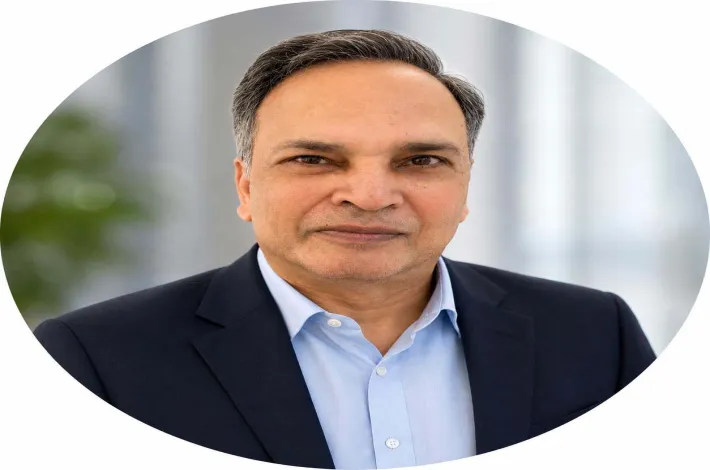
(S K Joshi served as Chief Secretary of Telangana from February 2018 to December 2019)