10 October, 2026 | 1:03 AM


Supreme Court setback for AP’s 34% BC quota
10-10-2026 12:00:00 AM
Metro India News | AMARAVATI
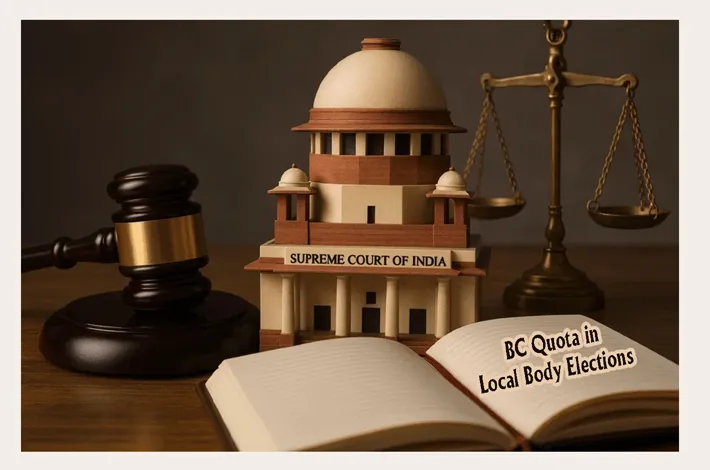
The Andhra Pradesh government’s bid to provide 34 per cent reservations to Backward Classes (BCs) in local body elections suffered a setback on Friday, with the Supreme Court dismissing its Special Leave Petition and upholding the High Court’s ruling that the total quota should not exceed 50 per cent. The Supreme Court endorsed the High Court’s position that reservations for BCs, when combined with those for Scheduled Castes (SCs) and Scheduled Tribes (STs), must remain within the 50 per cent ceiling.
Reacting to the verdict, Chief Minister N. Chandrababu Naidu assured BCs that the ruling would not diminish his government’s political commitment to their representation. He announced that the Telugu Desam Party (TDP) would allocate at least 34 per cent of its tickets to BC candidates in the forthcoming local body elections, even though the proposed quota had not secured judicial approval. The Chief Minister accused the previous YSR Congress Party (YSRCP) government of reducing BC reservations from 34 per cent to 24 per cent, resulting in the loss of approximately 16,800 positions for BCs in local bodies.
The Chief Minister said that the government had pursued the matter through the courts, engaging senior advocates in an effort to secure legal backing for the enhanced quota. He said that the government had attempted to restore 34 per cent reservations through GOs 105 and 1065, but the High Court subsequently struck them down. The party also invoked its political legacy, crediting its founder, N.T. Rama Rao, with championing BC empowerment and claiming that it had raised reservations in local bodies to 34 per cent in 1995.
The Supreme Court’s decision places the spotlight on the legal limits of reservation-based representation and the political parties’ strategies ahead of local body elections. While the judicial setback restricts the government’s attempt to implement the enhanced quota, the TDP’s promise to allocate 34 per cent of party tickets to BC candidates signals its intention to make political representation a central electoral issue.