30 September, 2026 | 9:44 PM


9 Tamil Nadu Students Turn to AI to Solve Everyday Problems
30-09-2026 09:11:18 PM
Can a three-minute WhatsApp video help workers learn without interrupting their work? Can a smartphone warn commuters about potholes and waterlogged roads before they encounter them? Can an AI-powered wearable help people with Parkinson’s remain active and independent?
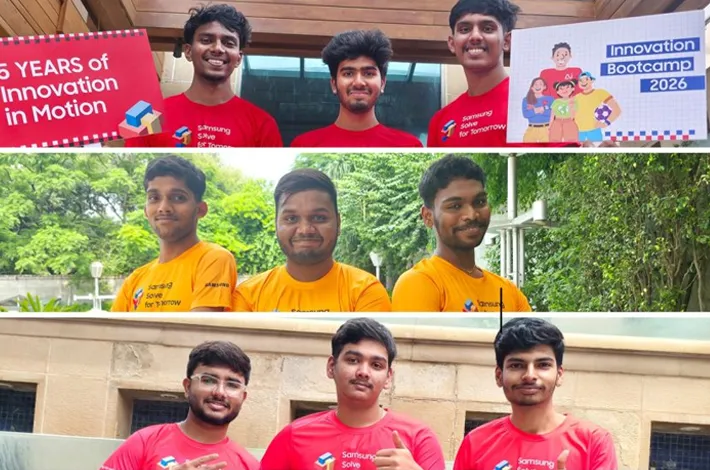
Three teams from Tamil Nadu—4 Percentage, JARVISS and Rogue—are attempting to turn these possibilities into reality. Their ideas have now taken them to the Top 20 of Samsung Solve for Tomorrow 2026.
Through MicroLearning AI, SafePath AI and NeuroStride, nine young innovators from Chennai and Coimbatore are using artificial intelligence, sensors and wearable technology to solve everyday problems in workplace learning, road safety and healthcare.For Sajith J, Mithran B and Kavin Nanadha M K of Coimbatore-based team 4 Percentage, the challenge was clear: conventional training programmes can be difficult to fit into the schedules of factory and frontline workers.
Their solution, MicroLearning AI, converts complex information into short, two-to-three-minute learning videos that can be delivered through WhatsApp in workers’ native languages. The platform is designed to make workplace learning easier to access, understand and complete without requiring employees to step away from their jobs for extended periods.
Chennai-based team JARVISS, comprising Sanjay Kumaar, G B Aswindbaghat and Varunprasath K, is developing SafePath AI to help commuters navigate potholes, waterlogged roads and other hazards more safely.For Chennai-based team Rogue, the challenge is deeply human: helping people with Parkinson’s manage involuntary tremors while retaining greater independence in their daily lives.
Team members Manoj Kumar Kasinathan, Jena R and Chriswin William D are developing NeuroStride, an AI-powered wearable designed to distinguish involuntary Parkinson’s tremors from intentional muscle movement. The device then seeks to provide targeted electrical stimulation to support more controlled movement.The team’s larger ambition is to develop an accessible, non-invasive solution that can help people with Parkinson’s perform everyday activities with greater confidence.