10 November, 2026 | 12:01 AM


The Rise & Fall of Brahmins
10-11-2026 12:00:00 AM
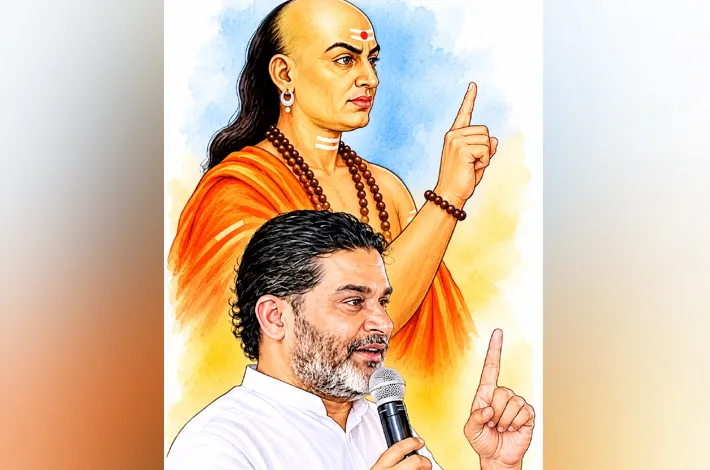
- ■ PK’s blunt message to Brahmins in Bihar’s Mithila: Reclaim your ancient strengths of knowledge and wisdom — or stay stuck in economic hardship and migration.
- ■ Shock claim: Nearly 18% of Muslims once voted for Brahmin candidates in the region… until sections of the community embraced BJP-style confrontational rhetoric and the support vanished.
- ■ Once the “land of scholars,” Mithila is now a region of unemployment and labour migration — even as Brahmin MLAs and MPs have held power for years without delivering prosperity.
- ■ For centuries Brahmins weren’t just priests — they were Rajgurus, advisors to kings, teachers, and architects of knowledge systems that shaped Indian civilisation.
- ■From Aryabhata’s calculation of Earth’s rotation and pi, to Sushruta’s pioneering surgeries and Chanakya’s Arthashastra — Brahmin scholars once drove breakthroughs in science, medicine, maths and statecraft.
- ■ Post-independence reality check: Land reforms, expanded education, and reservations steadily eroded the community’s traditional advantages in literacy, jobs and social influence.
- ■ The big shift: From being respected advisors who built broad coalitions to a community increasingly defined by identity politics and polarising rhetoric — and paying the social and political price.
- ■ Respect was never automatic — it came from wisdom, contribution and constru-ctive relations. Can Brahmins reclaim that path, or will nostalgia remain the only glory?
metro india news I hyderabad
Prashant Kishor’s recent address to the Brahmin community in Bihar’s Mithila region has ignited intense debate across social media platforms. Speaking in Darbhanga, the Jan Suraaj Party founder and MLA urged the community to reclaim its traditional strengths of knowledge and wisdom while fostering cordial relations with other groups. He highlighted how roughly 18 per cent of Muslims in the region had historically backed Brahmin candidates as public representatives.
That support, he argued, evaporated once sections of the community aligned with the BJP and adopted confrontational rhetoric against Muslims. Kishor contrasted Mithila’s past identity as a land of scholars with its present reality as a region marked by economic hardship and labour migration. His remarks frame a larger national conversation on the trajectory of the Brahmin community in India.
For centuries, Brahmins occupied a distinctive position in Indian society as custodians of knowledge, ritual, and counsel. They served as Rajgurus, advising kings on statecraft, ethics, and governance. Their role extended far beyond temples and ceremonies.
They functioned as teachers who transmitted learning across generations, as scholars who systematised vast bodies of thought, and as advisors whose counsel shaped administrative and moral frameworks. This status rested on intellectual achievement rather than mere birth. Respect flowed from demonstrated mastery of complex disciplines and from the community’s capacity to produce individuals who advanced human understanding.
Ancient Indian contributions to multiple fields bear the imprint of Brahmin scholars and rishis. In mathematics and astronomy, Aryabhata articulated the rotation of the Earth and calculated pi with remarkable precision in the fifth century. Brahmagupta formalised rules for zero and negative numbers, laying foundations that later travelled across continents.
These advances in the decimal place-value system transformed global computation. In medicine, Charaka compiled the Charaka Samhita, a comprehensive treatise on diagnosis, pathology, and treatment that remains foundational to Ayurveda. Sushruta detailed surgical techniques, instruments, and procedures including plastic surgery and cataract operations, earning recognition as an early pioneer of operative medicine.
Spirituality and philosophy flourished through the Upanishads and other texts that explored consciousness, ethics, and the nature of reality. Patanjali systematised yoga as a disciplined path integrating body, mind, and awareness. Chanakya, also known as Kautilya, authored the Arthashastra, a sophisticated manual of political economy, diplomacy, and administration that guided the Mauryan empire.
Even heterodox thinkers such as Charvaka contributed to materialist philosophy, demonstrating the range of intellectual inquiry within the broader tradition. These achievements positioned Brahmin scholars as fountains of knowledge across mathematics, astronomy, science, spirituality, yoga, and medicine, earning them respect that transcended regional and community boundaries.
During the freedom struggle, Brahmin leaders played prominent roles in articulating nationalist ideas and mobilising public opinion. Bal Gangadhar Tilak used newspapers and public platforms to demand self-rule and to revive cultural pride. Gopal Krishna Gokhale emphasised constitutional methods and education as instruments of reform.
Figures such as Madan Mohan Malaviya founded institutions that combined modern learning with cultural continuity. Their intellectual training and command over language enabled them to engage colonial authorities, draft petitions, and shape early organisational structures of the independence movement. The community’s historical emphasis on learning translated into disproportionate representation among the educated elite who led political and social reform efforts in the late nineteenth and early twentieth centuries.
The decades following independence witnessed a steady erosion of that elevated position. Land reforms diminished traditional economic bases in many regions. The expansion of education and opportunity to wider sections of society reduced the relative monopoly on literacy and administrative posts that Brahmins had once enjoyed. Reservation policies, introduced to address historical inequities, further altered access to government jobs and educational institutions.
In states such as Bihar and Tamil Nadu, demographic and political shifts accelerated the process. Mithila, once celebrated for its scholarly tradition, now sees many Brahmin families struggling with unemployment and migration for low-wage labour. Political representation alone has not translated into economic security. Kishor’s observation that Brahmin MLAs and MPs have held seats for years without resolving community hardship underscores this disconnect.
Over time, sections of the community appear to have shifted focus from the cultivation of knowledge and the maintenance of broad social relationships toward narrower identity assertions. The historical model of the advisor and teacher relied on intellectual authority and measured engagement with diverse groups. When political alignments prioritised polarising rhetoric over dialogue, earlier coalitions weakened.
The loss of Muslim electoral support in certain pockets, as described by Kishor, illustrates how confrontational postures can shrink the very social capital that once amplified influence. Respect that once stemmed from wisdom and utility gradually gave way to perceptions of isolation or entitlement. In public discourse, the community’s past glory is frequently invoked, while contemporary contributions to science, education, and public service receive less collective emphasis.
This trajectory reflects choices as much as external pressures. The traditional strengths of scholarship, teaching, and counsel remain available. Institutions of higher learning, research laboratories, and professional fields continue to draw talent from the community. Individuals still excel in medicine, engineering, academia, and administration. The difference lies in collective orientation.
Where earlier generations projected influence through mastery of knowledge systems and balanced social relations, later decades have seen greater reliance on political mobilisation and grievance narratives. Economic data from regions like Mithila reveal persistent challenges in employment and income mobility despite political visibility. Social media amplifies both pride in ancestral achievements and frustration over present circumstances, intensifying the sense of decline.
The storm generated by Kishor’s speech arises precisely because it confronts this gap between historical stature and current realities. By recalling the community’s role as repositories of wisdom and by pointing to the costs of strained inter-community relations, the remarks invite introspection.