30 August, 2026 | 4:31 AM


The stars can wait but planet Earth cannot, it needs us now
09-10-2025 12:00:00 AM
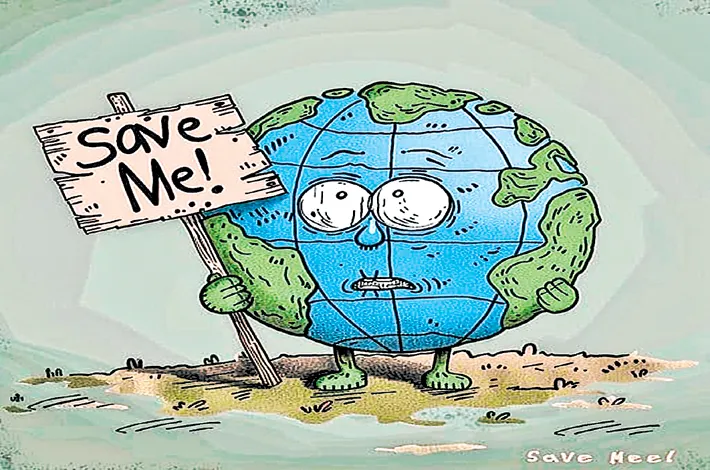
Talking about becoming a “multi-planet species” sounds exciting, but it feels more like a billionaire’s fantasy than a serious plan for everyone
Almost every week, we hear big news about space. NASA is planning to build a base on the Moon. Elon Musk keeps saying people will soon live on Mars. And India is getting ready to send humans to space with the Gaganyaan mission. The dream feels real: humans living on Mars, building homes on the Moon, mining asteroids. A brand-new chapter for mankind.
But before asking if we can do it, the bigger question is: do we really need to?
The idea of leaving Earth comes from one belief—that maybe our planet is too damaged, and it will be easier to start again on another world. But the truth is, space is not a safe place. When astronaut Subhanshu Shukla came back this year, his research showed how badly space affects the human body. The heart becomes weaker, the brain and nerves change, and the immune system slows down. Other astronauts have shown stress in their cells and needed months to recover after just a few days in orbit. Now think about Mars. It is freezing cold, with poisonous soil and no breathable air. Radiation storms there are much stronger than what we face on Earth. NASA says even one mission to Mars could double an astronaut’s lifetime risk of cancer. And survival would depend completely on machines—oxygen pumps, sealed domes, and protective suits. If just one thing fails, it’s over. That is not a second home. That is a dangerous gamble.
And even if you somehow survive, life would be miserable. Imagine never being able to step outside without a bulky suit. Imagine living in a closed dome where the air, water, and food all come from recycled systems. A cracked window or broken pipe is not just a nuisance—it’s life or death. Children, if ever born on Mars, would grow up indoors, never feeling rain or walking under open skies. The “Martian dream” sounds more like life in a giant lab, not a new paradise.
Yes, scientists are thinking of long-term ideas like using microbes to slowly make Mars more friendly for life. These microbes could one day help create oxygen or change the soil. But that is not happening anytime soon. It could take centuries. For now, there is no Planet B.
India’s role in space makes this story even more special. In 2014, ISRO reached Mars on its very first try. The whole mission cost less than a Hollywood space movie. In fact, people joked that India reached Mars for less money than it takes to make a “cup of tea” for everyone in the UK. The Mars Orbiter Mission was not just a scientific victory; it showed the world that space was no longer a playground of the rich nations alone. Then in 2023, Chandrayaan-3 landed near the Moon’s south pole, an area no one else had dared to attempt. And now, Gaganyaan is preparing to take Indian astronauts to space in an Indian spacecraft.
What makes this different is the intention. India is not promising colonies or empires. Its missions are about learning, exploring, and building knowledge. That quiet, thoughtful approach matters.
Because space is not only about rockets. It is about perspective. Astronauts often talk about something called the “overview effect”. From space, they see Earth as a tiny blue ball floating in a sea of black. No borders, no divisions, just one fragile planet carrying all of life. Many astronauts cry when they see this. They come back saying their priorities have changed, that protecting Earth is the only mission that matters.
And that’s the irony. Even as we dream of living on Mars, we have not yet fixed life on Earth. Climate change is already reshaping coastlines. Cities like Mumbai and Jakarta face the threat of rising seas. Delhi struggles with smog so thick it feels like a permanent season. Millions of people still do not have clean drinking water or enough food. Forests are vanishing, animals are going extinct, and temperatures are climbing year after year. If we cannot take care of Earth, the only planet built for life, why do we think we will succeed on Mars, a desert with no air and no water?
This does not mean we should stop exploring space. Not at all. In fact, space research already helps life on Earth every day. Satellites help farmers grow crops, warn villages about cyclones, and connect people in remote areas. Mars rovers teach us how planets are born and change over time. Chandrayaan found signs of water ice on the Moon, which could be important for future missions. The GPS on our phones, the weather reports we depend on, even the disaster warnings that save lives—all are gifts of space science. Exploration is important. The point is that we must do it for knowledge, not as an escape plan.
The stars will wait. They will still be there a hundred years from now. But Earth may not be the same. Talking about becoming a “multi-planet species” sounds exciting, but it often feels more like a billionaire’s fantasy than a serious plan for everyone. India’s story in space shows another path—one that is simple, careful, and driven by science, not ego.
So yes, let us keep sending rockets, building stations, and dreaming of Mars. But let us also accept that our first mission is here at home: to settle Earth properly—fairly, peacefully, and sustainably.
Space may be our future. But Earth is our only present. And it needs us now.