23 October, 2026 | 4:56 AM


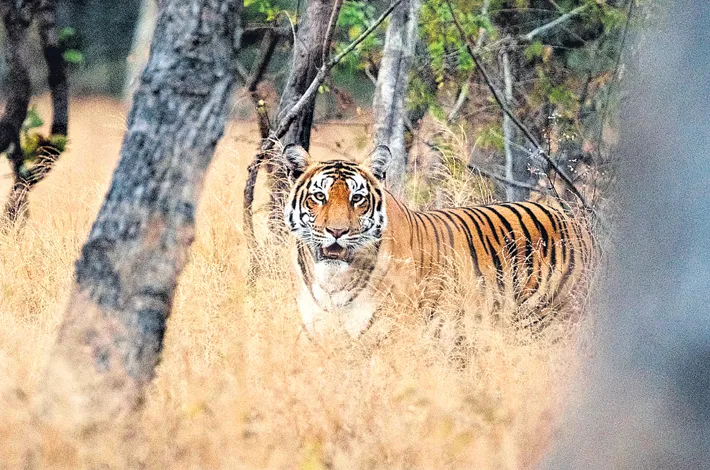
50 tiger sightings recorded in Amrabad in 2025
21-01-2026 12:00:00 AM
Currently, safaris are closed from January 20–25, 2026 for the All India Tiger Estimation exercise involving over 450 personnel across 253 beats.
Over the past four years, Amrabad Tiger Reserve (ATR) has transformed into a professionally managed, conservation-led wildlife destination with a transparent and visitor-friendly tourism model. Since October 2025, the reserve has recorded nearly 50 tiger sightings, reflecting healthier habitats and stronger protection measures. Visitors can currently experience wildlife through three curated safari circuits: Farhabad (16 km), Gundam (35 km) and Akkamahadevi Caves (14 km), with a new 20 km Kollam route ready for opening soon.
ATR’s tourism framework integrates conservation with community welfare, with all 18 safari vehicles operated by trained members of the Chenchu tribe as drivers and nature guides. The reserve is upgrading visitor amenities through bio-toilets, clean drinking water facilities and sustainable infrastructure in line with Government of India norms. Solar-powered borewells and water holes have been strengthened to support wildlife year-round. Safari revenues are routed transparently to the Tiger Conservation Foundation for conservation and community development, backed by digitized check-post operations.
Tiger census begins
The wildlife census started in Adilabad on Tuesday as part of the All India Tiger Estimation in the district. Usually, the census is confined to Kawal Tiger Reserve but this time, it has been extended to forest corridors. The previous census happened four years ago.
The census is being conducted across 171 beats in nine ranges under three forest divisions. While 170 volunteers from Telangana, Andhra Pradesh, Karnataka and Maharashtra have registered for the census work, about 50 are participating in the survey.
According to Adilabad Forest Divisional Officer Chinna Vishwanath Bussa Reddy and Utnoor FDO Aravind, the first three days of the survey will be dedicated to tracking herbivorous animals and the next three days for transit animals. The herbivorous animal survey will be carried out during morning and evening hours.