28 October, 2026 | 6:58 AM


Watching NSE Transform India’s Markets from Chaos to Confidence
08-06-2026 12:00:00 AM
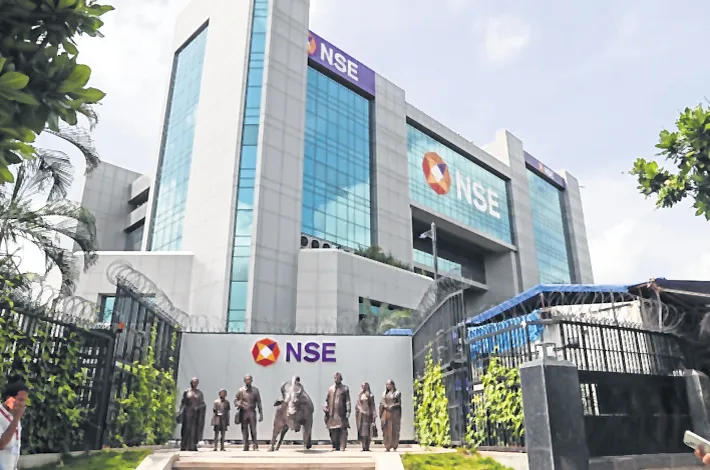
I have seen the Indian stock markets in its many avatars over the years. Some have been inspiring while, some frustrating, and some that tested your faith in the system itself. There was a time, some decades ago, when markets felt like closed clubs. Information moved in whispers, access depended on who you knew, and the small investor often stood at the periphery with hopes, but more with vulnerability.
And then came The National Stock Exchange
When NSE was set up in the early 1990s, many of us in the market didn’t immediately grasp how profound the change would be.
But looking back now it is clear that it wasn’t just a new stock exchange. It was a new way of thinking. For the first time, there was a serious and genuine attempt to put the investor right at the centre of the ecosystem not the intermediary, and definitely not the insiders.
I still remember the skepticism when electronic trading was introduced. Screens replacing trading floors. Orders matched by machines rather than by shouting brokers. It felt impersonal at first.
But what we didn’t fully appreciate then was the quiet revolution this would unleash. With screen-based trading, geography stopped mattering. Whether you were sitting in Mumbai, Madurai, or a small town you won’t find on most maps, the price you saw was the same, the opportunity was the same. That was a powerful equaliser.
For the small investor, this was nothing short of liberation
Before NSE existed, transparency was often spoken about but never really experienced. Prices could feel opaque and the execution exemplified the word ‘uncertainty’. NSE changed that equation. Real-time data, anonymous order matching, and a system-driven process brought a wave of fairness that markets had long needed. It wasn’t perfect in the beginning but a distinct and decisive step towards trust.
And in markets, trust is everything
Over the years, what has impressed most is that NSE didn’t stop at fixing what was broken. It kept asking what more can it do for the investors. Whether it was introducing derivatives, expanding into new asset classes, or building robust risk management systems, the effort was always forward-looking. There was a sense of anticipation, almost as if the exchange was trying to solve problems before they fully emerged.
Take connectivity, for instance. Today, we take it for granted that anyone with a smartphone can participate in the markets. But this kind of access didn’t happen by accident. It was a deliberated process through technology, infrastructure, and a vision that markets should not be confined to metropolitan cities or certain institutions. I’ve met investors from Tier-2 and Tier-3 cities who speak the language of markets with confidence today, much more like anyone in the metros. That, to me, is easily one of NSE’s quietest but most meaningful achievements.
There is also something to be said about discipline. Markets can be emotional places which are driven by greed in good times and fear in bad ones. NSE’s emphasis on risk management, clearing mechanisms, and settlement systems has provided a much-needed anchor. As someone who has lived through market cycles, I can say this with conviction that strong systems don’t just protect investors, they sustain markets.
But perhaps the most heartening change has been cultural
India was once described as a nation of savers. Fixed deposits, gold, real estate was a comfort zone and in those times equity investing was seen as risky, even speculative. Today, that narrative is changing. Millions of first-time investors are entering the capital markets, not out of compulsion, but with curiosity and confidence. And while many factors have contributed to this shift, NSE’s role in building awareness, trust, and accessibility cannot be overstated.
Of course, the journey is far from complete. Risks evolve as much as the markets evolve and investor expectations evolve even faster. The next phase will demand even greater responsibility especially in an age of algorithmic trading, rapid information flows, and global interconnectedness and geopolitical uncertainties. Now, the challenge will be to preserve the core principles of fairness and transparency while adapting to emerging new realities.
But if there is one thing history tells us it is that only the institutions built around the investor tend to endure the test of time.
NSE’s story, in many ways, is the story of India’s financial awakening. It is about breaking barriers, building trust, and giving ordinary people a stake in the country’s growth. For someone like me, who has watched this transformation from close quarters, there is a certain satisfaction and a quiet pride in seeing how far we have come. Because at the end of the day, markets are not just about numbers on a screen. They are about people. And for once, the system seems to remember that.