28 September, 2026 | 10:37 AM


Why Obstacles to Development?
22-03-2026 12:00:00 AM
■ Government Projects Face More Objections Than Public Approval
■ Disputes from the Very Start of Projects
■ Land Acquisition as the Main Issue
■ Who Really Benefits from Development?... Who Suffers?...
■ Allegations of Lack of Transparency in Government Initiatives
■ Analysts Say People's Participation is Essential in Development
CL Rajam
It is natural for governments at the national and state levels to launch numerous large-scale programs in the name of development. They are implementing projects such as new roads, flyovers, industries, river development projects, and expansion of urban infrastructure. Governments claim that through these projects, economic growth will be achieved and employment opportunities will increase. However, when these projects come into implementation, they face opposition from the public. The fact that development programs now receive more objections than public approval has become a major topic of discussion.
In Telangana, several development initiatives recently undertaken by the government are leading to significant debates. With goals such as expanding infrastructure, urban development, and promoting industries, the government is announcing massive projects. Still, whenever these projects move toward implementation, objections and protests from local people are also heard. This raises the question: Is development truly beneficial for all people? Or does it benefit only a few?
Three major development programs currently under discussion in the state are the Musi River Rejuvenation Project, Industrial Corridors, and the Regional Ring Road (RRR). Discussions are ongoing around these three projects regarding development and public benefits.
Hopes and Concerns Over 'Musi' Development...
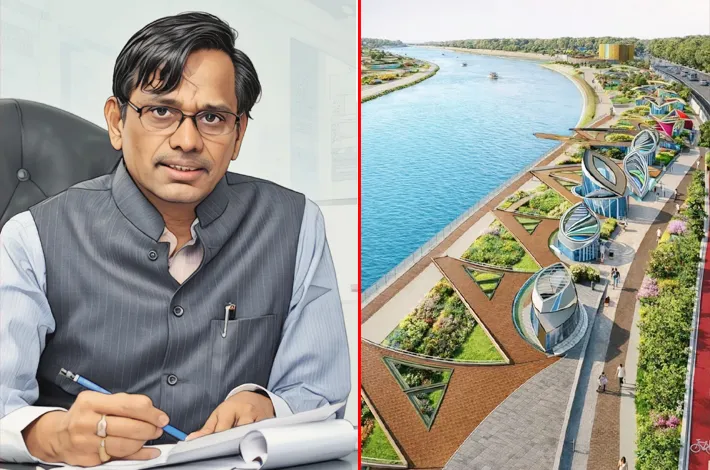
The government considers the Musi River Rejuvenation Project—flowing through the middle of Hyderabad—as a key program in urban development. Through this project, it aims to achieve goals such as cleaning the river, developing a riverfront, and expanding tourism opportunities. However, on the other hand, numerous objections are being raised against this project. The Musi River Rejuvenation Project, which is the lifeline of Hyderabad city, is currently sparking intense debate in state politics and among public groups. While the government describes it as a crucial project for the city's future, issues such as massive expenditures, lack of transparency, and allegations of corruption are causing controversies.
Differing estimates are heard regarding the Musi project's cost. Initial estimates of around ₹16,000 crore have reportedly risen to ₹1.5 lakh crore, according to allegations. This huge discrepancy is raising suspicions among the public, and opposition parties and civil society groups are asking whether this is a development project or a platform for massive corruption opportunities. If the government does not provide proper explanations, opinions suggest it could turn politically adverse.
Despite the controversies surrounding the Musi project, there is a clear need for it from the public perspective. No one denies the necessity of this project due to increasing pollution in the city and the risk of floods. But the real question is how it will be implemented. Analysts say that placing the Detailed Project Report (DPR) in the public domain and taking suggestions from people and experts is essential. Directly calling for tenders without doing so will only increase suspicions. Along with this, details such as how many families will be affected and their rehabilitation should be included in the DPR. Experts suggest implementing the project in phases rather than all at once on a massive scale. Criticisms include abnormally inflating estimates, tailoring qualifications to favor certain companies, tenders with few bidders, and leading to cartel systems. However, the responsibility lies with the government to clarify whether the Musi project is expenditure in the name of development or real change for the people.
Land Disputes in Industrial Corridors and RRR...
The government is planning to develop several industrial corridors in Telangana to promote industrial growth. Officials say these are key to attracting investments and increasing employment opportunities in the state. The government believes that establishing industries will bring jobs to local youth and accelerate regional development. However, the need to acquire land for industries is causing anxiety among farmers. Farmers are worried about how they will sustain their livelihoods after losing land, and even though the government provides compensation, they argue it is insufficient for the future. In some areas, farmers have raised objections to the land acquisition process and even held protests.
Another key project the government has taken up to expand development around Hyderabad is the Regional Ring Road (RRR). The government says this road will reduce traffic pressure on the city and accelerate development in surrounding districts. Officials believe that once this road is completed, industries, logistics hubs, and real estate development will progress rapidly. However, land acquisition has become a problem here too. Due to lack of clarity on compensation and rehabilitation, farmers are expressing objections.
Disputes from the Start of Projects...
Currently, many development projects in the state are becoming centers of controversy right from the initial stage.
For every major project announced by the government, support comes from one side, while objections arise from the other. Local people, environmental activists, social organizations, and political parties are raising questions from various angles. In some cases, these objections turn into protests. In others, cases are filed in courts. As a result, project implementation is delayed or requires changes.
The main controversy surrounding development projects is land acquisition. Implementing industries, roads, and urban expansion projects requires vast amounts of land. In this process, farmers' lands and surrounding village areas have to be acquired for government needs. Farmers are concerned about what will happen to their livelihoods after losing land. For families dependent on agriculture, losing land means not just losing property but losing their source of livelihood, they say. They argue that along with compensation, long-term security through rehabilitation schemes is necessary.
Who Benefits from Development?...
A major question has become who actually reaps the benefits of the development programs undertaken by the government. Who really gains from these projects? Are ordinary people's living standards improving as governments claim? Or are greater benefits going only to certain business groups and investors? Such arguments are being heard. Infrastructure development increases city land values, expands real estate business, and attracts investments. However, at the same time, people who lose land have to struggle for new livelihoods. In some cases, while land prices rise due to development projects and some benefit, the farmers who lost land face financial difficulties.
When large projects are announced, the government presents them as programs to improve people's living standards. It says roads, flyovers, riverfront development, industries, and real estate projects are necessary for the state's economic growth. But by the time projects reach the implementation stage, numerous suspicions arise among local people. Issues such as land acquisition, rehabilitation problems, environmental impact, and lack of transparency are causing anxiety among the public. Analysts say that suspicions increase further because complete information about the project is not provided to people in advance.
Lack of Transparency... Need for Public Opinion...
Another reason for growing suspicions among people about development projects is the lack of transparency. In many cases, project details, cost estimates, land requirements, environmental impact, etc., are not fully known to the public.