15 October, 2026 | 7:19 PM


Alternative fuels gain traction against India’s LPG dependence
27-05-2026 12:00:00 AM
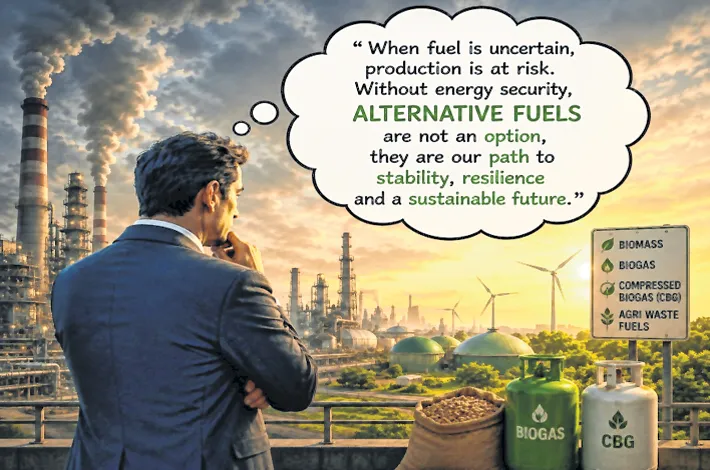
Nearly 40% imported LNG consumed by industries, increasing vulnerability to geopolitical tensions and severe energy-price shocks
Commodity Desk MUMBAI
India’s growing dependence on imported LPG and natural gas is emerging as a major concern for industries that rely heavily on continuous thermal energy and steam generation. Amid escalating geopolitical tensions in West Asia and volatile global fuel prices, businesses are increasingly looking at alternative fuels such as biomass, biogas, and compressed biogas (CBG) to strengthen energy security and reduce operational risks.
“For industries dependent on uninterrupted thermal energy and steam production, the current fuel pricing situation is not just about cost, but also about energy security and operational resilience,” said Amit Badlani, Managing Director of Vihaan Clean & Green Tech and Go Green Mechanisms.
India imports over 60% of its LPG requirement and more than half of its natural gas in the form of LNG. Nearly 40% of imported LNG is consumed by industries including textiles, chemicals, pharmaceuticals, food processing, paper, and manufacturing.
With global LNG prices fluctuating between $10 and $15 per MMBtu, industrial units remain exposed to supply disruptions and rising fuel costs.
Against this backdrop, biomass energy is increasingly being viewed as a scalable domestic solution. India generates nearly 500 million tonnes of biomass annually from agricultural waste such as rice husk, bagasse, sawdust, cotton stalk, and groundnut shells. A significant portion of this waste is either discarded or burnt, contributing to pollution. These fuels can be used in industrial boilers and steam systems, reducing dependence on imported fossil fuels. Biogas and gobar gas are also gaining traction, particularly in rural and agro-based industries. Produced through anaerobic digestion of cattle dung, crop residue, and food waste, biogas offers both energy generation and waste management benefits. The by-product slurry can also be reused as organic fertilizer, creating a circular energy ecosystem. According to Badlani, the future lies in integrated and decentralized energy systems combining biomass, biogas, CBG, recycled wastewater, and waste-to-energy solutions to improve India’s industrial resilience and long-term energy security.