20 October, 2026 | 3:00 PM


Aluminium reforms to add local value
19-06-2026 12:00:00 AM
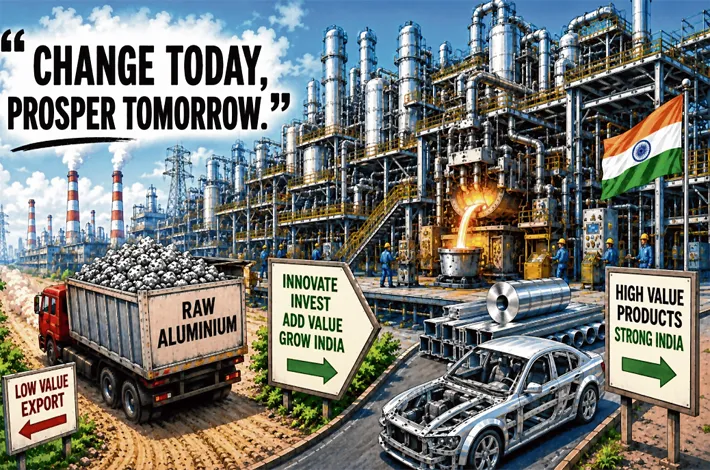
GTRI urges aluminium reforms, saying value-added manufacturing can boost jobs, exports and industrial competitiveness
Commodity Desk
MUMBAI
India should overhaul its aluminium tariff structure to strengthen domestic manufacturing, improve value addition and reduce dependence on imported finished products, according to the Global Trade Research Initiative (GTRI).
The think tank has recommended a series of policy measures, including removing import duties on unwrought aluminium, correcting the inverted duty structure and imposing a 20% export duty on primary aluminium metal.
Tariff distortions hurt industry
According to GTRI, existing tariff policies have created significant distortions across India's aluminium value chain. While primary aluminium producers continue to benefit from strong margins, downstream manufacturers that convert aluminium into higher-value products face rising input costs and increasing competition from imported finished goods. Aluminium plays a critical role in modern industries, including power transmission, renewable energy, electric vehicles, railways, construction, aerospace, defence and packaging.
As India increases investments in infrastructure, clean energy and advanced manufacturing, demand for aluminium products is expected to rise sharply in the coming years. Despite having abundant bauxite reserves, integrated refining and smelting capacity, and access to relatively low-cost power, India is not fully leveraging the economic potential of its aluminium sector, GTRI Founder Ajay Srivastava said. The current policies encourage exports of primary aluminium while making it more difficult for domestic manufacturers to compete in global markets.
This has resulted in India exporting raw aluminium and importing value-added products, limiting employment generation, investment opportunities and export competitiveness.
Lessons from China
GTRI highlighted China’s aluminium policy as a successful example of promoting domestic manufacturing. China treats aluminium as a strategic industrial input and discourages exports of primary metal through higher export duties. The country instead channels aluminium into domestic industries, helping build globally competitive downstream manufacturing sectors and generating substantial employment. To replicate this success, GTRI has suggested removing the 7.5% import duty on unwrought aluminium, ensuring that duties on raw materials remain lower than those on finished products. It has also recommended reviewing free trade agreement concessions that allow finished aluminium products to enter India at low or zero duties. GTRI further proposed a 20% export duty on aluminium metal, arguing that it would encourage domestic processing and value addition. China currently imposes a 30% export duty on aluminium ingots.
The data highlights the challenge. In 2025-26, India exported around $7 billion worth of aluminium and aluminium products, with 61.4% comprising primary aluminium metal and only 38.6% value-added products. By comparison, China exported $42.5 billion worth of aluminium products, with 97.2% consisting of value-added goods and just 2.8% primary metal, underscoring the benefits of a mfg-focused policy approach.
(With inputs from PTI)