22 September, 2026 | 1:13 PM


AP Cabinet Approves Pedestrian Safety Policy
08-08-2026 12:00:00 AM
Metro India News | AMARAVATI
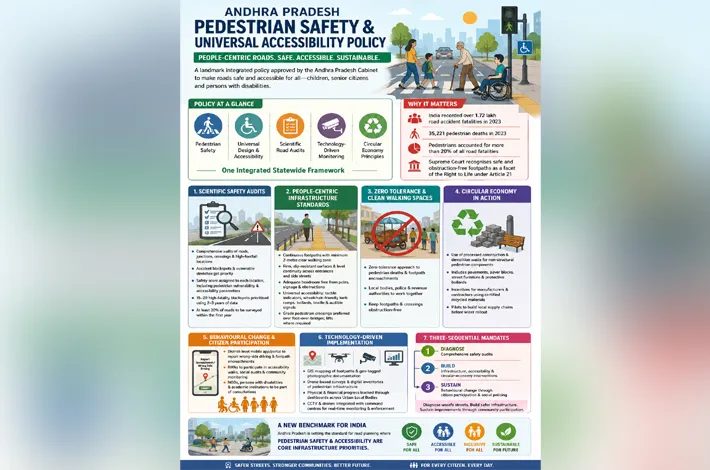
The Andhra Pradesh Cabinet has approved a comprehensive Pedestrian Safety & Universal Accessibility Policy, creating a unified framework that combines pedestrian safety, universal design, scientific road audits, technology-based monitoring and circular economy principles. The policy, along with detailed operational guidelines, aims to transform the planning, construction and monitoring of roads across the state.
The new framework marks a shift from vehicle-centric road planning to people-centric infrastructure, ensuring roads are safer and more accessible for everyone, including children, senior citizens and persons with disabilities. It will apply to urban, rural and peri-urban areas, satellite towns and urban fringes, covering both new road projects and the retrofitting of existing infrastructure.
The initiative comes against the backdrop of India's road safety crisis. In 2023, the country recorded over 1.72 lakh road accident deaths, including 35,221 pedestrian fatalities, accounting for more than 20 per cent of all road deaths. The policy also aligns with the Supreme Court's observations recognising safe and obstruction-free footpaths as part of the Right to Life under Article 21.
A key feature of the policy is the institutionalisation of comprehensive road safety audits. Roads, junctions, pedestrian crossings and high-footfall locations will be scientifically assessed, with accident blackspots and vulnerable stretches receiving priority attention. Each location will be assigned a measurable safety score incorporating pedestrian vulnerability and accessibility parameters. The government plans to prioritise 15–20 high-fatality blackspots based on two to three years of accident data, while surveying at least 20 per cent of roads during the first year.
The policy prescribes detailed standards for pedestrian infrastructure. Footpaths must provide a minimum two-metre clear walking space with slip-resistant surfaces and uninterrupted continuity across entrances and side streets. Universal accessibility measures include tactile paving, wheelchair-friendly kerb ramps, braille and audible signals, and protective bollards. Wherever feasible, at-grade pedestrian crossings will replace inaccessible foot-over-bridges, with lifts provided where necessary. The government has also adopted a zero-tolerance approach to pedestrian deaths and footpath encroachments. Urban local bodies, police and revenue authorities will work together to keep walkways free of obstructions.
A distinctive aspect of the policy is its emphasis on the circular economy. It mandates the use of processed construction and demolition waste for non-structural pedestrian infrastructure such as paver blocks, pavements, street furniture and protective bollards. Incentives will be offered to manufacturers and contractors using certified recycled materials, while pilot projects will help develop local supply chains.
Technology and citizen participation are central to implementation. GIS mapping, geo-tagged photographs, drone surveys and digital inventories will monitor pedestrian infrastructure, while dashboards will track physical and financial progress across urban local bodies. A district-level mobile app or portal will enable citizens to report footpath encroachments and traffic violations such as wrong-side driving. Resident Welfare Associations, NGOs, persons with disabilities and academic institutions will also be involved in social audits and accessibility walks. Through this integrated policy, Andhra Pradesh aims to set a new national benchmark by making pedestrian safety, universal accessibility and sustainable road planning central to future infrastructure development.