22 September, 2026 | 12:31 AM


IIT-B Suicide Triggers Students demand reforms
22-09-2026 12:00:00 AM
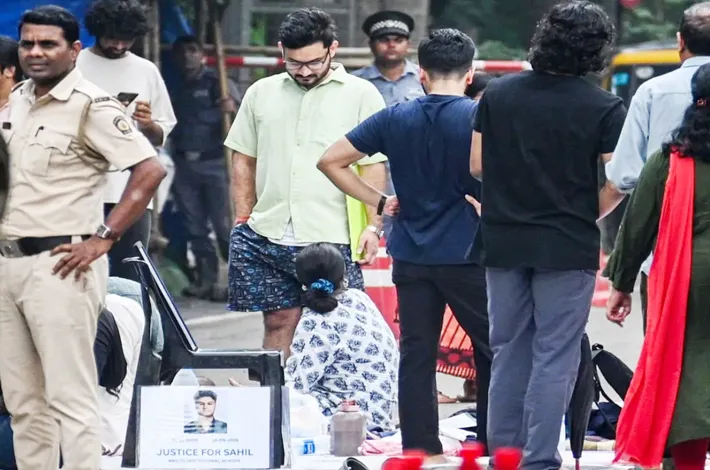
metro india news I hyderabad : The death by suicide of a second-year student at the Indian Institute of Technology Bombay has triggered intense protests, a police investigation, and renewed national scrutiny of academic pressure, mental health support, and institutional accountability in India’s elite engineering institutes. Sahil Ravindra Wakode, a 20-year-old BTech student in the Department of Energy Science and Engineering from Yavatmal, Maharashtra, was found dead in his hostel room on the evening of September 18.
Earlier that day, during a mid-semester examination, he was caught using a mobile phone. According to an official statement from IIT Bombay, he had uploaded the question paper to ChatGPT to seek answers. The institute said no disciplinary action was initiated. The instructor and head of department counselled him and assured him that the incident would not adversely affect his academic career. He returned to his hostel and was later found hanging. Students quickly gathered in large numbers near the main gate, holding sit-ins that continued for three days.
They demanded greater transparency, better mental-health provisions, changes to disciplinary processes, and the resignation of Director Prof. Shireesh B. Kedare, who has held the post since May 2024. A video of Kedare interacting with protesters circulated widely, in which he indicated he might resign around September 21. As of Monday, however, there was no official confirmation of any resignation from the institute, the Ministry of Education, or Kedare himself.
The institute’s website continued to list him as director. Late on Sunday, after a prolonged meeting livestreamed by students, Kedare signed an 18-point charter submitted by the protesters. The demands include an independent investigation into Wakode’s death with interim and final reports by specified deadlines, action against the invigilating professor subject to due process, an open house discussion, mental-health reforms, and assurances that peaceful protesters would face no repercussions.
Details were expected to be discussed further at an open house on Monday. The Mumbai Crime Branch has taken over the probe. Wakode’s parents filed a complaint alleging caste-based harassment and institutional pressure over previous months. Police registered a case of abetment of suicide under the Bharatiya Nyaya Sanhita and invoked provisions of the Scheduled Castes and Scheduled Tribes (Prevention of Atrocities) Act against a faculty member. The complaint also referenced the director. IIT Bombay has denied any caste discrimination, stating that caste-related information of students is not available to faculty or administrators in routine functioning and that no prior formal complaint had been recorded by the student. The episode is not isolated.
Data compiled by IIT alumnus Dheeraj Singh from RTI responses and media reports show at least 171 unnatural deaths, the large majority suicides, among IIT students over the past two decades, with a sharp rise in recent years. Across the IIT system, 74 such deaths were recorded between September 2021 and mid-September 2026, including multiple cases at IIT Bombay itself this year. Pattern analysis indicates clusters around examination periods. These tragedies highlight deeper structural pressures that characterise India’s most competitive higher-education institutions.
Entry into the IITs remains one of the most selective processes in the world, funnelled through the Joint Entrance Examination after years of intensive coaching. Once inside, students face a rigorous curriculum, continuous evaluation, high expectations of placement packages, and a culture that often equates self-worth with academic rank and career outcomes. The rise of generative AI tools has added a new layer of complexity to academic integrity rules;
IIT Bombay’s July 2026 disciplinary framework treats unauthorised possession or use of mobile phones, smartwatches, or AI gadgets during exams as serious malpractice potentially attracting an FR grade and semester suspension.
Mental-health resources on many campuses have expanded in recent years, yet students and alumni groups frequently report that counselling services remain insufficient relative to demand, stigma persists, and faculty training in sensitive handling of academic setbacks is uneven. Parental expectations, financial investments in coaching, and the social prestige attached to an IIT degree further amplify the stakes of any perceived failure. Critics argue that the system still prioritises high-stakes testing and ranking over holistic development and psychological resilience.
Defenders of rigorous standards counter that diluting academic expectations would undermine the very excellence that makes these institutes globally competitive.The IIT Bombay administration’s decision to engage with the 18-point charter and schedule further dialogue represents a step toward addressing immediate grievances.
Whether it leads to lasting reforms in how elite institutions detect distress, handle disciplinary matters with empathy, and support students from diverse socioeconomic and caste backgrounds will be closely watched. For now, the death of Sahil Wakode has once again forced a conversation that extends far beyond one campus: how India’s premier technical institutes can sustain excellence without exacting an intolerable human cost.
Suryanarayana did nothing wrong
Q: Were you and Sahil in the same course? And were you there when the professor caught him cheating?
Girl: Yes, we were in the same course. Around 1 PM, the Suryanarayana sir caught Sahil cheating. He didn’t shout at him. He said, “What are you doing? This is unfair to other students. Don’t panic. Everyone makes mistakes.”
Q : But many are saying Prof. Suryanarayana discriminated against students based on caste?
Girl: Never. Suryanarayana sir was one of the best prof. we had. He always taught us with jokes in between and never treated anyone differently. My grades in Power Electronics have improved a lot because of him
* We apologise for the statements contained in our earlier communication concerning the circumstances surrounding the unfortunate demise of Sahil.The details and circumstances leading up to the incident remain subject to investigation by the appropriate authorities. In view of the ongoing investigation, it was inappropriate to have set out or characterised details relating to the events preceding his demise before they had been duly established through the appropriate investigative process.