25 October, 2026 | 1:09 AM


22 AP legislators face women’s crime cases
25-10-2026 12:00:00 AM
Metro India News | AMARAVATI
Andhra Pradesh has emerged as the second-highest state in India in terms of sitting legislators facing criminal cases related to offences against women, according to a report by the Association for Democratic Reforms (ADR), raising fresh questions about candidate selection, political accountability and the protection of women. The report, based on an analysis of election affidavits filed by 4,881 sitting Members of Parliament and Members of Legislative Assemblies across the country, identified 187 legislators facing cases related to crimes against women. The list includes 19 MPs and 168 MLAs, with 14 legislators facing rape-related cases under Section 376 of the Indian Penal Code, according to the report. 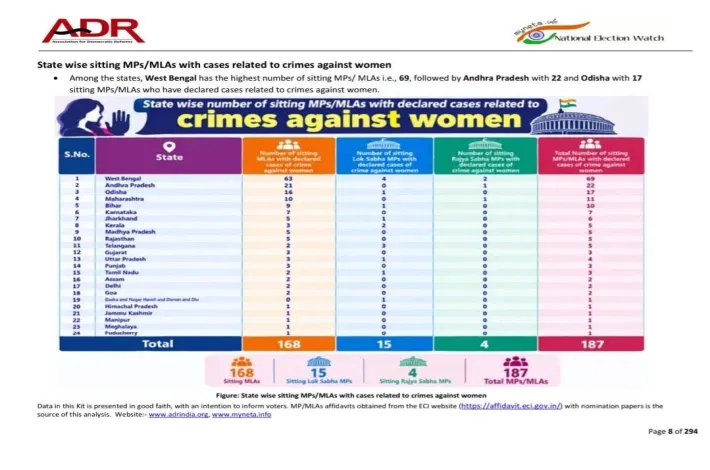
Andhra Pradesh accounts for 22 such legislators, comprising 21 MLAs and one MP, placing the state second nationally behind West Bengal, which has 69. Odisha ranked third with 17 legislators. According to the supplied report, 18 TDP representatives including 17 MLAs and one MP, feature among legislators facing cases related to crimes against women. The report also identifies four ministers in the Andhra Pradesh coalition government as facing such cases. The findings nevertheless raise concerns about how political parties assess candidates before distributing tickets, particularly when allegations involve serious offences against women.
Telangana, meanwhile, has five legislators in the report’s category, including three Lok Sabha MPs and two MLAs. At the national level, the BJP has the highest number of legislators facing cases related to crimes against women, with 106 representatives, 95 MLAs and 11 MPs, identified in the report. The Congress follows with 20, while the TDP is listed third with 18 representatives. ADR has advocated stricter disqualification measures for those with criminal backgrounds and faster trials through dedicated courts to reduce delays in the justice system.
For Andhra Pradesh, the report presents a challenge that goes beyond party politics. The key questions are whether parties adequately scrutinize candidates, disclose relevant information to voters and respond transparently when serious allegations emerge against their representatives. While the report does not establish the guilt of those named, it places renewed emphasis on the need for political parties to demonstrate that women’s safety and public trust are central to their candidate-selection decisions.