13 October, 2026 | 12:08 AM


Battleground Bengal- Can BJP stop Trinamool 4.0
17-03-2026 12:00:00 AM
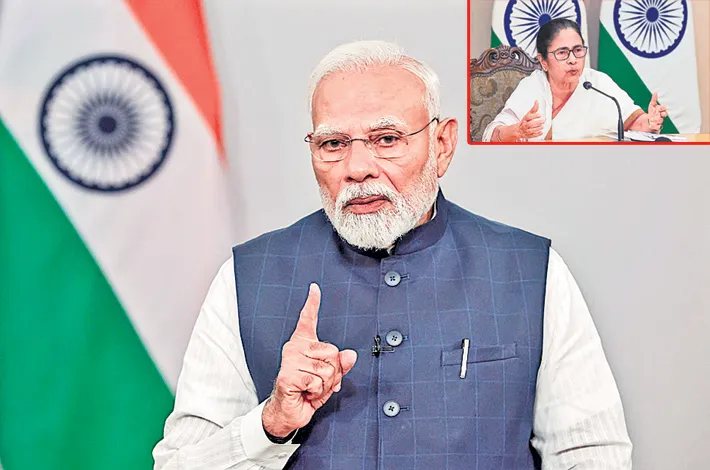
With the announcement of assembly elections in West Bengal, the bipolar contest between the Trinamool Congress (TMC) and the Bharatiya Janata Party (BJP) is shaping up as one of the most consequential political battles in the state. For both the BJP and Chief Minister Mamata Banerjee, this election is not merely about forming the next government. It carries deeper implications for political survival, ideological positioning and the future direction of the state’s politics.
Three-time Chief Minister Mamata Banerjee and her TMC are chasing a historic fourth term, banking heavily on welfare delivery, Bengali pride, and grassroots strength. A victory would not only consolidate her position within the state but could also strengthen her standing in national opposition politics. For the BJP, the stakes in West Bengal go far beyond the arithmetic of seats. Having emerged as the main opposition after surging to 77 seats in 2021, the party is mounting its strongest challenge yet by hammering issues of border security, allegations of illegal migration from Bangladesh, unemployment and anti-incumbency.
A senior journalist noted that despite allegations of political violence, corruption and incidents related to women’s security under Mamata Banerjee’s rule, her popularity has remained largely intact. She continues to be the unrivalled top leader in West Bengal. However, he pointed out that Mamata has completed three terms, and a fourth would be unprecedented. While she has delivered welfare schemes, development in the state—a large, strategically important border state—has been limited. He argued that this time the BJP appears far more sensitive to local practices, rather than imposing other choices.
A TMC leader ejected any suggestion of nervousness within her party. She asserted that TMC would perform even better than last time and credited Mamata Banerjee as a “very gentle and responsible person.” Referring to past elections marred by violence and irregularities, she expressed confidence that the Election Commission would ensure a fair poll this time. She criticised the previous Special Intensive Revision (SIR) exercise, claiming nearly 18 BLOs (Booth Level Officers) were lost and the process was mishandled.
A BJP spokesperson responded sharply, dismissing the notion that everything is “fine” in the state. She invoked the BJP’s new slogan—“Where Mukherjee was born, that Bengal will be ours”—signalling a strong push to reclaim the state. Breaking down the party’s strategy, she said the narrative has shifted: the BJP is now far more sensitive to Bengali sentiments, including religious and cultural preferences.
She outlined five concrete promises made by the Union Home Minister during his recent visit: implementation of the Seventh Pay Commission for government employees, transparent recruitment for all state government jobs, reopening positions shut down by the current regime, extending five years of service for those affected by the SSC (School Service Commission) scam and teacher recruitment scandal, and the complete removal of infiltrators.
The journalist reinforced this point, highlighting the Election Commission’s decision to clean up millions of fake voters through the new electoral roll revision and the appointment of a governor with a tough background. He predicted that intimidation, threats, murders, and arson—the TMC’s “old playbook” inherited from the Communist era—would be kept to a minimum. “This certainly takes some of the wind out of their sails,” he observed.
TMC leaders accused the BJP of bringing outsiders from Uttar Pradesh and Bihar to their rallies, showing videos of people allegedly transported for the Brigade Ground event. “Bengali culture and emotion are missing in their meetings,” they claimed, describing BJP supporters as lacking local roots and culture. They asserted that TMC would win again, just as it had in the last three elections, and that allegations of corruption would be exposed in due course.
The coming weeks would decide whether Mamata Banerjee secures a fourth term or whether the BJP succeeds in its biggest challenge yet in eastern India. With the ground shifting beneath TMC and the BJP projecting itself as more culturally attuned and development-focused, the election promises to be a defining moment for Bengal’s politics.