26 October, 2026 | 1:55 PM


Better rains boost cotton sowing
10-07-2026 12:00:00 AM
Commodity Desk MUMBAI
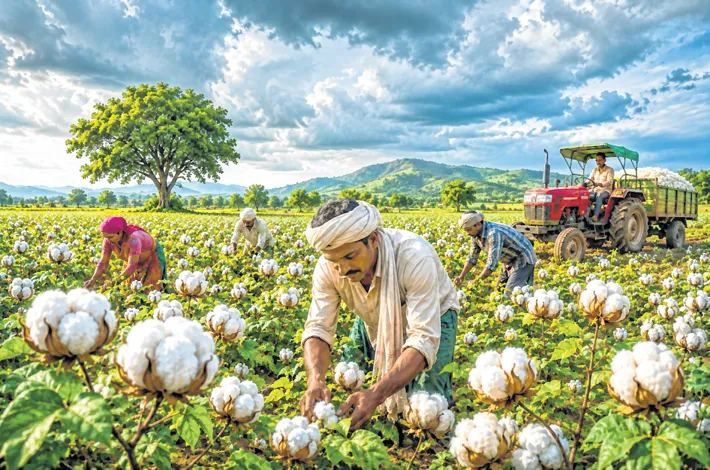
Cotton sowing has picked up pace across India after the revival of the southwest monsoon, raising hopes of a stronger kharif season even though acreage remains below last year's level. Improved rainfall in Maharashtra and other major cotton-growing states has encouraged farmers to return to the fields after an initial delay caused by weak monsoon activity.
Agriculture Commissioner P K Singh said the improvement in rainfall during July has significantly accelerated planting in key cotton-producing regions.
"The monsoon has improved. It is raining well in July and sowing has picked up," Singh said. According to the Agriculture Ministry, cotton was sown across 63.18 lakh hectares as of July 5, compared with 82 lakh hectares during the corresponding period last year. While acreage is still around 23% lower year-on-year, the shortfall has narrowed considerably as weather conditions improved.
The delayed arrival of the monsoon had slowed planting during June. However, widespread rainfall over the past fortnight has improved soil moisture, allowing farmers to speed up sowing operations.
The cotton sowing season begins in Punjab and Haryana before expanding to Gujarat, Maharashtra, Madhya Pradesh, Telangana, Andhra Pradesh, Karnataka and Tamil Nadu.
Although the normal planting window ends around July 15, it has been extended until July 30 this year due to the delayed onset of the monsoon. Trade sources said Gujarat has seen a sharp increase in cotton sowing over the past week after receiving good rainfall. Maharashtra, Karnataka and Madhya Pradesh have also reported stronger planting activity as favourable weather returned.
In parts of Maharashtra, poor germination of early soybean crops has prompted growers to switch to cotton after rainfall improved field conditions. India's cotton production for 2025-26 is estimated at 290.91 lakh bales of 170 kg each, compared with 297.24 lakh bales in 2024-25, according to the Agriculture Ministry's latest estimates. On the broader kharif season, Singh said July is traditionally the busiest sowing month. Weekly planting generally rises to 200-250 lakh hectares during July from around 50 lakh hectares per week in June. Of India's average 1,140 lakh hectares of kharif acreage, about 250 lakh hectares is normally sown in June, while nearly 750 lakh hectares is covered during July. Farmers in affected areas are expected to resume planting once excess water recedes. "Agriculture is location-specific," Singh said, adding that foodgrain production and productivity have not declined in any year since the 2015 El Niño, and he expects that trend to continue this season.
Cotton remains crucial to India's textile sector, which contributes around 2% of GDP and 11% of manufacturing gross value added, employs more than 45 mn people, and generated $37.8 bn in textile and apparel exports during FY25. The government aims to increase textile and apparel exports to US$100 billion by 2030, supported by rising domestic demand, expanding technical textiles and improving global market opportunities.