28 September, 2026 | 12:01 AM


Can Musi bring Old Hyderabad back to life?
28-09-2026 12:00:00 AM
Venkat Parsa
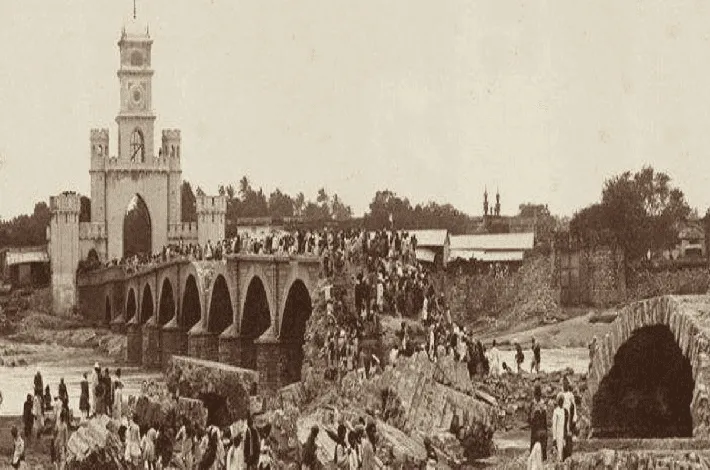
Old City once the seat of power and hub of literary and cultural activity, may get a face-lift with the ambitious Musi River Rejuvenation Project. Musi River floods played havoc in Hyderabad on September 28, 1908 and virtually changed its course. Eventually, Old Hyderabad fell on bad times, suffering neglect and deprivation.
Hyderabad was the cradle of composite Indian culture and emerged as among the major centres of Urdu, alongside Delhi, Bhopal and Lucknow. Hyderabad became the seat of learning. Legend says Mohammad Quli Qutub Shah crossed the flooded Musi to meet Bhagmati, a fishermaid from Chiclam. He later married her as Hyder Mahal and built Hyderabad around the Charminar, named after her. Quli’s Kulliyat is regarded as the first Urdu poetry diwan, predating Ghalib. Hyderabad later became a major Urdu and literary centre, with Osmania University established as an Urdu-medium university. Josh Malihabadi and Daagh Dehlvi were also associated with the city.
Musi River Floods in 1908 changed the course of history, virtually sealing the fate of Old Hyderabad. The scale and level of its devastation caused by the flood in River Musi was unimaginable. In one stroke, 15,000 lives were lost, thousands more displaced, with several areas remaining waterlogged for over 36 hours.
Mir Mehboob Ali Pasha was the VI Nizam of the erstwhile Hyderabad, during the River Musi Floods. His successor, Mir Osman Ali Khan, following his coronation on September 18, 1911, as Nizam VII, opted for flood-control strategy. This was devised by renowned engineer Sir Mokshagundam Vishveshvaraya. In fact, Vishveshvaraya's name was suggested by Ali Nawaz Jung, Engineer in the PWD, who rose to become Chief Engineer and Secretary to Government in 1918.
Under the Nizam, an efficient underground drainage and storm water channel system was laid that continue to protect Hyderabad's older zones till this day. Major protective reservoirs led to building Osman Sagar in Gandipet in 1920 and Himayat Sagar in 1927 to dam the Musi River and its tributaries, preventing future surges entering the city.
The Musi rejuvenation project is modeled on River Thames, in London and aims to transform dried up, polluted river-bed into a flowing urban riverfront with entertainment zones, green spaces and vibrant corridor with walkways, cycle tracks, parks and commercial spaces. Intent is to enliven Old Hyderabad, which has lost out on its old-world charm and grandeur.
River Musi could undergo an image makeover, from a polluted urban drain into a world-class waterfront destination. This ambitious urban rejuvenation project by Chief Minister A Revanth has yet unintended benefit. That is to transform a 55 km corridor of the historic Musi River in Hyderabad into a vibrant, sustainable economic and recreational hub, could the change the very face of Old Hyderabad.
Over the years, River Musi virtually changed its course in Hyderabad City. Can River Musi be brought back to life?
(Venkat Parsa is a senior journalist)