14 November, 2026 | 12:00 AM


Skilling India: Overlooking skilled graduates?
14-11-2026 12:00:00 AM
The employment concerns of Forestry graduates in Telangana reflect a larger disconnect between professional education, recruitment policies and India's ambition to build a skilled workforce.
India's aspiration to become a developed economy by 2047 rests substantially on the strength of its human capital. From Skill India to the National Education Policy, the emphasis has increasingly shifted towards developing a workforce equipped with specialised knowledge, practical competencies and industry-relevant skills. Yet, a fundamental contradiction persists: while the country invests in creating skilled professionals, employment systems do not always recognise or adequately utilise their qualifications. The concerns of B.Sc. (Hons.) Forestry graduates in Telangana illustrate this larger structural challenge.
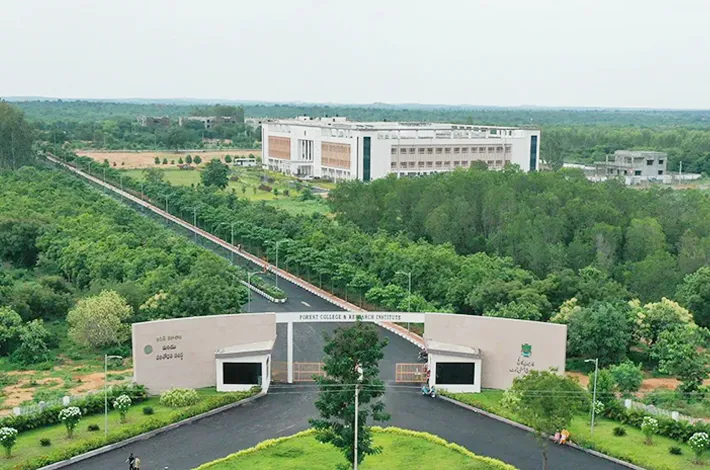
The situation of Forestry graduates in Telangana must be examined against this national backdrop. The establishment of the Forest College and Research Institute (FCRI), Mulugu, in 2016 represented a significant investment in professional forestry education. Its four-year B.Sc. (Hons.) Forestry programme combines academic instruction, field training and practical exposure in silviculture, forest management, forest mensuration, wildlife conservation, biodiversity, forest ecology and natural resource management. The objective is to develop professionals capable of addressing the increasingly complex requirements of scientific forest administration.
However, graduates trained specifically for this sector continue to face uncertainty over recruitment opportunities and the recognition of their professional qualifications. When eligibility for specialised forest-service positions extends to candidates from several academic disciplines, without giving corresponding recognition to professional Forestry education, it raises questions about the alignment between educational policy and recruitment practices.
The question of professional recognition
Technical departments prescribe specialised qualifications for veterinary, engineering and horticultural positions, aligning education with professional responsibilities. Forestry deserves similar recognition as an independent discipline encompassing silviculture, forest inventory, ecological restoration, wildlife management and sustainable resource conservation. Related disciplines offer complementary expertise but cannot necessarily substitute comprehensive professional Forestry education.
Designated technical forestry posts should require recognised professional Forestry qualifications, ensuring 100% eligibility alignment with specialised responsibilities. This proposal seeks professional recognition, not exclusion of other disciplines. Recruitment rules should classify positions by technical functions, prescribing appropriate qualifications while retaining multidisciplinary expertise for research, administration and specialised assignments.
An ecological and economic imperative
Forests underpin climate regulation, biodiversity, watershed protection and community livelihoods. Rising ecological threats demand scientific forest management and institutional capacity. Professionally trained Forestry graduates can strengthen forest inventories, ecological monitoring, landscape restoration and evidence-based conservation while contributing to emerging fields such as carbon accounting, agroforestry, climate adaptation and geospatial analysis.
Public investment in professional education must translate into productive employment. Underutilising specialised graduates diminishes returns on human capital and weakens labour productivity. While universities should promote research, entrepreneurship and private-sector careers, timely government recruitment remains vital in forestry, where the State carries essential conservation and regulatory responsibilities.
Aligning education with employment
The National Education Policy 2020 emphasises multidisciplinary learning, vocational exposure and the integration of education with practical skills. Similarly, the broader objectives of Skill India and Viksit Bharat place human-capital development at the centre of economic transformation. These ambitions require coherence between educational institutions, employment demand and recruitment policy.
For Telangana, this calls for a comprehensive review of the professional staffing requirements of the Forest Department. Posts involving core technical forestry responsibilities should be identified through an expert assessment, and the feasibility of prescribing 100% eligibility for recognised professional Forestry degree holders should be examined within the applicable service and recruitment framework.
Equally important is the need for timely recruitment notifications, transparent vacancy assessments and a predictable recruitment calendar. Professional education loses much of its practical value when graduates face prolonged uncertainty about employment opportunities in the sector for which they have been trained.
India's demographic dividend depends not merely on producing graduates but on effectively utilising their capabilities. The concerns of Telangana's Forestry graduates highlight the disconnect between education, professional recognition and recruitment policies. A State investing in specialised human capital must ensure its employment framework adequately recognises and utilises professional expertise.
If India seeks to move from a predominantly low-skilled employment structure towards a knowledge-driven and sustainable economy, recognising professional competence cannot remain an afterthought. The future of forestry, like the future of skilled employment, depends not only on producing qualified graduates but also on creating institutions that know how to utilise them.

-Ruthik Rao Pulloor specialises in forestry