15 October, 2026 | 1:09 PM


Courts strike down Trumps’ ‘tantrums’
22-02-2026 12:00:00 AM
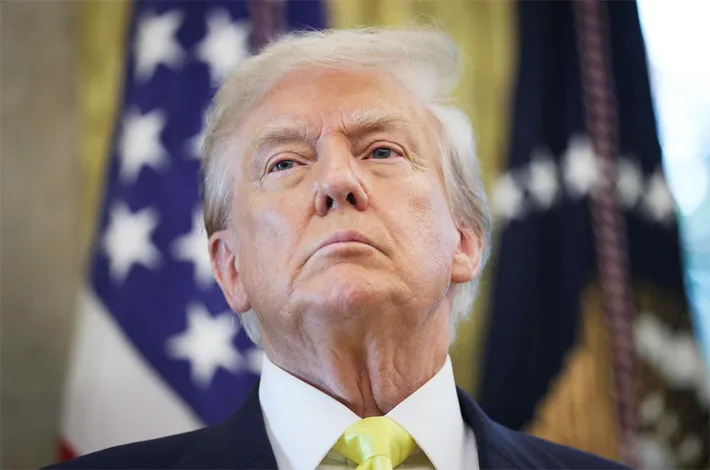
In a landmark 6-3 decision on February 20, 2026, the US Supreme Court ruled that President Donald Trump's sweeping tariff hikes, imposed under the International Emergency Economic Powers Act (IEEPA), were illegal. The ruling, authored by Chief Justice John Roberts, struck down tariffs that had targeted imports from nearly every major trading partner, marking a significant rebuke to Trump's protectionist agenda. This verdict not only curbs executive overreach but also unleashes economic ripple effects across the globe, potentially leading to billions in refunds and reshaping international trade dynamics.
Background on Trump's Tariffs
Trump's tariffs originated from his "Liberation Day" declaration in April 2025, where he invoked IEEPA to impose reciprocal duties as high as 50% on key partners like India and Brazil, and up to 145% on China, citing trade deficits, drug trafficking, and national security threats. IEEPA, a 1977 law intended for genuine emergencies, was stretched to justify these broad levies without congressional approval. The administration argued that persistent trade imbalances and public health crises from imported drugs constituted emergencies, allowing unilateral action. However, challengers, including businesses and states, contended this violated the Constitution's assignment of taxing powers to Congress. Lower courts had already deemed the tariffs unlawful, leading to the Supreme Court's review.
The court's majority opinion emphasized that IEEPA permits regulation of imports but not the imposition of tariffs, which are taxes. Roberts noted that Congress never intended to delegate such broad authority, rejecting Trump's expansive interpretation. Dissenters, including Justices Brett Kavanaugh, Clarence Thomas, and Samuel Alito, argued the ruling could constrain future presidential flexibility, potentially creating a "mess" with refunds. The decision invalidates IEEPA-based tariffs but spares sector-specific ones, like those on steel and aluminum under Section 232.
Immediate US Impacts
Domestically, the ruling is a blow to Trump's economic strategy, which relied on tariffs to extract concessions and boost revenue. Importers have paid over $130-200 billion in duties since 2025, funds that reduced the budget deficit but raised consumer prices by an estimated $600-800 per household annually. The Yale Budget Lab projects the effective US tariff rate could halve, potentially stimulating the economy through lower costs. Businesses, from mattress makers importing from India to tech firms reliant on Chinese components, may seek refunds, though the court left this to lower tribunals. Markets reacted mildly, with the S&P 500 up 0.3% and the dollar dipping, as investors anticipated the outcome.
Politically, Democrats cheered the decision as a constitutional win, with House Speaker Nancy Pelosi hailing it as rejecting executive abuse. Trump lambasted the court as "disgraceful" and swayed by "foreign interests," vowing to use alternative tools. Hours later, he imposed a new 10% global tariff under Section 122 of the 1974 Trade Act, a temporary measure for balance-of-payments issues, signaling ongoing volatility.
Global Fallout
Internationally, the verdict injects uncertainty into trade relations, neutralizing tariffs as a "geoeconomic weapon" while prompting partners to reassess deals. Countries like China, facing the highest rates, gain breathing room, though Trump plans Section 301 investigations into unfair practices. The EU, analyzing the ruling, seeks stability, with Germany emphasizing predictable trade. Canada views it as vindication but notes persistent sector tariffs on autos and lumber, urging growth-oriented collaboration. Mexico, exporting 80% to the US, is evaluating impacts, with officials studying countermeasures.
Specific Implications for India
India, a key focus, had faced 25-50% tariffs for buying Russian oil, later reduced to 18% under an interim deal committing to $500 billion in US imports over five years. The ruling strikes these IEEPA-based duties, but Trump insists "nothing changes," with India continuing to pay tariffs while the US does not. A White House official clarified India faces the new 10% global tariff "until another authority is invoked," maintaining the interim framework.
This could embolden India in negotiations, potentially ramping up Russian oil purchases, though it risks escalating tensions. Indian officials are monitoring for leverage before finalizing the deal by March's end, amid Trump's praise for Prime Minister Narendra Modi but criticism of past "ripping off" the US. Economically, lower tariffs might ease pressures on Indian exporters in textiles and furniture, but new levies sustain costs, affecting bilateral trade valued at hundreds of billions.
Speaking to a news channel, former Union Minister Milind Deora urged caution for India, advising against celebration or alarm. He stressed government-to-government negotiations remain key, suggesting Indian exporters explore refund claims if mechanisms exist under the ruling, while carefully examining details rather than reacting hastily. He dismissed political criticism from some quarters questioning India's prior trade framework agreement, calling it hindsight conjecture and praising the government's mature, consistent approach in standing firm on national interests.
Few international affairs experts emphasized that tariffs are paid by US importers, not foreign exporters—a common misconception in Trump's framing—and that the ruling eliminates the legal basis for "reciprocal" tariffs. He viewed it as a positive sign of America's checks and balances functioning, potentially emboldening Congress and affected businesses in midterm elections.
Robert Moran predicted the current Congress might not act decisively, but a future one could, and anticipated the administration invoking older laws (from 1930, 1962, and 1974) for a "Plan B" to maintain similar policies quickly—possibly within days. A political strategist predicted the current Congress might not act decisively, but a future one could, and anticipated the administration invoking older laws (from 1930, 1962, and 1974) for a "Plan B" to maintain similar policies quickly—possibly within days.
A member of Indo-US Business council argued the ruling shifts the geo-economic context, noting US tariffs have not delivered promised economic gains, with declining industrial jobs in key sectors and corporate pushback. For India, he saw it as a "second chance" to negotiate a more balanced deal, revising commitments on purchases and resisting linkage to geopolitics, prioritizing domestic benefits and energy security.
A former Indian diplomat, described tariffs as a "blunt weapon" antithetical to diplomacy, now stripped from Trump's toolkit under IEEPA. He anticipated the administration would pursue alternatives like Sections 301 or 232, though those are more limited and procedurally constrained. He noted prior U.S. threats against India under similar provisions but emphasized their narrower scope compared to Trump's omnibus approach. He predicted Trump would not easily concede, possibly seeking review or appeals, but saw the ruling as a global relief from "illegal" tariffs affecting many nations.
Overall, while the verdict offers temporary global relief—including for India, where an Indian delegation was set to visit the US soon—the consensus was that it may prove short-lived. Trump moved aggressively to pivot, with reports indicating new tariffs imposed under different authorities shortly after. The episode underscores ongoing tensions in US trade policy, the limits of executive power, and the need for careful diplomacy in ongoing negotiations, including the anticipated India-US trade deal targeted for March operationalization. As discussions continue, the world watches how swiftly and effectively alternative measures take hold.