20 October, 2026 | 9:11 PM


Death in the Temple Town: Re visited
19-08-2025 12:00:00 AM
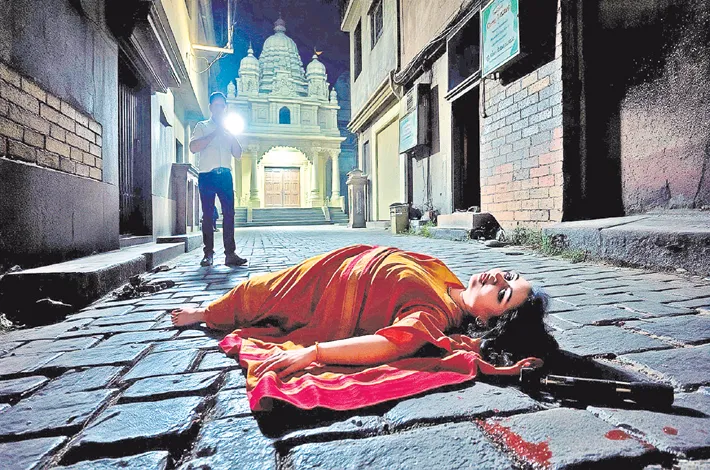
The humid night air clung to Bhubaneswar like a second skin, the city’s pulse throbbing under the weight of its ancient temples and modern ambitions. It was past midnight, and the streets around Lingaraj Temple were eerily quiet, save for the occasional hum of a stray auto-rickshaw.
Inspector Rakesh Mohanty, a grizzled veteran of the Bhubaneswar Police, stood in the dimly lit alley behind the temple, his flashlight cutting through the darkness. The body lay sprawled across the cobblestones, a young woman, no older than thirty, her silk saree stained crimson. Her throat had been slashed with surgical precision, and her wide, lifeless eyes stared at the starless sky.
Rakesh crouched beside the body, his jaw tight. The scene was too clean—no signs of a struggle, no footprints, no dropped weapon. Only a single clue: a small, intricately carved stone pendant clutched in her hand, etched with the symbol of a trident. It was a mark associated with the temple’s ancient rituals, but something about it felt wrong, out of place.
“Another one,” muttered Constable Jena, standing a few feet away, his voice shaky. “That’s the third this month.”
Rakesh didn’t respond. He didn’t need to. The city was on edge. Three women, all killed in the same ritualistic manner, all found near temples—Lingaraj, Mukteshwar, and now here. The press had dubbed the killer “The Temple Slasher,” and panic was spreading faster than the monsoon rains. Bhubaneswar, the City of Temples, was becoming a city of fear.
Back at the police station in Old Town, Rakesh pored over the case files. Each victim was a professional woman—doctors, lawyers, academics—found near a temple with a trident pendant in their hand. No fingerprints, no DNA, no witnesses. The killer was a ghost, slipping through the city’s ancient arteries like a shadow. Rakesh’s gut told him the pendants were the key, but the priests at Lingaraj swore they hadn’t seen such artifacts in decades. They were relics of a forgotten cult, they said, tied to a dark chapter of the temple’s history.
The next morning, Rakesh visited the State Museum, seeking answers from Dr. Anjali Rout, a historian specializing in Odishan temple architecture. Her office was a cluttered maze of books and artifacts, the air thick with the scent of old paper. Anjali, a sharp-eyed woman in her forties, examined the pendant Rakesh had brought from the crime scene.
“This is no ordinary trident,” she said, her voice low. “It’s a symbol of the Kapalika sect, a tantric group that practiced in secret centuries ago. They believed in blood offerings to appease the goddess. But they were wiped out… or so we thought.”
Rakesh’s pulse quickened. “You think someone’s reviving this cult?”
Anjali’s eyes met his, grim. “Or using it as a cover. The pendants aren’t ancient—they’re newly crafted. Someone’s going to great lengths to make this look ritualistic.”
The revelation hit Rakesh like a thunderbolt. This wasn’t just a serial killer; it was someone with a deep knowledge of the city’s history, someone hiding in plain sight. He left the museum with a new lead but a heavier burden. The killer was playing a game, and Bhubaneswar was the board.
That evening, Rakesh tailed a suspect—a local jeweler named Sanjay Behera, known for crafting intricate temple artifacts. Sanjay’s shop in Saheed Nagar was a hub for priests and collectors, and Rakesh had a hunch he might be linked to the pendants. Under the guise of buying a gift, Rakesh watched Sanjay’s every move. The jeweler was nervous, his hands trembling as he showed Rakesh a tray of silver trinkets. When Rakesh casually mentioned the trident symbol, Sanjay’s face paled, and he stammered an excuse to close the shop early.
Rakesh didn’t buy it. He followed Sanjay through the bustling streets of Bhubaneswar, past the neon-lit markets of Unit-1 and into the quieter lanes of Kharabela Nagar. Sanjay slipped into an abandoned warehouse, its rusted gates creaking in the night. Rakesh crept closer, his hand on his service revolver. Inside, he heard low chanting, rhythmic and guttural, like a ritual from another time. Peering through a cracked window, he saw Sanjay kneeling before a makeshift altar, surrounded by hooded figures. At the center was a woman, bound and gagged, her eyes wide with terror.
Rakesh’s heart pounded. He called for backup, but he couldn’t wait. He kicked open the door, gun raised, shouting, “Police! Hands up!” The figures scattered like roaches, but Sanjay froze, a knife gleaming in his hand. The woman screamed as Rakesh tackled Sanjay, pinning him to the ground. The others vanished into the night, their footsteps echoing in the empty warehouse.
As backup arrived, Rakesh untied the woman—a lawyer named Priya Das, who’d been investigating land disputes around the temples. She was shaken but alive, whispering about a “cult” buying up temple land for profit, using the murders to scare off opposition. Sanjay, it turned out, was just a pawn, crafting the pendants for a shadowy group led by a powerful real estate tycoon, Vikram Sethi.
The case broke open. Sethi’s empire unraveled as raids uncovered documents linking him to the murders, the pendants a twisted distraction to mask his greed. But as Rakesh stood in the rain outside Lingaraj Temple, watching the city breathe again, he knew the truth was murkier. Some of the hooded figures were still out there, their chants lingering in the shadows of Bhubaneswar’s ancient stones.
The Temple Slasher was gone, but the city’s secrets were far from buried.