23 October, 2026 | 1:26 PM


Eating Sugar? No Papa!
26-08-2026 12:00:00 AM
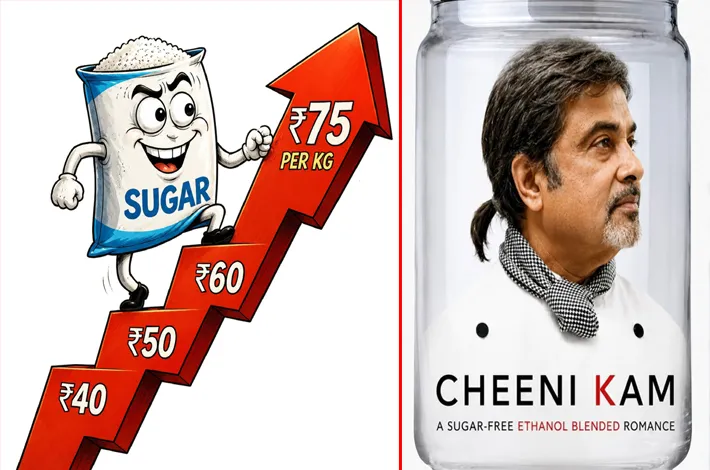
Sugar price soar, bitter times ahead
metro india news I hyderabad
Retail sugar prices across India have risen sharply in recent weeks, with the all-India average climbing from Rs 48.18 per kg on July 20 to Rs 55.70 per kg by August 20, an increase of more than 15 per cent in a month. In some markets, prices have reached Rs 63–70 per kg, with the highest reported retail price at Rs 75. Ex-mill prices have also risen from Rs 47–48 to Rs 58–62 per kg.
The surge comes as demand rises ahead of Ganesh Chaturthi, Dussehra and Diwali, increasing pressure on households, sweet manufacturers, bakeries and bulk consumers. At the same time, sugar production for 2025-26 is estimated at 30.6 million tonnes, about 11 per cent below the initial projection of 34.3–34.5 million tonnes, a shortfall of roughly 37 lakh tonnes.
Carry-over stocks are also expected to fall sharply from last year’s 50 lakh tonnes to around 33–34 lakh tonnes or less. With domestic consumption estimated at 280–285 lakh tonnes, the supply buffer remains limited.
Crop damage has contributed significantly to the shortfall. Excess rainfall and waterlogging, along with diseases such as red rot and top borer and pests including early shoot borer, affected sugarcane in Maharashtra, Karnataka, Uttar Pradesh and Tamil Nadu. Fungal infections and mass flowering also reduced recoverable sugar content.
The decline follows a longer-term trend, with sugar production falling from 35.9 million tonnes in 2021-22 to 32 million tonnes in 2023-24. Tighter global supplies, including production challenges in Brazil, have added pressure.
The Centre has responded by allowing duty-free imports of up to 10 lakh tonnes of raw sugar until October-end, the first major such step in about a decade. It has also imposed stockholding limits, capped dealers’ holdings at 400 tonnes and restricted bulk consumers to 15 days’ requirements. Sugar exports had earlier been restricted until September-end.
The government has ordered physical verification of mill stocks and advised states to begin the next crushing season from mid-October. October production could exceed one million tonnes, compared with the usual 3–4 lakh tonnes.
Agricultural economists have attributed the price spike to supply shortfalls and delayed policy action, while the Centre has rejected claims that ethanol diversion is the main cause. Official data show sugar diverted for ethanol fell from about 12 per cent in 2022-23 to 9 per cent in 2025-26, with nearly three-fourths of ethanol now produced from grains, particularly maize.
Industry bodies have instead pointed to speculative stocking and advance buying. Some bulk consumers and traders reportedly accumulated one to two months of supplies, reducing sugar available in the market and amplifying price movements.
The combination of falling production, crop damage, tighter stocks, speculative buying and delayed corrective measures has created a “perfect storm” for consumers. Sweet manufacturers and other bulk users are facing higher input costs, while households are paying more for a basic kitchen essential.
Recent measures, including duty-free imports, stock limits, stock verification and early crushing, are aimed at improving availability. Prices could moderate once panic buying eases and fresh supplies enter the market. However, the coming weeks will determine whether these measures can stabilise prices before the peak festive season.