21 September, 2026 | 2:05 AM


El Niño sparks crop shift, Nalgonda farmers show the way
29-07-2026 12:00:00 AM
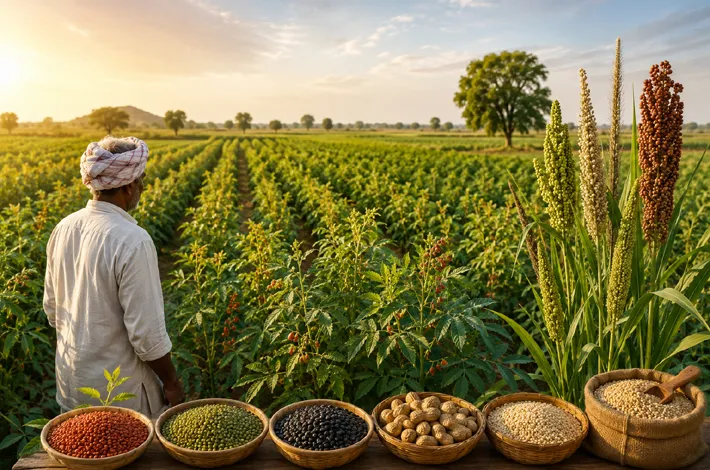
- Nidamanur mandal in Nalgonda has emerged as Telangana's model for climate resilient farming, with Bankapuram village alone shifting nearly 800 acres from paddy to red gram.
- To tackle El Niño induced rainfall uncertainty, the Telangana government is promoting low water crops such as red gram, green gram, black gram, groundnut, sesame, jowar and bajra instead of water intensive paddy.
- Farmers are embracing crop diversification following extensive awareness campaigns, scientific advisories and field support from the Agriculture Department.
- The initiative aims to reduce water use, lower cultivation costs and ensure stable farm incomes while building long term climate resilience across Telangana.
MAHESH AVADHUTHA I hyderabad
As Telangana prepares for an uncertain monsoon under the shadow of El Niño, a quiet agricultural transformation is taking shape in Nalgonda district. Farmers in Nidamanur mandal have emerged as early adopters of the state's climate resilient farming strategy, replacing water intensive paddy with drought resistant crops such as red gram, green gram, black gram, groundnut, sesame, jowar and bajra. Bankapuram village has become the torchbearer of this shift, with nearly 800 acres already converted from paddy to red gram cultivation, demonstrating how timely planning and scientific guidance can help farmers turn a climatic challenge into an opportunity.
The Telangana government launched an extensive contingency plan for Vanakalam 2026 after forecasting rainfall uncertainties due to El Niño. Instead of allowing farmers to face the risks of water scarcity, the Agriculture Department has undertaken a statewide campaign encouraging cultivation of low water crops that offer stable returns with reduced irrigation needs. The initiative aims to protect farm incomes while promoting sustainable agriculture across the state.
Nidamanur's transformation has been particularly noteworthy because the mandal has traditionally been a paddy growing region. Paddy cultivation covered 31,347 acres in 2023 and 24, increased to 35,656 acres in 2024 and 25, and further to 36,391 acres in 2025 and 26. However, this Vanakalam season, farmers have begun diversifying their crops in anticipation of lower rainfall. Apart from Bankapuram's 800 acre shift, farmers in Vengandla village have also brought nearly 150 acres under alternate crops, highlighting the growing acceptance of the government's recommendations.
One of the farmers leading this transition is Adabala Venkateshwarlu from Bankapuram village. Having cultivated paddy on 13 acres in previous years, he has switched entirely to red gram this season.
"Earlier, I cultivated paddy on all 13 acres. Based on the advice of Agriculture Department officials, I have shifted the entire area to red gram this year. The crop requires much less water, cultivation costs are lower and I expect better income. I hope more farmers adopt alternate crops for a secure future," he said.
Another farmer from the same village, Rayapati Srinivasa Rao, echoed similar confidence.
"The awareness created by Agriculture Department officials convinced me to replace paddy with red gram on my eight acres this season. Since the crop can be grown with much less water and promises good returns, I believe shifting to alternate crops is the right decision under the prevailing weather conditions," he said.
The state's contingency strategy goes far beyond crop recommendations. Telangana has prepared district specific and agro climatic zone specific crop plans in collaboration with leading scientific institutions, including the India Meteorological Department, Indian Council of Agricultural Research, Professor Jayashankar Telangana Agricultural University, Sri Konda Laxman Telangana Horticultural University, Indian Institute of Millets Research and other expert agencies. Farmers are receiving real time advisories on delayed rainfall, dry spells and suitable crop choices through Rythu Vedikas, Gram Sabhas, video conferences, digital platforms and field level demonstrations.
Agriculture officials are also promoting scientific farming practices such as soil testing, efficient water management, quality seed distribution and integrated crop management to improve productivity while reducing cultivation costs. Experts say crops like red gram, green gram, black gram, sesame, groundnut, jowar and bajra not only withstand moisture stress but also fetch stable market demand and improve soil health.
The government has constituted a high level expert committee under Dr G. Chinna Reddy to continuously monitor the evolving El Niño situation and issue timely advisories. Officials have also announced a second phase of seed distribution to ensure farmers have adequate access to seeds of alternate crops. With villages like Bankapuram showing encouraging results even before the season gathers momentum, Nalgonda has emerged as a model for Telangana's climate smart agriculture initiative. The district's experience demonstrates that with scientific planning, government support and farmer participation, the challenge of El Niño can be transformed into an opportunity for building a more resilient and sustainable agricultural future.