19 September, 2026 | 12:40 PM


Face first: The visual logic of South Indian stardom
22-04-2026 12:00:00 AM
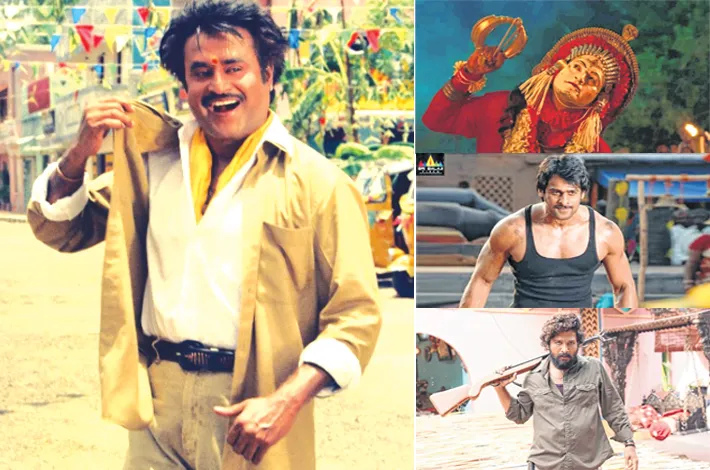
Hindi cinema often lets its heroes disappear into the crowd. South Indian mass cinema does the opposite. Its stars are built on a visual logic where the face must remain visible, dominant and almost sacred
Darshim Saxena
There is a moment in almost every South Indian mass film that works like a reset button. The crowd parts. The camera finds a face. And for a few seconds, nothing else in the frame matters. The hero has arrived, and you are meant to feel it in your chest.
This is not an accident. It is a philosophy. Hindi cinema and South Indian mass cinema may look like cousins. They share genres, stars, and now even screens. But underneath, they run on opposite visual logics. Understanding that difference explains something essential about why South Indian stardom works the way it does.
In Hindi cinema, the spectacle is often the crowd. Think of the chaos sequences, the festival scenes, the moments where bodies merge and identities blur. The hero can vanish into the noise and re-emerge. Anonymity, briefly, is allowed. South Indian mass cinema issues the opposite instruction. The mass hero is never meant to dissolve into the crowd. The crowd is meant to dissolve around him.
Think of Rajinikanth’s cigarette flip in Baasha (1995), held in close-up until the audience erupts. Or Allu Arjun’s slow pivot in Pushpa (2021), the camera circling him like a planet orbiting its sun. The visual grammar issues one instruction: look here. This is the man. These faces are not merely cinematic. In South India, the star’s popularity and the politician’s mandate have historically run on the same current of mass darshan, the sacred act of beholding. The hero’s face carries something devotional. It cannot afford to disappear. The industry knows exactly what happens when this grammar breaks down. Prabhas’ mid-career film Rebel (2012) briefly attempts a Bollywood-style crowd spectacle. The moment is rarely remembered, and the reason is instructive. The star briefly loses control of the frame. When the hero cannot be found in his own film, the audience stops believing in him.
This is also why colour works so differently across these two traditions. In Hindi cinema, colour, including festival gulal, rain, and chaos, is often used to dissolve identity, and to create a loophole in the story where the normal rules don’t apply. South Indian cinema treats colour as ritual chemistry. Baahubali’s (2015) saffron and gold encode divine kingship. Kantara’s (2022) earth-red invokes ancestral rage. These are not decorative choices. They are narrative codes.
Kantara (2022) makes this explicit. When Rishab Shetty’s face is painted with the fierce pigments of Bhoota Kola in the film’s climax, the ritual paint does not dissolve him. It sharpens him. Colour reveals divinity rather than erasing identity. The hero becomes more legible, not less.
It is worth noting that this logic is not uniform across all of South Indian cinema. Malayalam cinema, shaped by ensemble storytelling and director-driven films, has long resisted the tyranny of a single star face. Lijo Jose Pellissery’s Jallikattu (2019) is practically a manifesto for crowd-as-protagonist. The generalisation holds most powerfully for the mass Tamil and Telugu industries.
Even within those industries, RRR (2022) offers the most instructive near-exception. The Naatu Naatu sequence is carnivalesque, collectivist, full of competitive joy. And yet Rajamouli never loses his heroes inside the spectacle. At peak chaos, the camera snaps back to the faces of Ram Charan and Jr. NTR. The old grammar adapts, but it does not break.
The Pan-India era will keep testing this. The test is simple. Watch what happens to the hero’s face in the middle of a crowd. If it stays readable, the philosophy survives. If it disappears, South Indian mass cinema will have broken the oldest law of its stardom. The hero’s face must never be lost.