18 October, 2026 | 8:46 PM


Ghooskhor Pandit controversy freedom of expression limits
09-02-2026 12:00:00 AM
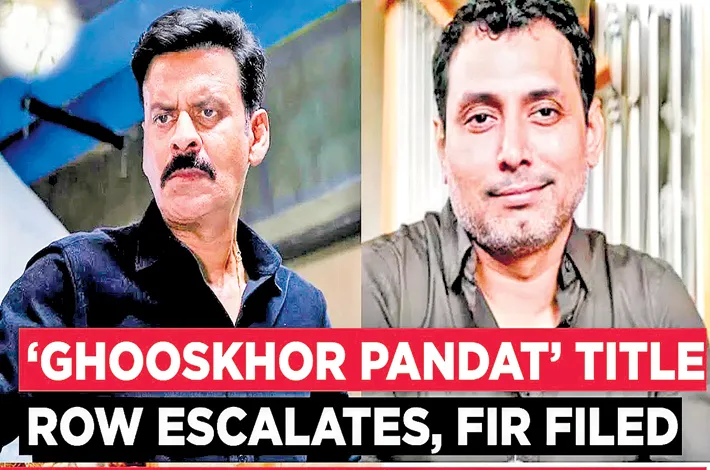
In a brewing storm that has engulfed Bollywood even before a single frame hits the screens, the film Ghooskhor Pandat, directed by Niraj Pandey and starring Manoj Bajpayee, is at the centre of intense controversy. Critics and members of the Brahmin community have accused the film's title of deliberately tarnishing the image of Hindu priests. The title, which loosely translates to "bribe-taking Brahman" or "corrupt priest," is seen by many as a direct attack on a respected caste identifier, linking it to criminality and generalizing an entire community. This backlash has escalated rapidly, drawing in political leaders, police action, and legal interventions across India.
The outrage began with allegations that the title defames Brahmins by portraying them as inherently corrupt. In Uttar Pradesh, Chief Minister Yogi Adityanath has directed the filing of First Information Reports (FIRs) against the filmmakers. Former Uttar Pradesh Chief Minister Mayawati has been vocal in her condemnation, describing the title as a matter of "great sorrow and concern" that spreads anger nationwide and negatively stereotypes the Brahmin community. She has demanded an immediate ban on the film and supported the FIR lodged at Lucknow's Hazratganj police station.
Adding to the pressure, the National Human Rights Commission (NHRC) has issued a notice to the Ministry of Information and Broadcasting, alleging that the film promotes negative stereotypes and vilifies a social group. In response, the filmmakers have insisted that the movie is being judged solely by its title, not its content. Director Niraj Pandey has clarified that Ghooskhor Pandat is a fictional cop thriller, where "Pandat" serves as a colloquial nickname for the flawed police officer character, Ajay Dikshit, played by Bajpayee. Bajpayee himself has emphasized that the character's journey is about self-realization, not social commentary. As a conciliatory gesture amid the uproar, the team has removed all promotional materials, including the teaser, while awaiting court decisions.
This incident is far from isolated in Indian cinema, where films have repeatedly bowed to social and political pressures. Historical precedents abound: In 2007, then-Uttar Pradesh Chief Minister Mayawati demanded a nationwide ban on Madhuri Dixit's comeback film “Aaja Nachle” over a lyric deemed derogatory to Dalits. Filmmaker Yash Chopra issued an apology, and the film was released only after interventions from the Central Board of Film Certification (CBFC) and the National Commission for Scheduled Castes.
Similarly, Shah Rukh Khan's Billu Barber dropped "Barber" from its title following protests from salon associations who found the term offensive, rebranding it as Billu. Mental Hai Kya became Judgementall Hai Kya after criticism for insensitivity toward mental health. Deepa Mehta's Padmavati was renamed Padmaavat amid Karni Sena protests, and John Abraham's Jaffna was changed to Madras Cafe due to objections from Sri Lanka. These examples highlight how filmmakers often navigate a minefield of demands from various societal groups, with courts, censors, politicians, and public outrage dictating changes.
A BJP spokesperson strongly condemned the title, arguing it deliberately targets Hindus and Brahmins, inciting unrest and promoting negative stereotypes. He questioned the filmmakers' intentions, suggesting the title was chosen for sensationalism and eyeballs, drawing parallels to past films like Padmaavat where historical figures were portrayed controversially. Giri emphasized that while fiction allows creativity, generalizing a community as corrupt is unacceptable and could lead to societal division. He maintained that if content or titles cause trouble, communities have the right to complain.
An author and film historian echoed some of these concerns, asserting that the title was intentionally provocative to attract attention in a crowded market like Netflix, where dozens of films release daily. He pointed out that titles are crucial for evoking reactions and cited examples like Wednesday (another Pandey film) or R... Rajkumar, where names set expectations. He argued that if the filmmakers believed the title was harmless, they should stand by it, but the backlash—including FIRs and potential boycotts—reflects the realities of India's diverse society.
He dismissed claims of unintentional offense, noting that in an era of short attention spans, titles are designed for maximum impact, and filmmakers cannot feign surprise at the fallout. He also referenced broader issues in cinema, such as stereotypes of Muslims as terrorists or villains in skull caps, acknowledging that objections arise across communities but often lead to changes for commercial viability.
A senior film critic and writer offered a more balanced view, defending the filmmakers' artistic freedom and integrity. He described Niraj Pandey as a mature director focused on business, not malice, citing his recent Netflix release Tuskeri as evidence of his non-controversial track record. He argued that the title, while evocative, was unintentional in its offense, and Netflix, as an international platform reaching 122 countries, would prioritize avoiding communal controversy by changing it. He stressed that films mirror society and are inspired by reality, but not meant to malign groups.
The episode underscored the confusion in drawing lines: some films educate, others entertain, yet objections arise universally. As Netflix has already pulled promotional material and the title change looms, the incident raises broader questions about who decides offensiveness—courts, politicians, or the public—and whether Indian cinema can ever truly escape such scrutiny. The story continues to unfold, with the film's fate hanging in the balance.