28 November, 2026 | 12:02 AM


Happiness and sadness chemicals in human body
28-11-2026 12:00:00 AM
Science Corner
A social media caption once caught my attention stating that the emotions we experience every day are influenced by chemicals produced within our body. That made me think on the connection between mental and physical health. When I am happy, I feel energetic, motivated, and productive. When I am sad, it stays on. This led to the interesting question, why does happiness seem short-lived while sadness stays longer with us?
Curious to understand the science behind this, I began reading about neuroscience, psychology, and human physiology to some extent. What fascinated me was the body's remarkable biochemical quality control regulation. Every neurotransmitter and hormone is produced in precise amounts, released when needed, and carefully controlled. Yet emotions are not caused by chemicals alone. They arise from complex interactions among brain circuits, hormones, neurotransmitters, memories, experiences, thoughts, and the environment around us.
These thoughts also reminded me of traditional Indian health systems. Concepts such as sattvika, rajasika, and tamasika qualities, along with classifications like vata, pitta, and kapha, emphasize the relationship between food, lifestyle, and mental well-being. Although these ideas were developed through observation rather than modern laboratory methods, they highlight an important principle that: what we consume can influence how we think, feel, and function.
Food provides the raw materials needed to sustain our bodies and the trillions of microorganisms living in the digestive system, collectively known as the gut microbiome. Modern research supports the concept of the gut-brain axis, a communication network linking the digestive system and the brain. These microorganisms influence nutrient processing, immune responses, and the production of compounds that can affect mood and behavior.
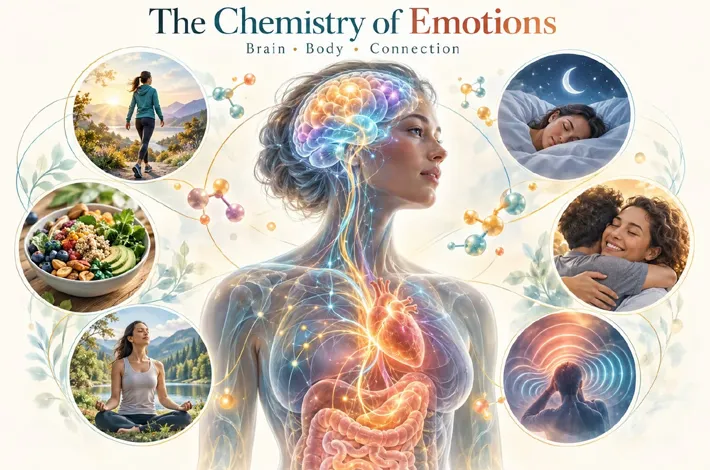
Several neurochemicals are commonly associated with emotional well-being. Dopamine plays a key role in motivation, learning, and goal-directed behavior. Serotonin contributes to mood stability, sleep, appetite, and emotional balance. Endorphins are natural pain relievers released during exercise, laughter, and other activities. Oxytocin supports trust, attachment, and social connection.
Other chemical messengers also regulate our mental state. Norepinephrine maintains alertness, attention, and vigilance, while melatonin regulates the sleep-wake cycle. Because good sleep is essential for emotional resilience, melatonin indirectly contributes to overall well-being. Not all chemical messengers are associated with positive feelings. Some are crucial for responding to challenges and threats. Two important examples are adrenaline and cortisol.
Water-soluble adrenaline hormone is released rapidly during sudden stress and triggers the familiar "fight-or-flight" response. It increases heart rate, sharpens attention, and prepares the body for immediate action. Fat soluble cortisol, often called the stress hormone, acts more slowly but has longer-lasting effects. It helps regulate metabolism, energy availability, immune function, and the body's response to prolonged stress.
Cortisol does not directly cause sadness, but abnormally elevated levels are associated with anxiety, fatigue, sleep disturbances, depression, and low mood. This partly explains why stressful experiences often more persistent than pleasant ones. But the human brain exhibits a natural negativity bias, an evolutionary phenomenon, to pay greater attention to threats than rewards, as it improves survival.
Fortunately, the same biology that contributes to emotional distress also supports recovery. Physical exercise stimulates endorphin release. Quality sleep helps regulate serotonin, melatonin, and cortisol levels. Meaningful relationships encourage oxytocin production, while mindfulness and meditation can reduce excessive stress responses. Good nutrition, regular activity, adequate rest, and supportive social connections help maintain a healthy balance among these chemical messengers.
Understanding the biology of emotions allows us to view happiness and sadness not as signs of weakness or strength, but as natural responses shaped by chemistry, experience, environment, and thought. The more we understand these connections, the better equipped we become to care for both our mental and physical health, allowing them to work together in harmony.

(Dr Swarnabala Ganti - a seasoned chemist, Regulatory Affairs Specialist and R&D Scientist with experience across India, Iran, Japan and Taiwan. Consultant at Swaram Biochem, AgriLife India & Som Phytopharma.