28 November, 2026 | 12:33 AM


How founders save their startups in a downturn
28-11-2026 12:00:00 AM
STARTUPS, ON SATURDAY
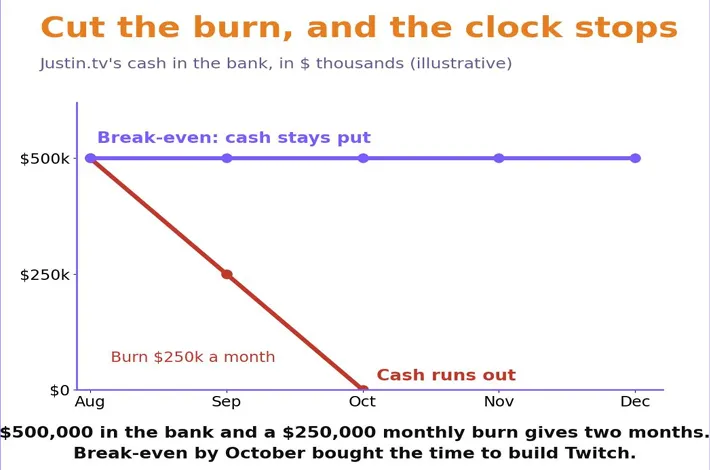
In August 2010, Justin.tv had half a million dollars in the bank and was spending a quarter million a month. The math is obvious. The business had a two month “runway”. The Founder Michael Seibel summoned the entire team into a meeting room and laid out three choices in front of them: 1) die in two months, 2) get to break-even or 3) become profitable. The team huddled, wrote revenues on one side of the paper, costs on the other side and refused to lead the room until they found $100,000 a month. By October, they had broken even. That company became Twitch, which Amazon acquired for a billion dollars later.
Every now and then business cycles turn and people tend to blame all kinds of factors: weather, interest rates, investor sentiment and global macro gloom. None of these are in the Founders’ control, but what that team wrote down on that sheet of paper is. In this column, I want to examine what Founders do to save their startups when capital dries up.
Default Alive or Default Dead. Paul Graham of Y Combinator gave founders a rather blunt framework. A startup is Default Alive if, with costs and growth continuing as they are, it reaches profit before the cash runs out, without raising another rupee. It is Default Dead if the bank account hits zero first. Then survival depends on new investors saying yes. This makes a world of difference. A default alive founder pitches with conviction, because he / she does not need the money. A default dead founder with three months of runway needs to take whatever terms are offered to fund the business.
Why Founders drift into default dead? Because in good times, investors cheer revenue growth and rapid hiring. A founder has one bet, his / her company. Founders fall into what Graham calls the fatal pinch. Traction is slow, so they spend more to buy it. Before they know it, three months of cash remains, and it is too little to fix anything.Y Combinator's Dalton Caldwell calls the cure a startup bankruptcy.
Take a short hit to growth now, clear the unsustainable burn, and you can rebuild. He specifies three levers: Right-size the team. Pay-roll is the biggest cost item. Hiring ahead of product-market fit is the biggest cause of lethal burn. Letting people go is agonizing but to the best founders, the company's survival comes first. Switch Off Unprofitable Growth. Many startups buy customers through ads that never pay back, terrified that slower growth will hurt the next round. Turn those ads off and growth will fall overnight. A smaller business that lives is better than an impressive one that dies.
Fix the Price. If you sell a rupee of value for seventy-five paise, scaling only speeds up the end. Last week, we discussed that pricing is hard. In a downturn, hard becomes necessary. Raise prices until every sale contributes. Telling the team that the company is in trouble feels like admitting defeat. Yet when Seibel rallied his team, nobody quit. They rallied. People join startups knowing it is a dinghy boat and not a luxury cruise liner. Why it matters: Tough times are not survived by the founders with the best pitch, but by those who know their runway on a daily basis. Face the math while there is still time to change it.
-Ravi Ravulaparthi is the CEO & Cofounder of Qapita.