22 October, 2026 | 8:25 AM


Indian energy need &Russian oil relief
07-03-2026 12:00:00 AM
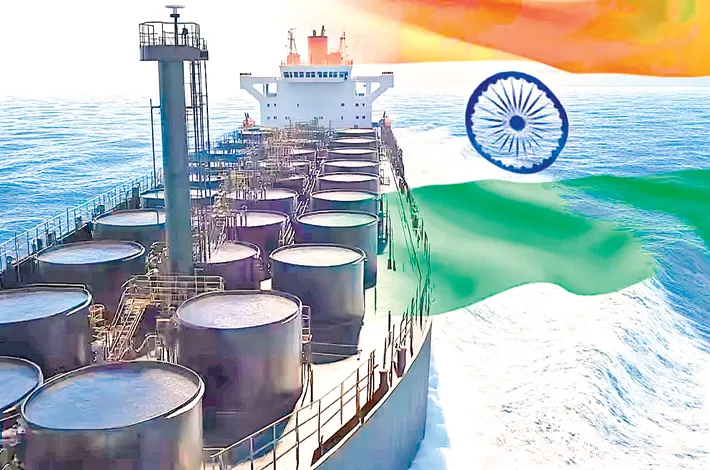
The United States has granted India a temporary one-month waiver allowing the purchase of Russian oil cargoes currently stranded at sea, providing a critical buffer amid the ongoing disruption in global energy supplies caused by the effective closure of the Strait of Hormuz. The waiver, approved by the US Treasury Department, permits Indian refiners to acquire Russian crude and petroleum products loaded onto vessels by early March 2026, with deliveries to India permitted through early April.
This comes as escalating conflict involving the US, Israel, and Iran has led to a near-total halt in maritime traffic through the Strait of Hormuz—a vital chokepoint for roughly one-fifth of the world's oil and significant liquefied natural gas (LNG) flows. Iranian forces have threatened attacks on vessels attempting passage, prompting major shipping companies to suspend transits and leaving hundreds of tankers anchored or stranded.
Industry sources indicate that around 130 million barrels of oil are currently floating at sea globally, with portions—including about 20 million barrels potentially reachable by India within weeks—located in accessible areas like the Arabian Sea. Experts estimate that India could secure approximately 20 million barrels of this Russian crude by the end of March, depending on transit times (typically at least 20 days from Russian origins) and pricing. When combined with existing stocks and ongoing purchases, this positions the country to maintain crude supplies comfortably for at least two months, even as summer demand rises.
Former BPCL chairman G Krishna Kumar noted that while market information carries some uncertainty, this influx should prevent immediate shortages in crude availability. On the natural gas front, particularly for domestic cooking gas (piped natural gas and related supplies), the outlook remains manageable despite the Hormuz disruptions. India's current natural gas consumption stands at about 190 million standard cubic meters per day (mmcmd), with roughly 50% imported. Of the imports, supplies routed through the affected Strait account for less than one-third of total consumption—around 60 mmcmd.
Sandeep Kumar Gupta, former chairman of GAIL, emphasized that any prolonged constraint from Middle Eastern sources could be addressed by prioritizing essential sectors—such as domestic piped natural gas (PNG), compressed natural gas (CNG) for vehicles, and fertilizers—while curtailing non-essential industrial use, including in refineries and petrochemicals. India already sources gas from diversified origins beyond the Middle East, including the United States, Australia, and portfolio contracts, covering a significant portion of its 85-90 mmcmd import needs.
While global competition for spot volumes could drive prices higher and make additional sourcing challenging or unaffordable for some consumers, essential supplies for households and key sectors appear secure in the near term without major shortages. The Hormuz crisis has also influenced refining margins and product markets. Singapore gross refining margins (GRM) have surged dramatically—from around $3 per barrel recently to nearly $30—driven by supply constraints and reduced Chinese exports of refined products.
However, experts caution that these elevated margins may not translate into immediate windfalls for Indian oil companies or consumers. With domestic pump prices remaining stable and government policy emphasizing consumer protection, any potential gains could be deferred or offset by cycles of pressure. Gupta suggested that exports of refined products should be curtailed amid domestic constraints to prioritize local needs.
Looking ahead, both experts stressed the importance of further diversifying LNG and gas sources, a strategy already underway but one that requires acceleration given the unprecedented nature of the current Hormuz disruption—unseen even during past regional conflicts.