22 September, 2026 | 7:36 AM


india’s Unity in Diversity
23-07-2026 12:00:00 AM
Gen Z exposes cracks in democracy
Why did Gen Z come out? Traditional politics failed to connect. A single post mobilised thousands, reflecting deep public anger. TV focusing on violence, what unfolded was largely a peaceful, disciplined protest where even students and young women faced lathi charges.
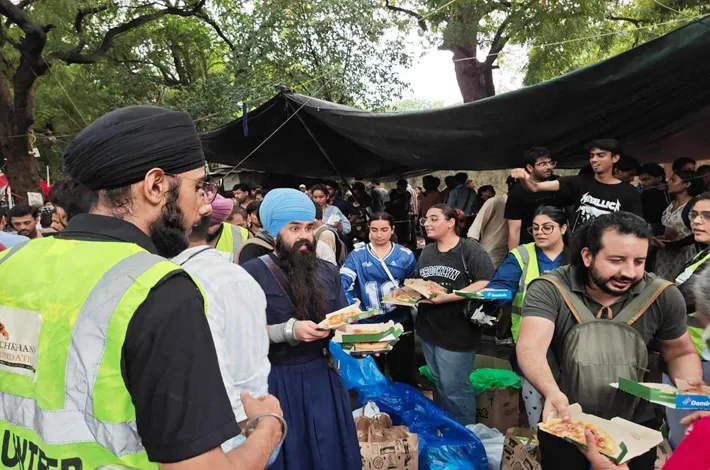
Food, tea and snacks poured into Jantar Mantar. Gurudwaras provided shelter, langar and first aid, while nearby mosques also opened their doors.
While campuses in Delhi, Kolkata, Hyderabad, Bengaluru and other cities saw marches and vigils.
Hearing a plea against police action on student protesters, CJI Surya Kant remarked, "Don't waste our time," and saying the court did not have time to watch them.
HEMA SINGULURI, KIRANMAI TUTIKA & MAHESH AVADHUTHA
Jantar Mantar in the capital has transformed from a tourist relic into a crucible of youthful defiance. What began as outrage over the NEET-UG 2026 paper leak has swelled into a nationwide indictment of systemic failure, police overreach, and governance that many young Indians see as callously indifferent to their futures. Far from orchestrated political theater, this movement showcases raw spontaneity and discipline — students and youth streaming in from Kerala to Assam, unmarshaled by party flags or machinery. This is Unity in Diversity not as slogan, but lived reality.
Discipline defined the early days. Protesters maintained order amid chaos, with girls and students reportedly arming themselves with lathis not for aggression but self-defense after clashes. Veteran activist Sonam Wangchuk's indefinite hunger strike from June 28 amplified the cause, drawing thousands before health concerns led to his hospitalization. Food poured in — pizzas, samosas, chai — from every corner of India and even overseas Indians, an outpouring so overwhelming that organizers issued public appeals to halt further deliveries. Local Gurudwaras opened doors for langar, shelter, and first aid, echoing Sikhism's tradition of sanctuary. Mosques in central Delhi followed suit, offering refuge. This cross-faith solidarity, alongside volunteers from diverse regions, has reignited the spirit of "India as one" amid deep disillusionment.
Gen Z's Awakening
Why did Gen Z flood the streets? Traditional politics failed to speak their language of aspiration, precarity, and digital-native anger. One viral post, one image of systemic betrayal — repeated leaks, suicides, vanishing jobs — connected instantly. "This isn't just NEET," says Priyanka K, a 23-year-old freelance makeup artist from Hyderabad. "It's about transparent governance. When systems fail in education or jobs, we stand together." Fellow protester Jaishree, 20, echoes: "As Gen Z, we represent tomorrow's world. It's our right to question and sustain this movement."
The spark: NEET irregularities, broader exam scams, and an unemployment crisis crushing millions. Protests broadened to demand accountability, reforms, and fairness. Symbols of defiance — swimming goggles, helmets, raincoats against tear gas, candlelight vigils for suicide victims — marked peaceful resolve before marches toward Parliament triggered confrontations. Nearly 180 injured in clashes involving lathi charges and tear gas. Delhi Police cited law-and-order; protesters and videos alleged brutality, including against female students. The judiciary's response deepened distrust. Chief Justice of India Surya Kant dismissed a plea against police action with curt dismissal: "Don't waste our time... We are not interested in videos." This from the apex guardian of the Constitution struck many as tone-deaf, prioritizing docket efficiency over alleged atrocities on students.
Nationwide Echo and Solidarity
Support cascaded. Telangana Chief Minister A. Revanth Reddy slammed the Centre, framing it as a battle between Gandhi's heirs and others, demanding Pradhan's ouster and decrying "barbaric" police action. Protests erupted in Hyderabad, Bengaluru, Kolkata. Indians abroad sent aid and amplified voices online. Even in quieter Andhra Pradesh — where student activism has waned amid placement focus and party-aligned unions — social media buzz showed latent sympathy, though street presence lagged. Hashtags like #DharmendraPradhanResign, #JusticeForStudents, #ExamMafia, and #YouthForJustice trended as Gen Z owned the narrative on Instagram, X, and Reddit. They framed it as a fight for futures, not partisan grudge. Critics counter that it veered political, with disruption and alleged stone-pelting. Some demands seem maximalist; violence tainted the image. Yet the core grievance — exam mafia, opaque systems, youth despair — resonates beyond ideology. Misinformation swirled too: fake videos, edited clips, debunked celebrity appearances.
Media Exposed
Mainstream television's coverage — fixated on "violence" while downplaying scale, spontaneity, and peaceful core — has backfired spectacularly. Protesters chanted "Godi media go back," accusing lapdog outlets of bootlicking power and ignoring ground realities. Independent voices, social media, and citizen footage filled the void, exposing selective framing. Di’bang’s observation rings true: Don't reduce this to TV's narrow lens. What unfolded was massive, disciplined, cross-regional mobilization without top-down orchestration. This isn't mere exam protest. It's Gen Z signaling the end of patience with perceived undemocratic tendencies, eroded secular ethos in practice, and rulers prioritizing optics over delivery.
Traditional parties missed the pulse; one authentic cry mobilized masses. Ravi Teja P, 26, cautions against conflating justice-seeking with unrest, noting government responses like re-exams and apologies. Yet momentum persists.As tents rebuild post-dispersal amid rain and rubble, Jantar Mantar symbolizes resilience. From langar lines to viral reels, India's youth are rewriting the script: accountable institutions, not inherited privilege; unity beyond division; futures not sacrificed to leaks and lathis. Whether this forces systemic course-correction or fizzles remains uncertain. But the spirit — spontaneous, diverse, unrelenting — has been rekindled. India is watching. The world too.