25 October, 2026 | 11:32 AM


Inside Gen Z Life
10-09-2026 12:00:00 AM
How they fare!
68% list health and fitness among top concerns
68% maintain a body mass index under 25
Roughly 40% exercise three or more times a week
- Alcohol consumption stays low, with around 82 per cent reporting they do not drink
- One in four smoke, and one in ten identify as chain smokers
metro india news I hyderabad
India’s Generation Z, born between 1997 and 2012, form one of the largest such cohorts in the world. Estimates place their numbers at around 377 million, accounting for roughly 27 to 28 per cent of the country’s population. This group already drives a substantial share of consumer spending, estimated at $860 billion, with projections pointing toward significant growth in the coming decade. Their lifestyle reflects a blend of digital immersion, health consciousness, convenience, and selective aspirations shaped by smartphones, social media, and rapid economic change.
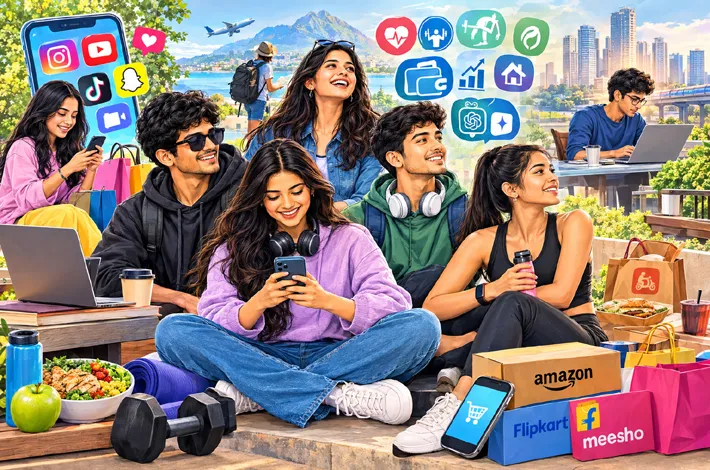
Digital life sits at the center of daily routines. Platforms such as Instagram, YouTube, Snapchat, and others serve as primary sources for information, entertainment, shopping inspiration, and social connection. A large majority turn to social media for product discovery, with many creating mood boards or following authentic creators rather than traditional celebrities. Shopping itself has become heavily app-driven. Eight out of ten rely on platforms like Amazon, Flipkart, and Meesho for festive or everyday purchases, while still mixing in occasional offline visits to local markets or malls.
Surveys show nearly 68 per cent list health and fitness among top concerns. About 68 per cent maintain a body mass index under 25, higher than older groups, and roughly 40 per cent exercise three or more times a week. Average physical metrics reflect better nutrition outcomes compared with previous cohorts at similar ages. Alcohol consumption stays low, with around 82 per cent reporting they do not drink. Smoking presents a contrasting pattern: one in four smoke, and one in ten identify as chain smokers, a habit that carries longer-term implications for health and finances.
On average, some data points to several trips a year among those who travel. Quick commerce and late-night ordering have also become normalized in many cities, turning impulse discovery into rapid fulfilment. Financial behaviours show discipline mixed with pressure. Many report saving portions of income, often directing funds toward safer instruments such as fixed deposits alongside mutual funds or stocks. Subscriptions, bills, and daily needs absorb a large share of earnings for those who work.
Early career salaries for this cohort often exceed what previous generations earned at the same stage, supporting greater access to preventive health measures and insurance. Housing costs in major cities, however, remain a heavy burden, leading many to prefer renting for longer periods. AI tools have integrated deeply into everyday life. Close to 78 percent of those aged 18 to 28 regularly use tools such as ChatGPT, Gemini, or similar platforms for studies, productivity, content creation, design, or problem-solving. Augmented reality features in apps and filters feel natural rather than novel.
This digital fluency extends to content creation, gaming, and side interests that blur leisure and skill-building. Events and broader shifts reinforce these patterns. The rise of quick commerce, the expansion of food delivery platforms, and the mainstreaming of fitness apps and wearable tracking all align with observed behaviors. Post-pandemic recovery periods accelerated reliance on digital services while also heightening awareness of personal wellbeing. In smaller cities and towns, the same digital tools enable access to trends and products once limited to metros.
Overall, the lifestyle of India’s Gen Z centers on autonomy over time, selective consumption, physical upkeep, and constant digital connection. Convenience coexists with residual traditional habits such as home meals and family ties. Aspirations for premium experiences sit alongside practical constraints of urban living costs.
This generation navigates a landscape of abundant information and options, shaping consumption and daily rhythms in ways that influence markets well beyond their current peak earning years. Their choices around health, spending, and digital tools already register in retail, entertainment, travel, and technology sectors across the country.