15 October, 2026 | 7:34 PM


Land allotments spark accusations of patronage
20-02-2026 12:00:00 AM
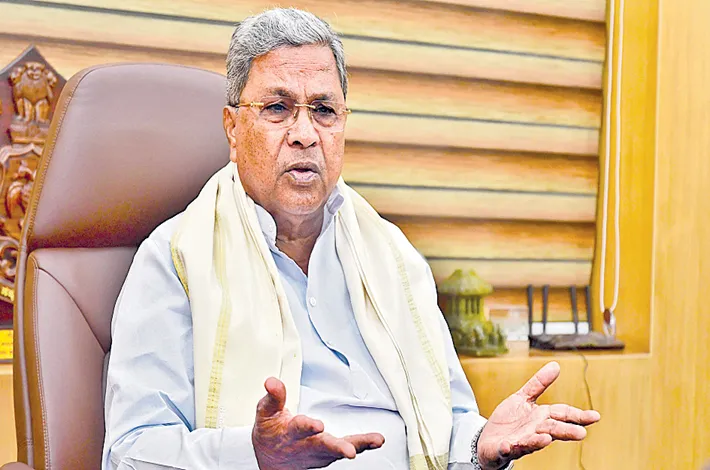
The back-and-forth underscores a recurring theme in Indian politics: the cycle of accusations and counter-accusations over resource allocation
In the southern Indian state of Karnataka, a fresh political controversy has erupted, centering on allegations of misuse of public land for partisan gains. The Bharatiya Janata Party (BJP) has leveled serious charges against the ruling Congress government, claiming that nearly two dozen civic amenity sites—intended for community use—have been allotted to the Congress party at heavily discounted rates. According to the opposition, properties valued at approximately 40 crore rupees were acquired for just 2 crore, effectively turning public assets into party property. This row unfolds amid broader concerns about governance priorities, including a planned international study tour by Congress MLAs to New Zealand and Australia, which critics argue raises questions about optics and focus on domestic issues.
The BJP's accusations paint a picture of systemic favoritism, asserting that these allotments violate rules meant to preserve public land for non-political purposes. They highlight specific instances where land in various districts was handed over for Congress party offices, bypassing market rates and legal norms. The opposition insists this is not just a matter of policy but a blatant "daylight robbery" of government resources, especially since civic amenity sites in Karnataka are governed by strict guidelines that prohibit direct allocations to political parties. This controversy echoes past disputes over land use, amplifying tensions between the two major parties in the state.
In response, the Congress has mounted a vigorous defense, accusing the BJP of selective outrage and hypocrisy. Party representatives point out that during the BJP's tenure between 2019 and 2023, over 150 acres of land were allegedly allotted to organizations linked to the BJP and its ideological affiliate, the Rashtriya Swayamsevak Sangh (RSS). They cite examples such as 116 acres for Chanakya University near Bengaluru, valued at over 300 crore rupees, and other allocations to trusts and bodies associated with the saffron party. Congress leaders, including Deputy Chief Minister DK Shivakumar, maintain that all recent allotments followed legal processes and norms, challenging the BJP to take the matter to court if they believe wrongdoing occurred. They argue that concessional land for political offices is a standard practice across parties, including the BJP, Janata Dal (Secular), and others.
A Congress spokesperson dismissed the BJP's claims as mere "allegations" and "political mudslinging," questioning why the opposition hadn't filed a police complaint or approached the high court with evidence. He emphasized that without concrete proof—such as government documents showing improper allocations—the accusations lack substance. He further argued that political parties are entitled to concessional land for offices, a benefit extended to all major players in Karnataka's political landscape. When pressed on why the Congress would emulate the BJP's alleged past actions, he reiterated that no wrongdoing had occurred and urged legal scrutiny if doubts persisted.
On the other side, BJP leaders staunchly defended their party's position, clarifying that previous allotments under BJP rule were made to non-governmental organizations (NGOs) and registered entities, not directly to the party itself. They referenced a 2022 cabinet decision prohibiting land allocations to political parties, accusing the Congress of violating this rule by taking sites in the party's name across four locations. A BJP leader identifying himself as a qualified architect and planner familiar with Karnataka's Department of Town and Country Planning (DTCP), detailed how the Congress had paid only 5% of market value in some cases, contravening rules that mandate market-rate sales or leases outside Bengaluru. He described the allotments as a violation of civic amenity guidelines, insisting that political parties cannot benefit directly from such sites.
An independent analyst offered a broader critique, suggesting the controversy reflects deeper instability within the Congress government. He pointed to the ongoing rivalry between DK Shivakumar and Chief Minister Siddaramaiah as a distraction from governance, predicting that internal power struggles could derail ambitious projects like constructing numerous party "bhavans" (offices). He questioned whether the focus on land for re-election purposes overshadowed public welfare, noting Karnataka's history of political volatility since the Congress came to power in May 2023. He refrained from labelling it a full-blown "land scandal" prematurely but warned of potential inefficiencies due to leadership tussles, likening the situation to a recurring TV soap opera.
The back-and-forth underscores a recurring theme in Indian politics: the cycle of accusations and counter-accusations over resource allocation. Both parties accuse each other of patronage while defending their own actions as routine or justified. Critics argue this highlights a deeper issue of political entities treating public land as perks, potentially at the expense of community needs. As the debate rages, the key question remains whether this is genuine misuse or partisan posturing, with calls for judicial intervention growing louder. For now, the controversy adds fuel to Karnataka's already heated political landscape, where land, loyalty, and legacies continue to intersect.