28 September, 2026 | 3:15 AM


Measure of a Champion: What Happens After the Point ?
28-09-2026 12:00:00 AM
Urvashi’s Meliorism
Who is your idol in sports? Is an often asked question. The answer has very little to do with the sport itself. Perhaps it is about how someone handles pressure, conducts themselves after winning, or responds when things do not go their way. That is what fascinates me about athletes—not the emotion itself, but how they handle it. The recently concluded US Open finals brought that thought back to me. Around the same time, I had finished watching Rafa, Netflix’s four-part documentary on Rafael Nadal, which follows the final chapter of his career and the physical and emotional cost of remaining a champion.
My older son asked, “Mamma, who is your idol in sports?” “Current athletes or in general?” I asked. He paused before asking, “Can Ronaldo ever be your ideal sports person?” I laughed. I do not follow football, so why would Ronaldo be my idol? Only later did I realise, I had walked into an ongoing sibling debate: does your sports idol have to belong to the sport you play?
“See!” my son told his brother. “That’s exactly what I’m saying.” I still wanted the last word. “My idol is Steffi Graf. Among current players, maybe Jannik Sinner or Carlos Alcaraz. I like Nadal too. And Novak.” His silence said everything. Somewhere between the laughter, I wondered why we choose our idols. Talent gets noticed; character emerges under pressure. That is what stayed with me about Zverev’s US Open victory.
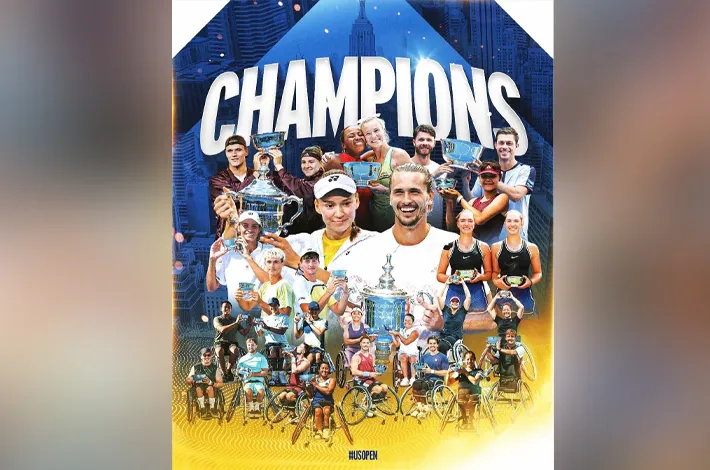
Zverev defeated American Ben Shelton 6–3, 7–6(2), 5–7, 6–2 to win his first US Open title and second Grand Slam. Shelton was playing his first major final, and the Arthur Ashe Stadium crowd was overwhelmingly behind the American.
People behind the trophy
I watched only the first set live and caught the highlights the next day. Zverev had become my second choice after Shelton defeated Carlos Alcaraz, but what stayed with me was what happened after the match.
At the trophy ceremony, Zverev acknowledged that most of the stadium had wanted Shelton to win. He apologised for disappointing them, thanked them for their energy and spoke warmly about Shelton, his family and team, saying he believed Shelton would one day win the trophy. He even walked over to embrace Shelton’s father and coach, Bryan. Shelton, despite losing his first Grand Slam final, spoke about his successes and failures as a gift. That, too, is sport.
Behind every trophy are parents, coaches, doctors, physiotherapists, therapists and families who help athletes through pressure, injury, defeat and recovery. Zverev’s story made that even more poignant. Diagnosed with Type 1 diabetes at four, his mother, Irina, refused to let the diagnosis define his future. The trophy may belong to one athlete, but the journey belongs to many.
The women’s final offered another kind of lesson. Elena Rybakina defeated Aryna Sabalenka 6–4, 5–7, 6–2 to win her first US Open title, her third Grand Slam and the world No. 1 ranking.
The strength of composure
Her calmness fascinated me; even my son noticed how little her reaction changed after winning. Perhaps composure is its own strength, reminiscent of Federer’s “just a point” philosophy and Sampras’s famously stoic presence. And then there is Nadal. In Rafa, Nadal reflects on Toni’s influence, the path he followed, career setbacks, doubts and moments when retirement seemed possible. “I am not a winner; I am a competitor,” he says, capturing his belief that victory is temporary, while the desire to keep fighting endures despite Mueller-Weiss syndrome and chronic pain.
Watching all of this, I keep returning to the same thought. Winning and losing are part of sport. But perhaps the more revealing contest begins after the point is over.
How do we carry ourselves when we win? How do we respond when we lose? And, perhaps most importantly, do we remember the people who helped us get there?
That may be what makes sport so deeply human.
(Urvashi Kaul, Head, Government and Institutional Partnerships, DataLEADS)