21 October, 2026 | 5:31 AM


The Bhimavaram Mystery @ dnr college campus
21-08-2025 12:00:00 AM
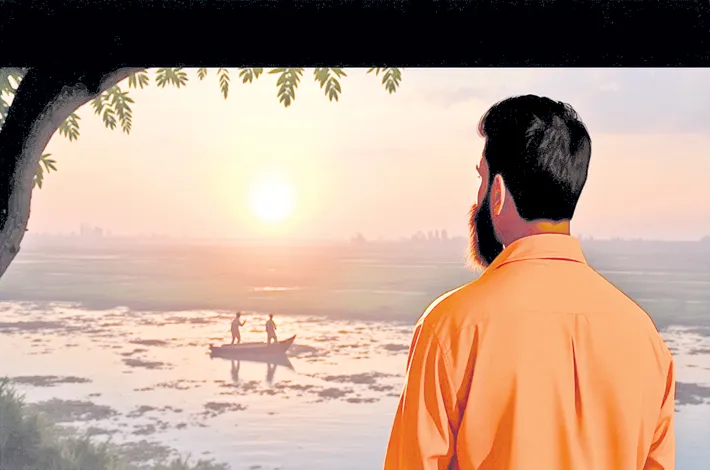
The humid air of Bhimavaram clung to Inspector Ravi Teja’s skin as he stepped out of his jeep, the scent of saltwater from the nearby Godavari mingling with the faint tang of blood. It was past midnight, and the narrow lanes of this coastal Andhra town were eerily quiet, save for the distant barking of stray dogs. The call had come an hour ago—a body found in the rice fields near DNR College, sprawled under the moonlight like a discarded puppet.
Ravi, a wiry man in his late thirties with a scar above his left eyebrow, adjusted his khaki cap and scanned the scene. Constables milled about, their torches cutting through the darkness, illuminating the body of a young woman. Her silk saree was torn, her bangles shattered, and her throat bore the unmistakable marks of strangulation. A single gold earring glinted in the mud, the other missing.
“Who is she?” Ravi asked, his voice low but sharp, cutting through the murmurs of the crowd that had gathered despite the hour.
“Anjali Reddy, sir,” said Constable Suresh, a nervous rookie. “Local girl, worked at the textile shop on PP Road. Twenty-two years old. Her brother identified her.”
Ravi crouched beside the body, his eyes narrowing. The bruising on her neck suggested a struggle, but the precision of the marks hinted at something deliberate, almost ritualistic. He noticed a faint imprint in the mud—a footprint, too large to be hers. “Get this photographed and cast,” he ordered, pointing to the print. “And find that missing earring.”
The town of Bhimavaram, with its bustling fish markets and quiet temples, wasn’t known for violent crime. But something about this murder felt personal, rooted in the undercurrents of a place where everyone knew everyone else’s secrets. Ravi’s instincts, honed by a decade in the force, told him this wasn’t random.
By dawn, the station was abuzz. Anjali’s brother, Venkatesh, sat slumped in a chair, his eyes red from grief. “She was coming home from the shop,” he said, voice cracking. “She always took the shortcut through the fields. I told her not to, but she never listened.”
“Anyone who might’ve had a grudge against her?” Ravi asked, leaning against the desk, his notepad open.
Venkatesh hesitated, then muttered, “She was seeing someone. A guy named Kiran. Runs a mobile repair shop near the market. They fought a lot. She said he was possessive.”
Ravi’s jaw tightened. Kiran was a known name—small-time hustler, quick to anger, with a reputation for trouble. “Bring him in,” he told Suresh.
Kiran was dragged into the station by noon, his cocky grin fading under Ravi’s glare. “I didn’t touch her,” he protested, his voice high-pitched. “Yeah, we fought, but I was at the shop all night. Ask my cousin, he was with me.”
The cousin’s alibi checked out, but Ravi wasn’t convinced. Kiran’s shifty eyes and the faint scratch marks on his hands raised red flags. Still, without hard evidence, Ravi had to let him go. “Don’t leave town,” he warned.
As days passed, the case grew colder. The footprint cast was inconclusive—too common a sole pattern. The missing earring remained elusive. Whispers spread through Bhimavaram’s tea stalls and temples: a jilted lover, a family feud, even talk of a vengeful spirit tied to the old banyan tree near the crime scene. Ravi dismissed the superstitions but couldn’t shake the feeling that the answer was hiding in plain sight.
A breakthrough came on the fifth day. A street vendor near the textile shop approached Ravi, nervously clutching a cloth bag. “Sir, I found this near the drainage canal,” he said, producing a gold earring that matched the one from the crime scene. The canal was a stone’s throw from Kiran’s shop.
Ravi’s pulse quickened. He ordered a search of the canal, and within hours, divers pulled up a muddy plastic bag containing a bloodied scarf and a pair of gloves. The scarf had embroidered initials: K.M. Kiran’s full name was Kiran Mohan.
Back at the station, Kiran crumbled under pressure. “It wasn’t supposed to happen like this,” he sobbed, his bravado gone. “She wanted to leave me. Said she’d tell everyone about my debts, my deals. I just wanted to scare her, but she fought back, and I… I panicked.”
The confession was damning, but something nagged at Ravi. Kiran’s story explained the murder, but the precision of the strangulation, the staged scene—it felt too clean for a crime of passion. He dug deeper, cross-referencing Kiran’s phone records. A number stood out: frequent calls to a local landlord, Prasad Rao, a man with a reputation for shady land deals and a temper to match.
Ravi paid Prasad a visit at his sprawling bungalow on the town’s outskirts. The man was polished, his smile too smooth. “Kiran? Barely know him,” Prasad said, sipping chai. But Ravi noticed a pair of boots by the door—same sole pattern as the footprint in the field.
A late-night raid on Prasad’s property uncovered the final piece: a hidden ledger detailing payments to Kiran for “services.” Anjali, it turned out, had stumbled onto Prasad’s illegal land grabs while working at the textile shop, which doubled as a front for his deals. She’d threatened to expose him. Kiran was just the muscle, paid to silence her.
In the end, both men were arrested. As Ravi stood by the Godavari, watching the sun set over the fields where Anjali’s life ended, he felt no triumph. Bhimavaram’s secrets had been laid bare, but at what cost? The town would move on, its rhythms unbroken, but the shadow of that night would linger in his mind, a reminder that even in a place as small as this, darkness ran deep.