6 October, 2026 | 8:08 AM


The enigma of the Indus Valley script
15-08-2026 12:00:00 AM
Metro India News | Hyderabad
If there is an ancient mystery waiting to be unravelled, it is the 4,000-year-old Indus script. A $1 million prize announced in January 2025 for deciphering the script has renewed global interest in cracking one of history’s most enduring enigmas. Developed by the Indus Valley Civilization, the script is among the earliest known writing systems of the Indian subcontinent.
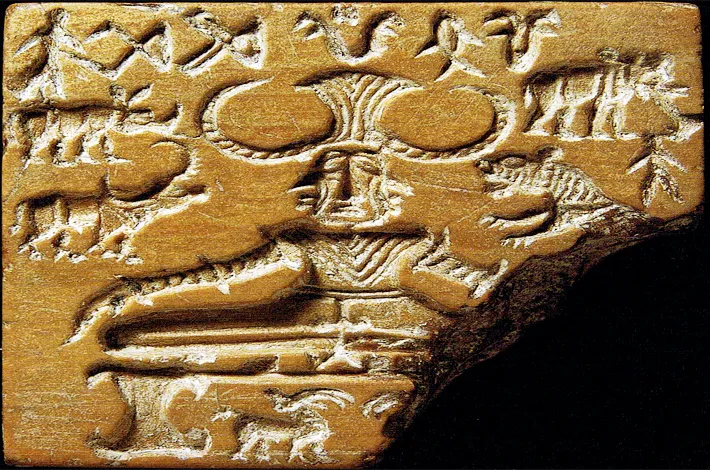
Since the discovery of the Indus Civilization was announced in 1924, its script has remained one of history’s greatest unsolved mysteries. Used between 2600 and 1900 BCE, the Indus script contains an estimated 400–700 symbols, including human figures, animal motifs such as unicorns and bulls, and geometric marks. Found mainly on stone seals, pottery and copper tablets, the inscriptions are extremely short, averaging around five symbols per line. The longest known sequence contains only 26 symbols. Despite a century of research, experts have yet to decipher the script or determine the language it represents.
Usually written from right to left. Some longer lines use the Boustrophedon, an ancient style of writing where lines alternate direction. Text reads left-to-right on one line, then turns to read right-to-left on the next line in a zigzag pattern.
Why it is not deciphered?
There is no ancient "Rosetta Stone" or bilingual inscription pairing Indus signs with a known translated language. (The Rosetta Stone is an ancient stone slab found in Egypt in 1799. It has the same message written in three different scripts: Greek, Egyptian hieroglyphs, and Demotic script. Because experts could read Greek, they used it to translate and finally read the ancient Egyptian hieroglyphs.)
The script died out alongside the civilization around 1900 BCE, leaving no direct evolutionary link to later Indian writing systems like Brahmi. The Indus Valley Script, also known as the Harappan script, is an enigmatic puzzle that has resisted attempts to decipher it.
The Mystery of the Indus Valley script consists of around 400–600 symbols, found on seals, pottery, and tools. Indus Valley Script, also known as the Harappan script, remains undeciphered. The Indus Valley script is not decoded. Despite over a century of claims by independent researchers and computer models, it remains an unreadable ancient writing system.
Why is the script hard to decipher?
Most inscriptions on stone seals and pottery contain only four or five signs. There is no companion text in a known language like Sumerian or Greek to act as a translation guide. Scholars do not know if the underlying language is Dravidian, early Indo-Aryan (Sanskrit), or an entirely extinct language family. Some researchers argue the symbols may not be a full language, but rather family crests, religious emblems, or political ID badges.
The Indus Valley or Harappan Civilization was a major Bronze Age culture that flourished from 3300 to 1300 BCE across present-day Pakistan, northwest India and Afghanistan. Its cities, including Harappa and Mohenjo-daro, were known for grid-planned streets, uniform baked-brick houses and advanced drainage systems. Homes had private baths and toilets linked to covered drains, while Mohenjo-daro featured the Great Bath. The civilization traded widely, using standard weights and carved seals. From around 1900 BCE, changing monsoons, drying rivers and economic pressures gradually weakened urban centres, prompting migration to smaller rural settlements.
- Harry Jayanth