21 October, 2026 | 12:14 PM


The Monsoon Letters
23-08-2025 12:00:00 AM
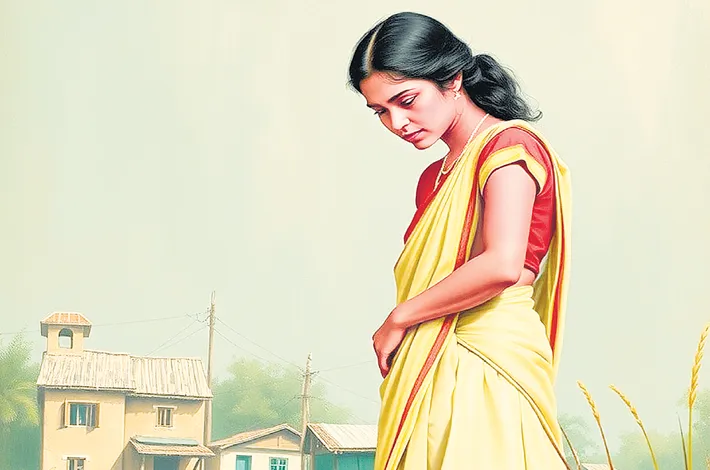
In the summer of 1965, the small town of Alipur in West Bengal hummed with the rhythm of life. The air was thick with the scent of jasmine and the promise of monsoon rains. Radha, a young woman of twenty-two, lived in a modest house with her widowed mother, stitching dreams into the blouses she tailored for the women of the town. Her life was simple, her days spent with needle and thread, her evenings lost in the pages of Tagore’s poetry.
Across the narrow lane stood the post office, a squat building with peeling yellow paint. It was here that Arjun, the new postmaster, arrived from Kolkata, bringing with him a quiet charm and a suitcase full of books. At twenty-five, he was an anomaly in Alipur—a man who spoke softly, wore crisp kurtas, and carried a smile that seemed to hold a secret. The townsfolk whispered about him, the city boy who sorted letters with the precision of a poet arranging words.
Radha first noticed Arjun one humid afternoon when she crossed the lane to mail a letter for her mother. He stood behind the counter, his fingers stained with ink, his eyes scanning a letter as if it held a story only he could read. Their eyes met briefly, and he offered a polite nod. She felt a flutter, like the first drop of rain on parched earth.
Over the weeks, Radha found excuses to visit the post office. A letter to a cousin in Delhi, a money order for her uncle in Patna—small errands that brought her to Arjun’s counter. Their conversations began tentatively, about the weather or the unreliability of the postal service. But soon, they drifted to books. Radha confessed her love for Tagore, and Arjun admitted he carried a copy of Gitanjali in his pocket. “It’s like carrying a piece of the soul,” he said, and Radha’s heart skipped a beat.
One evening, as the monsoon clouds gathered, Arjun handed her a letter addressed in an unfamiliar hand. “It came for you,” he said, his voice low. Puzzled, Radha opened it later that night. Inside was a single sheet, the words written in neat, slanting script: “The night is dark, but your smile lights the stars. – A Friend.” Her cheeks burned. She knew it was Arjun.
Thus began the monsoon letters. Every few days, a new envelope arrived, slipped into her mother’s mail or left on the counter when no one was looking. Each letter was a whisper of affection, woven with poetry and subtle confessions. “The rains sing of you, Radha, soft and unyielding, like the earth that drinks them in.” She never spoke of them, but her heart raced each time she saw his handwriting. In return, she began leaving notes in the postbox, unsigned, her words tentative but bold: “The heart is a quiet river, but it flows where it dares.”
The town, however, was not blind. Whispers grew louder—Radha, the tailor’s daughter, and Arjun, the postmaster, were too often seen talking, their smiles too warm. Her mother, stern and protective, warned her of scandal. “A girl’s reputation is fragile, Radha. Mind your steps.” But love, like the monsoon, was unstoppable.
One evening, as thunder rumbled and rain lashed the streets, Radha found Arjun waiting under the banyan tree near the post office, his kurta soaked, his eyes bright. “I couldn’t wait for another letter,” he said, his voice trembling. “Radha, it’s you. It’s always been you.” She stood frozen, rain mingling with the tears she hadn’t realized were falling. “Arjun, this town… my mother… they won’t understand.”
“Then let’s make them understand,” he said, stepping closer. “Or we’ll leave. Kolkata, Bombay, anywhere. I’ll go where you go.” His words were a promise, reckless and beautiful, like the storm around them.
But Alipur was not kind to reckless love. The next day, a group of elders visited Radha’s mother, their voices heavy with judgment. “Your daughter is bringing shame,” they said. “The postmaster is not one of us.” Her mother, torn between love for Radha and fear of disgrace, forbade her from seeing Arjun. The letters stopped. The post office became a place of silence.
Weeks passed, the monsoon faded, and Radha’s heart grew heavy. She stitched in silence, her mother’s watchful eyes never far. Arjun, too, seemed dimmed, his smile gone, his days mechanical. The town believed it had won.
Then, one crisp October morning, a letter arrived, addressed to Radha in her mother’s name. Her hands trembled as she opened it. Inside was a train ticket to Kolkata and a note: “The river flows, even when the banks try to hold it. I’ll be waiting at Howrah Station, October 15th, 6 p.m. – Arjun.”
Radha stood at the edge of her world, the ticket in her hand, her mother’s voice echoing warnings. She thought of Tagore’s words: “Love does not claim possession, but gives freedom.” That night, she packed a small bag, her copy of Gitanjali tucked inside, and left a note for her mother: “I am choosing my heart. Forgive me.”
At Howrah Station, under the vast iron roof, Radha found Arjun waiting, his eyes searching the crowd. When he saw her, his face broke into that secret smile. They didn’t speak of the town, the gossip, or the future’s uncertainties. They boarded the train together, the whistle sounding like a song of freedom.
As the train rolled toward a new life, Radha leaned against Arjun, the rhythm of the wheels matching her heartbeat. The monsoon had passed, but their love, like the rivers it fed, would flow on, unyielding and eternal.