11 October, 2026 | 11:28 AM


The Puducherry Mystery
10-10-2025 12:00:00 AM
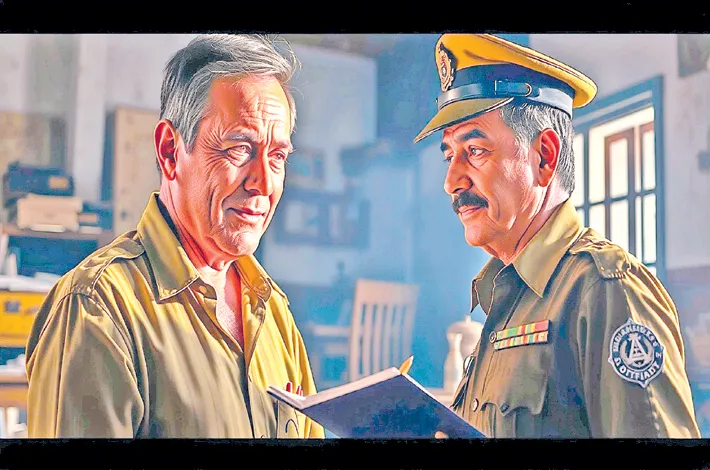
The humid night air of Puducherry clung to Inspector Rajan Pillai like a second skin as he pushed open the wrought-iron gate of Villa Rouge. The French Quarter's pastel facades loomed silent under the moon, their ochre walls whispering secrets of colonial ghosts. It was past midnight, and the call had come from a frantic neighbor: screams from the antique shop. Rajan, a wiry man in his forties with a mustache like a crescent moon and eyes sharpened by two decades of chasing shadows in this sun-bleached paradise, knew better than to ignore the old streets' cries.
Inside, the air was thick with the scent of sandalwood and decay. Monsieur Henri Duval lay sprawled across a Persian rug, his silk cravat untied, a porcelain teacup shattered beside him. Foam flecked his lips—arsenic, Rajan guessed, from the acrid tang. Duval's shop was a labyrinth of gilded mirrors, brass lamps from forgotten Indochinese palaces, and shelves groaning under brass idols smuggled from Tamil Nadu's black markets. But tonight, the treasures seemed to mock the dead man, their eyes glinting like conspirators.
"Poison," Rajan muttered to Constable Lakshmi, his sharp-eyed protégé, who knelt beside the body, gloved hands probing. "No struggle. He trusted his killer." Lakshmi nodded, her ponytail bobbing. "Sir, look—his ledger's open. Last entry: 'Auroville delivery, 10 PM. Trust no one.'"
Auroville. The utopian enclave twenty kilometers south, where dreamers built mud huts and chased enlightenment under banyan trees. Duval had ties there—rumors of fencing artifacts from the ashram's digs, sacred relics bartered for euros. Rajan pocketed the ledger. "Get forensics. And wake up Duval's circle. Start with the widow."
By dawn, the Promenade Beach was a ribbon of gold under the rising sun, waves lapping at the Gandhi statue like guilty confessions. Madame Elise Duval, a statuesque Frenchwoman in her fifties with silver-streaked hair and a cigarette perpetually dangling from rouged lips, met them at the Café des Arts. Her villa overlooked the boulevard, its balcony festooned with bougainvillea that dripped like blood.
"Henri was obsessed," she said, exhaling smoke that curled toward the sea. Her voice was a low purr, laced with Gallic disdain. "Those Auroville fanatics—hippies digging up the past, selling it to tourists. He met someone last night, a buyer. I heard the door at nine, then silence." Her eyes, kohl-lined and unblinking, fixed on Rajan. "You think I did it? For the insurance? Mon dieu, Inspector, love is not so tidy."
Rajan leaned forward, the salt breeze ruffling his kurta. "Who was the buyer?" She shrugged, but her fingers tightened on the saucer. "A woman. Calls herself Lila. Spiritual type, with henna tattoos and lies about Sri Aurobindo."
Lila. The name echoed in Rajan's mind like a mantra gone sour. By noon, they were at Auroville's Matrimandir, the golden dome gleaming like a misplaced sun amid the eucalyptus groves. The community was a fever dream of eco-huts and meditation circles, where expats and locals blurred into a haze of patchouli and purpose. Lila Moreau, a lithe French-Indian artist in flowing whites, was sketching in the Peace Area when they found her.
"I bought a statue," Lila admitted, her bangles jingling as she sat cross-legged on a jute mat. "A bronze Nataraja, from Duval's private stock. He said it was cursed—stolen from the ashram's vaults decades ago. We argued; he wanted double the price. But poison? I left at ten, alive." Her gaze drifted to the horizon, where the Bay of Bengal met infinity. "Henri was greedy. The past doesn't forgive."
Rajan noted the tremor in her voice, the way her eyes darted to a nearby tamarind tree. Greed. It always circled back to that in Puducherry, where French elegance masked Tamil undercurrents of want. Back at the station—a peeling colonial bungalow near the Grand Canal—he pored over the ledger. Entries blurred into a code: shipments to Paris, coded as "spiritual aids." One name repeated: Pierre Laurent, Duval's silent partner, a shadowy importer holed up in a Villa in White Town.
Dusk fell like a velvet shroud as Rajan tailed Laurent's scooter through the narrow alleys of Rue Romain Rolland. The man was a ghost—lean, bespectacled, with a goatee that hid a perpetual smirk. He parked at the old lighthouse, its beam sweeping the sea like a detective's flashlight. Rajan waited in the shadows, heart pounding to the rhythm of distant temple drums.
Laurent met a figure by the rocks: Elise Duval. Their whispers carried on the wind—"The Nataraja's gone, but the ledger points to you"—before she shoved him, hard. He stumbled, and in the scuffle, a vial slipped from his pocket, glinting in the moonlight. Arsenic residue, just like Duval's cup.
Rajan burst from cover, gun drawn. "Hands up! It's over." Laurent spun, eyes wild, but Elise was faster. She lunged, a stiletto flashing from her sleeve—French precision in a Tamil night. The blade grazed Rajan's arm, hot pain blooming, but he tackled her into the surf. Waves crashed, soaking them as Lakshmi cuffed Laurent.
"You're both in it," Rajan gasped, pinning Elise against the wet sand. "The scam: Duval fences relics, you two siphon the profits, Lila as the innocent buyer. But he got cold feet, threatened to expose you. So poison for him, and now silencing Laurent."
Elise laughed, a bitter cascade. "He was weak, Henri. Auroville's dirt hides fortunes—statues worth millions. We built this life on whispers." Laurent spat seawater. "She planned it. The vial was hers."
In the station's interrogation room, under the flicker of a tube light, truths unraveled like frayed silk. Elise confessed first: the affair with Laurent, the forged shipments, the arsenic from an old colonial apothecary. Lila was clean—a dupe, her sketchbook filled with innocent renderings of the Nataraja. But the twist cut deeper: Duval's ledger hid a final entry, in invisible ink revealed by heat—proof that Elise had killed before, a jealous rage over a Pondy lover years ago, buried in the ashram's sands.
As dawn broke over the Promenade, Rajan watched Elise led away in chains, her elegance shattered. Puducherry's beauty was a veil, he thought, thin as the morning mist rolling off the sea. The White Town slumbered on, its villas holding more graves than gardens. But for now, the shadows retreated, and the waves sang a lullaby to the dead.
In the café that evening, nursing a filter coffee, Rajan sketched his report. Lakshmi slid into the seat opposite. "Another one closed, sir. What's next—ghosts in the canal?"
He smiled faintly. "In Puducherry, Constable, the ghosts are the easy part. It's the living we chase."