21 September, 2026 | 1:26 PM


Tripura migrant killed in Dehradun, is internal-racism a reality?
01-01-2026 12:00:00 AM
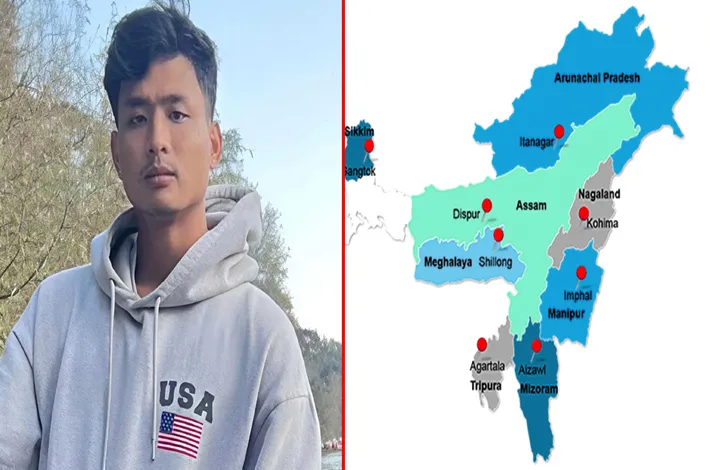
On December 9, 2025, in Dehradun, Uttarakhand, 24-year-old Angel Chakma, an MBA student from Tripura in his final semester, was brutally stabbed after being subjected to racial slurs. He fought for his life for 14 days before succumbing to his injuries. The attack, according to his brother Michael who witnessed the incident, began when Angel and his friends were called "Chinki," "Momo," and "Chinese" — derogatory terms frequently used to mock people from India's Northeast who have East Asian features.
When Angel challenged his abusers, asking what proof of Indian citizenship they required, the confrontation turned violent. The assault left him paralysed on one side and ultimately took his life. The case has ignited outrage across the Northeast and raised uncomfortable questions about racism, institutional response, and the value placed on the lives of citizens from the region. Angel's father, a serving Border Security Force (BSF) jawan who protects India's borders, now mourns a son killed in the heart of the country by men who branded him a foreigner.
More controversially, even after Angel's death and widespread public attention, the Senior Superintendent of Police (SSP) of Dehradun declared that the crime was not racially motivated — merely a "misunderstanding" between a group of boys. This assertion persists despite the fact that three of the five accused are themselves from the Northeast, and despite the clear eyewitness account of racial abuse preceding the stabbing. The police have also faced backlash for offering a reward of just Rs 25,000 for information leading to the arrest of the main accused, who is believed to have fled to Nepal — an amount many have described as insultingly low given the gravity of the crime.
A representative of the Tipra Motha party who has been following the case closely, strongly rejected the police narrative during a television discussion. He argued that denying the racial angle reflects deep-seated prejudice and an unwillingness to admit that racism exists within Indian society — not only towards people from the Northeast but also in broader attitudes toward skin colour, as evidenced by India's massive market for skin-lightening products.
He also pointed out that people with "Mongoloid" features face discrimination regardless of whether the perpetrators are from the Northeast or elsewhere. He cited examples of similar slurs being used within the region by non-indigenous migrants, reinforcing that racism is about perceived physical difference, not simply geography. He described the low reward amount as a painful symbol of how little the lives of North easterners are valued.
A retired IPS officer described the police response as a serious "bungle," calling it a clear hate crime that should have been treated as such from the beginning. He questioned the absence of stringent measures such as invocation of the National Security Act, a substantial reward for the absconder, and meaningful financial compensation for the grieving BSF family. The congress, meanwhile criticised the Uttarakhand Chief Minister Pushkar Singh Dhami for contacting Angel's father only on December 29 — 20 days after the attack — and for allowing the conversation to be recorded and released to the media, which many perceived as a belated PR exercise rather than genuine empathy.
Congress MP Pradyut Bardoloi (from Assam) strongly criticized the Uttarakhand government's initial response, accusing local police and administration of attempting to cover up or trivialize the incident. He highlighted that this is not isolated, referencing the 2014 murder of Arunachal Pradesh student Nido Tania in Delhi's Lajpat Nagar, where similar racial slurs escalated to fatal violence. Bardoloi stressed the persistent lack of awareness and sensitivity toward Northeastern people in northern Indian cities, drawing from his own experiences as a former Delhi student facing normalized taunts like "chinky" or "Chinese." He urged full implementation of the Bezbaruah Committee recommendations (formed after Nido Tania's death), which include amending criminal laws to criminalize racial slurs, creating fast-track courts, special police squads, and promoting awareness in education and society.
The BJP rejected accusations of a police "cover-up" and emphasised statements from the Chief Minister and Minority Welfare Minister expressing grief and promising action, while acknowledging that insensitive police statements were unacceptable and needed investigation. A spokesperson defended the Uttarakhand administration, asserting that police would leave no stone unturned in apprehending the culprits. She argued that the Modi government has addressed decades of neglect in the Northeast through accords and development, contrasting it with alleged Congress failures.
An office bearer of the Northeast Support Centre & Helpline (NESCH)—which has handled over 600 discrimination cases since 2007—described Angel's murder as part of a larger pattern of harassment, including cultural shock, workplace issues, and violence. She noted a surge in helpline calls post-incident and reiterated demands for criminalizing racial slurs (beyond existing provisions like IPC 153A/B or BNS equivalents), expanding special police units (like Delhi's 1093 cell) to other cities, and implementing Bezbaruah recommendations fully. She highlighted the heartbreak of families sending children for dreams, only for them to return as victims.
This case underscores that racial discrimination in India is a reality, not merely a "law and order" issue. While some progress has been made since 2014, including special cells and awareness efforts, the persistence of such tragedies demands urgent, collective commitment to eradicate prejudice and ensure Northeastern citizens' dignity and safety across the country. Angel's last moments—asserting "I am Indian"—remain a poignant reminder of the urgent need for change.