12 October, 2026 | 12:30 PM


Trump huffs & puffs at Mexico
12-04-2025 12:00:00 AM
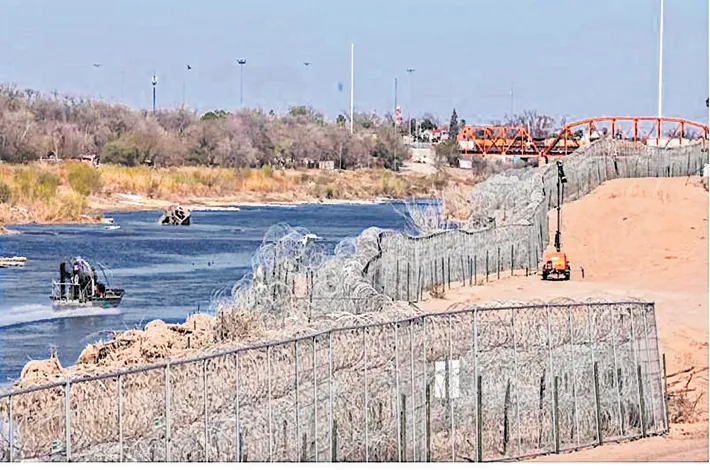
File photo of a US Border Patrol on the Rio Grande on the US-Mexico border at Eagle Pass, Texas
Agencies WASHINGTON/MEXICO CITY
American President Donald Trump has threatened Mexico with sanctions and tariffs in a dispute over water-sharing between the two countries, accusing Mexico of breaking an 81-year-old treaty and "stealing the water from Texas Farmers."
Under the 1944 US-Mexico Water Treaty, officially titled the "Treaty Between the United States of America and Mexico for the Utilization of Waters of the Colorado and Tijuana Rivers and of the Rio Grande", Mexico is obligated to deliver 1.75 million acre-feet of water to the United States from the Rio Grande over a five-year cycle. This water comes from specific tributaries in Mexico, including the San Juan and Alamo rivers.
The treaty also requires that the US deliver 1.5 million acre-feet of water annually to Mexico from the Colorado River, an obligation that has been largely fulfilled, although recent deliveries have been reduced due to severe drought, something the 1944 accord allows for.
The current five-year cycle is up in October, but Mexico has sent less than 30% of the required water, according to data from the International Boundary and Water Commission. "Mexico OWES Texas 1.3 million acre-feet of water under the 1944 Water Treaty, but Mexico is unfortunately violating their Treaty obligation," Trump posted on Truth Social.
"My Agriculture Secretary, Brooke Rollins, is standing up for Texas Farmers, and we will keep escalating consequences, including TARIFFS and, maybe even SANCTIONS, until Mexico honors the Treaty, and GIVES TEXAS THE WATER THEY ARE OWED!" Trump said. Mexican President Claudia Sheinbaum, in response, said on X that Mexico has been complying with the treaty "to the extent water is available" amid three years of drought. Mexico sent a proposal to US officials on Wednesday, Sheinbaum said, to address the water supply to Texas, which includes short-term actions.
Mexican officials have routinely pointed to a historic drought fueled by climate change as a barrier to fulfilling water commitments, a scenario for which the treaty offers leniency, allowing the water debt to be rolled over to the next five-year cycle. While Mexico sends far less water to the US, it has struggled to fulfill its end of the bargain due to a combination of factors including droughts, poor infrastructure and growing local demand.
Politicians in the US maintain that Mexico’s growing cattle and pecan industries along the border have used up precious water. Reuters, citing sources, reported on Wednesday that Mexican officials were scrambling to come up with a plan to increase the amount of water sent to the US because of growing concern that Trump could drag the dispute into trade negotiations.
In an attempt to increase deliveries, Mexico has agreed to send 122,000 acre-feet of water to the U.S. and is working on an option to deliver another 81,000 acre-feet, a Mexican official told Reuters. But that would still mean Mexico had sent less than 40% of the water it owes under the treaty.