14 October, 2026 | 9:06 AM


West Asia war shock: Is India's Gulf jobs model under threat?
06-03-2026 12:00:00 AM
The escalating conflict in West Asia, triggered by joint U.S.-Israeli strikes on Iran beginning late February 2026, has shattered the long-held perception of the Gulf region as a safe haven. What many viewed as stable, prosperous cityscapes—hubs for travel, trade, and employment—have now been directly impacted by retaliatory Iranian drone and missile attacks.
Over the past few days, precision strikes have targeted key sites across the United Arab Emirates (UAE), including Dubai International Airport, where a concourse was damaged and staff injured; the Fairmont Palm Hotel, which went ablaze; and even near the U.S. Consulate in Dubai, where a drone strike caused a fire and plumes of smoke. These incidents, occurring as recently as March 3, starkly contrast with the UAE's carefully cultivated image of stability and security.
The violence has not been confined to the UAE. Reports indicate Iranian drone and missile activity extending to Saudi Arabia, with strikes linked to U.S. facilities and energy infrastructure, including fires at oil refineries like Ras Tanura. Qatar has faced attacks on gas production facilities and civilian infrastructure, such as airports, leading to temporary halts in operations. Similar disruptions have affected other Gulf states, including Bahrain and Kuwait, where U.S. assets and civilian sites have come under threat. Airspace closures, flight cancellations, and heightened alerts have scrambled civil defense systems across the region, turning once-routine travel and trade routes into zones of uncertainty.
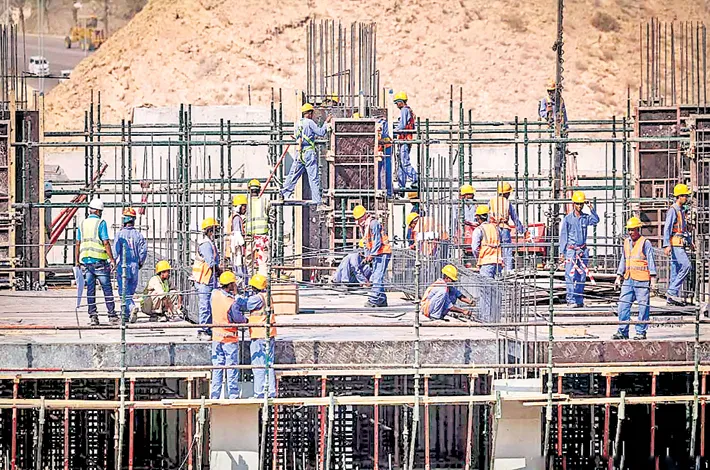
For India, this is far from a distant geopolitical event. The Gulf hosts India's largest overseas community, with nearly 90 lakh (9 million) Indians living and working there. The UAE alone is home to about 35-36 lakh Indians, Saudi Arabia around 24-26 lakh, Kuwait about 10 lakh, Qatar 8 lakh, Oman 7 lakh, and Bahrain roughly 3 lakh. These expatriates span students, professionals, entrepreneurs, and blue-collar workers in construction, hospitality, healthcare, and services—forming the backbone of many Gulf economies.
The Indian government has emphasized that it cannot remain impervious to developments endangering its citizens. The Ministry of External Affairs (MEA) has opened control rooms, issued advisories, activated 24/7 helplines, and coordinated special evacuation and relief flights. As a precautionary measure, Indian embassies have relocated many students from high-risk areas to safer locations. Tragically, the human cost is already evident: at least three Indian seafarers have been killed in Iranian strikes on merchant vessels off Oman, with others injured across the region.
The economic stakes are immense. These expatriates power India's remittance lifeline, with India receiving about $118.7 billion in remittances in FY 2023-24. The UAE accounts for around 19% of these flows, and the GCC collectively about 38%—representing roughly 3-3.5% of India's GDP as a cushion. Analysts warn that prolonged hostilities could disrupt up to 90 lakh Indian jobs, affecting household incomes, remittance-led consumption back home, and broader economic stability. Elevated insurance costs, compliance burdens, flight disruptions, and potential scaling back of operations in sectors like construction and hospitality could introduce volatility in remittance flows and pressure India's external position, including the trade deficit, current account, rupee, and even fiscal dynamics if oil prices remain high.
A global business strategist described the market mood as "risk-off," noting escalation beyond expectations as Iran targets not just U.S. assets but softer civilian sites, though hoping for containment. A migration policy researcher with personal ties to the Gulf, framed the crisis in humanitarian and long-term terms—questioning mass evacuation prospects while emphasizing job creation, upskilling, and sustainable migration policies. A recruitment expert remained optimistic from a short-term hiring lens, arguing that geopolitical tensions often refine frameworks and could ultimately boost opportunities for India's skilled workforce, given the Gulf's reliance on Indian talent in key sectors.
A former Indian Ambassador to the U.S. stressed immediate priorities: establishing safe corridors for those wishing to return, noting no mass evacuation desire yet but acknowledging image damage to the Gulf's "islands of law and order." She pointed to miscalculations in the conflict's early phase and Iran's expansion of the theater. Another senior recruitment specialist viewed the spillover as a challenge for Indian diplomacy—balancing ties with Iran and Gulf partners—but expressed hope that sanity would prevail, given mutual dependence on migrant labor and the high costs of escalation.
While the Gulf's safe-haven sheen has been shaken—airports, hotels, energy nodes, and shipping routes now carry added risk—the region's resilience, employer responsibilities, and India's proactive layered response offer hope. Control rooms, advisories, student relocations, and calls for dialogue aim to safeguard lives and livelihoods. The model of Gulf jobs powering India's prosperity faces real stress, but with calm protocols and targeted efforts, a full breakdown is not inevitable. This evolving situation demands vigilance, as the path to restoring stability remains uncertain.