22 October, 2026 | 8:20 PM


Who killed ONGC?
22-03-2026 12:00:00 AM
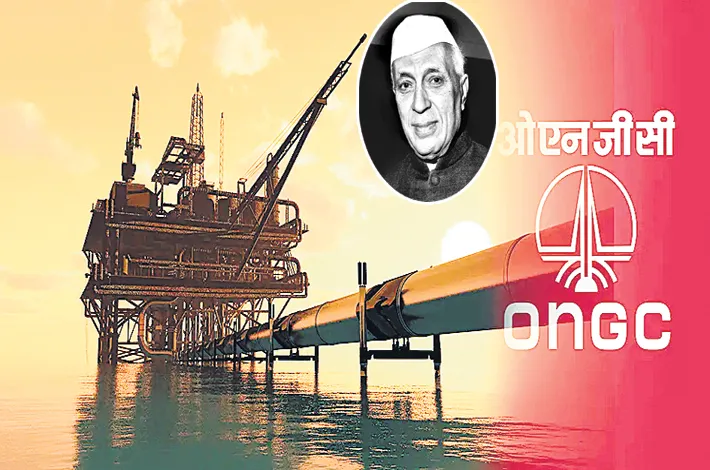
In the early 1950s, India stood at a crossroads in its quest for energy independence. Russia offered crude oil in rupees, a gesture that could have eased the young nation’s foreign exchange burden. Yet the United States opposed the deal outright. At the time, three Western multinational corporations—Burmah Shell, Stanvac, and Caltex—controlled 95 percent of India’s petroleum market. They refused to refine or distribute Russian oil, effectively blocking cheaper imports and tightening their grip on the country’s energy supply.
It was against this backdrop of colonial-era cartel dominance that a young minister, Keshav Dev Malviya, stepped forward with a bold proposal. Backed by Prime Minister Jawaharlal Nehru, Malviya argued that India must explore and produce its own oil rather than remain perpetually dependent on foreign powers. Nehru’s government moved swiftly. Despite stiff resistance from the West, which cited prohibitive costs and lack of technical manpower, India pressed ahead. The United States and Britain refused both financial aid and technical assistance, dismissing the idea as an expensive adventure unsuitable for a poor country.
Undeterred, India established the Oil and Natural Gas Commission (ONGC) in 1956. Within three years, the organisation trained its first batch of geologists and geophysicists. By 1959, India struck oil in Cambay. The first offshore rig soon followed, and ONGC became the cornerstone of the nation’s energy security programme. Over the decades, the company grew into India’s most profitable public sector enterprise. It not only met domestic needs but also symbolised self-reliance. By 2014, ONGC had accumulated cash reserves of Rs 13,000 crore and was effectively debt-free.
Domestic production covered 27 percent of the country’s crude oil requirements—an impressive achievement that insulated India from global price shocks. Today, that legacy lies in tatters. As of 2025, ONGC carries a staggering debt of Rs 78,000 crore. Exploration budgets have been systematically diverted. Billions were siphoned to write off the failed investments of the Gujarat State Petroleum Corporation, worth nearly Rs 26,000 crore. Another Rs 36,000 crore was extracted when ONGC was forced to buy stakes in Hindustan Petroleum Corporation Limited (HPCL), with the proceeds funnelled directly into the Union government’s budget to cover fiscal deficits.
The result is painfully clear: domestic crude oil production has plummeted from 27 percent to just 13 percent of national consumption. Projections from the International Energy Agency warn that without urgent intervention, India will produce only 8 percent of its crude demand by 2030.This decline is not accidental. Successive policy decisions have starved ONGC of capital needed for fresh exploration. Instead of investing in new fields, funds have been redirected to cosmetic fiscal maneuvers. The Modi government has repeatedly cited “oil bonds” as justification, yet retail fuel prices have remained stubbornly high.
Between 2014 and 2025, the government collected massive excise and customs duties on petroleum products—running into lakhs of crores—while passing on international price spikes directly to consumers. Subsidies that once buffered the common man during the UPA years have vanished. Under Dr Manmohan Singh, oil bonds and direct support shielded households from volatility; today, the burden falls squarely on ordinary citizens through higher transport costs, inflated goods prices, and reduced purchasing power.
The consequences extend far beyond balance sheets. India remains the world’s third-largest oil importer, vulnerable to geopolitical shocks in West Asia or supply disruptions elsewhere. Every percentage point drop in domestic production translates into billions in foreign exchange outflow, weakening the rupee and fuelling inflation. Energy sovereignty, once a pillar of India’s post-independence vision, has been reduced to a slogan. Meanwhile, global oil majors continue to profit, and the government collects windfall taxes even as exploration rigs lie idle.
The time has come for course correction. Policymakers must revisit the UPA model: targeted subsidies for vulnerable sections, renewed capital infusion into ONGC, and aggressive exploration in untapped basins. India cannot afford to let its energy security erode further. Protecting citizens from spiralling crude prices is not charity—it is sound economics and political responsibility. As Congress leader Gurdeep Sappal highlighted in his National Herald analysis, the meaning of energy sovereignty is not abstract. It is the difference between a nation that controls its destiny and one that remains hostage to imported oil and fluctuating global markets. Nehru and Malviya understood this seven decades ago. Their vision delivered results. Reviving that spirit—through prudent investment, transparent governance, and people-centric policies—is the only way to restore India’s energy independence and shield the common man from the next inevitable oil shock.