19 September, 2026 | 3:10 AM


‘A Zoom Meeting with My Father in Heaven’
01-06-2026 12:00:00 AM
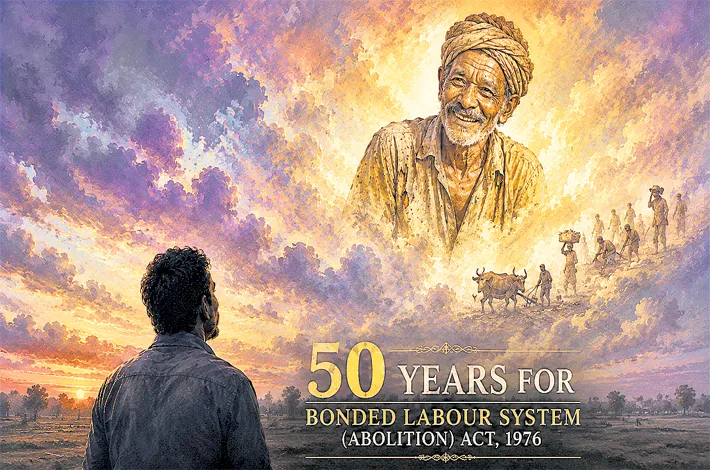
A father's memories of bonded labour echo through a son's journey toward justice
Metro India News | Hyderabad
As civil society organisations observed 50 years of the Bonded Labour System (Abolition) Act, 1976, anti-bonded labour activist J. Neelaiah chose to mark the occasion in an unusual and deeply personal way. Instead of writing a conventional article, he imagined a Zoom meeting with his late father, who had spent much of his youth and adulthood as a bonded labourer, locally known as a "Jeethagadu."
Me: Naana... how are you?
Father: I am fine, Chinnanna. Are all of you well?
Me: We are all doing well. Recently, meetings were held marking 50 years since the abolition of bonded labour. You told me you were put into bonded labour at around 14 years of age. Why?
Father: We were three brothers and three sisters. I was the second among the boys. Honestly, I don't know why I was sent into bonded labour.
Me: What was life like?
Father: Most of my life, I worked in a landlord's house in a village three kilometres away. I woke up around 4 a.m., cleaned the cattle shed, watered the oxen and worked in the fields. Food was usually a ball of ragi or millet with groundnut chutney placed in my hands.
Me: And then?
Father: Labourers, including your mother, would arrive. I assigned work, cut fodder for cattle and continued till evening. During sowing, transplanting, weeding and harvesting seasons, I worked 18 to 20 hours a day.
Me: Including walking to and from the fields, you covered nearly 20 kilometres every day. Thinking about it now pains me deeply.
Father: That's the life of a bonded labourer.
Me: You also worked the kavili irrigation system, running with bullocks to lift water from an open well. Didn't your legs ache?
Father: It was hard. But whenever I saw the Arts College in Anantapur where your elder brother studied, I forgot all the pain. Your mother was my courage and strength.
Me: Though our village was only three kilometres away, you came home only twice a month. Why?
Father: I had to be there all the time — either at work or in their house.
Me: When I was a child and visited you, they would ask me to bring your glass from the cattle shed before pouring coffee. I now understand it was untouchability.
Father: Do you still need all this now? You have become a great man. You freed many bonded labourers like me and worked for their welfare.
Me: What was your wage?
Father: There was no monthly wage. Only annual payment. When I left, it was Rs.350 a year. The landlords decided it. We had no say.
Me: I remember being called "the bonded labourer's son" in school. It hurt deeply.
Father: There is no answer to such things. That was their upbringing.
Me: Though bonded labour was abolished in 1976, you came out around 1978. Why did you never receive compensation?
Father: In those days, there were no people like you.
Me: I later worked with the International Labour Organization for the eradication of bonded labour. Yet it continues in different forms even today.
Father: Bonded labour caused immense suffering — forced labour, caste discrimination, humiliation, labour exploitation, economic exploitation and violence. Whatever form it takes, it must be eradicated.
Me: Anything more, Naana?
Father: If you can, buy back our one acre of land. I sold it long ago for your brother's education. Somehow, my name will live in it.
Me: Thank you, Naana.
Father: May God bless you, Grace Amma and your children abundantly.
— Neelaiah Jyothi, Human rights activist